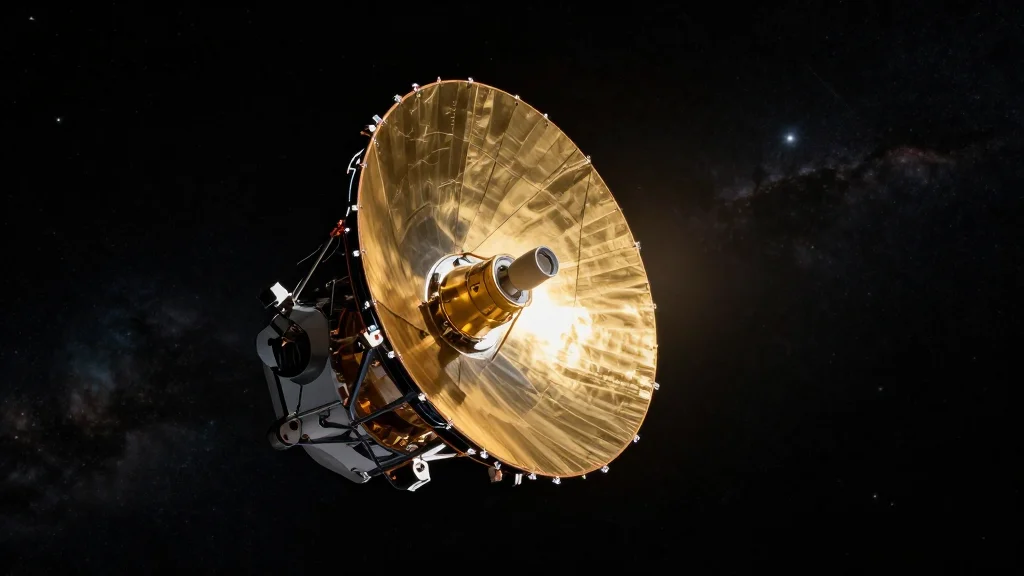
NASA Sets Early September Launch for $4.3 Billion Roman Space Telescope, Ahead of Schedule

Companies Mentioned

NASA
SpaceX
Why It Matters
The Roman Space Telescope will deliver the most detailed map of the universe ever produced, sharpening measurements of dark energy that could force a revision of the standard cosmological model. Its exoplanet census will also fill a critical gap in our understanding of planetary system formation, informing future missions that aim to image Earth‑like worlds. Beyond pure science, Roman’s on‑schedule, under‑budget delivery restores confidence in NASA’s ability to manage flagship projects efficiently. Success could influence congressional funding decisions and set a new benchmark for cost‑controlled, high‑impact space science.
Key Takeaways
- •NASA set an early‑September launch window for the Roman Space Telescope
- •The observatory costs $4.3 billion and is ahead of schedule and under budget
- •Roman’s 2.4‑meter mirror offers a field of view ~100× larger than Hubble’s
- •Mission aims to discover tens of thousands of exoplanets and map billions of galaxies
- •Launch will be on a SpaceX Falcon Heavy from Kennedy Space Center
Pulse Analysis
Roman’s early launch is more than a scheduling win; it signals a shift in how NASA approaches large‑scale science missions. By tightening project management and leveraging commercial launch services, the agency avoided the cost overruns that plagued James Webb and Artemis. This disciplined approach could become the template for future flagship endeavors, especially as the budget environment tightens.
Scientifically, Roman arrives at a pivotal moment. The tension between observations that suggest the universe’s expansion is accelerating faster than predicted and the lack of a compelling theoretical framework for dark energy has driven a decade‑long debate. Roman’s high‑precision measurements of supernovae, baryon acoustic oscillations, and weak lensing will either tighten the constraints on existing models or expose cracks that demand new physics. Either outcome will reshape cosmology curricula and guide the next generation of ground‑based surveys.
On the exoplanet front, Roman’s microlensing survey complements the transit‑focused missions like TESS and the upcoming PLATO. By probing planets farther from their host stars and in more distant regions of the galaxy, Roman will provide a statistical baseline that is essential for assessing the frequency of Earth‑like worlds. This data will be crucial for planning future direct‑imaging missions, such as the Habitable Worlds Observatory, by informing target selection and instrument design. In short, Roman’s early launch not only accelerates the timeline for groundbreaking discoveries but also sets a new operational standard for NASA’s flagship science missions.
NASA Sets Early September Launch for $4.3 Billion Roman Space Telescope, Ahead of Schedule
Comments
Want to join the conversation?
Loading comments...