NASA Shares Psyche Spacecraft's Photos of Mars
Why It Matters
The successful gravity assist validates Psyche’s navigation and imaging systems while keeping the spacecraft on schedule for its 2029 asteroid rendezvous, a mission that could illuminate how planetary cores form. The additional Mars data enriches our understanding of the Red Planet’s surface composition and polar ice.
Key Takeaways
- •Psyche passed 2,800 miles above Mars, closer than Phobos
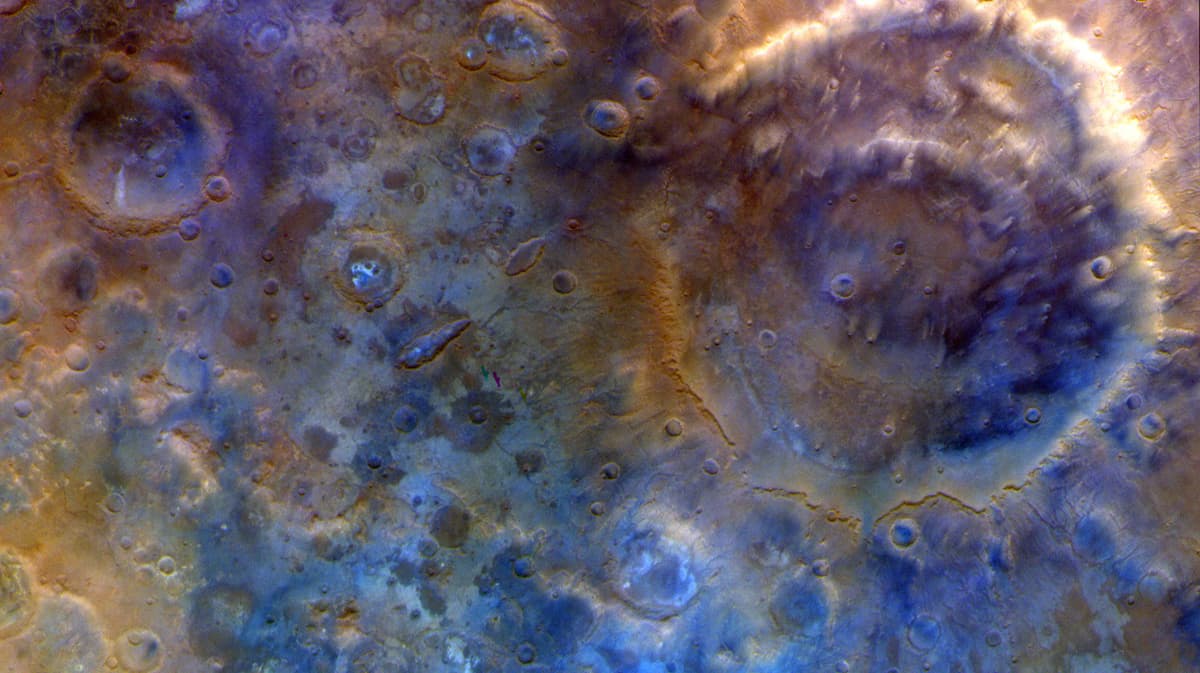
- •Captured color‑enhanced image of 290‑mile Huygens crater
- •High‑resolution photo revealed bright water‑ice at Martian south pole
- •Crescent Mars view showed atmospheric dust reflecting sunlight
- •Gravity assist keeps Psyche on track for 2029 asteroid arrival
Pulse Analysis
The Psyche spacecraft, launched in October 2023, is the first deep‑space mission powered solely by solar‑electric propulsion. Its trajectory includes a carefully planned Mars flyby that provides a gravity boost, shaving months off the six‑year journey to the metallic world of 16 Psyche. By passing within 2,800 miles of the planet, the probe demonstrated precise navigation capabilities that are essential for future missions that rely on low‑thrust propulsion and planetary assists.
During the flyby, Psyche’s onboard cameras captured a suite of images that go beyond a simple navigation check. A color‑enhanced photograph of the Huygens double‑ring crater reveals subtle variations in dust, sand and bedrock, offering clues about Martian surface processes. Meanwhile, a high‑resolution view of the southern polar ice cap highlights the extent of perennial water ice, a key resource for any potential human presence on Mars. The bright crescent seen as the spacecraft approached underscores the scattering effect of the planet’s thin, dusty atmosphere, adding a visual reminder of Mars’ dynamic climate.
The gravity assist not only conserves fuel but also ensures Psyche reaches 16 Psyche on schedule for its 2029 arrival. Studying the largest known metallic asteroid promises insights into the building blocks of planetary cores, potentially reshaping models of Earth’s formation. Success here could pave the way for more ambitious low‑thrust missions to distant targets, reinforcing the role of electric propulsion in the next era of solar system exploration.
NASA shares Psyche spacecraft's photos of Mars
Comments
Want to join the conversation?
Loading comments...