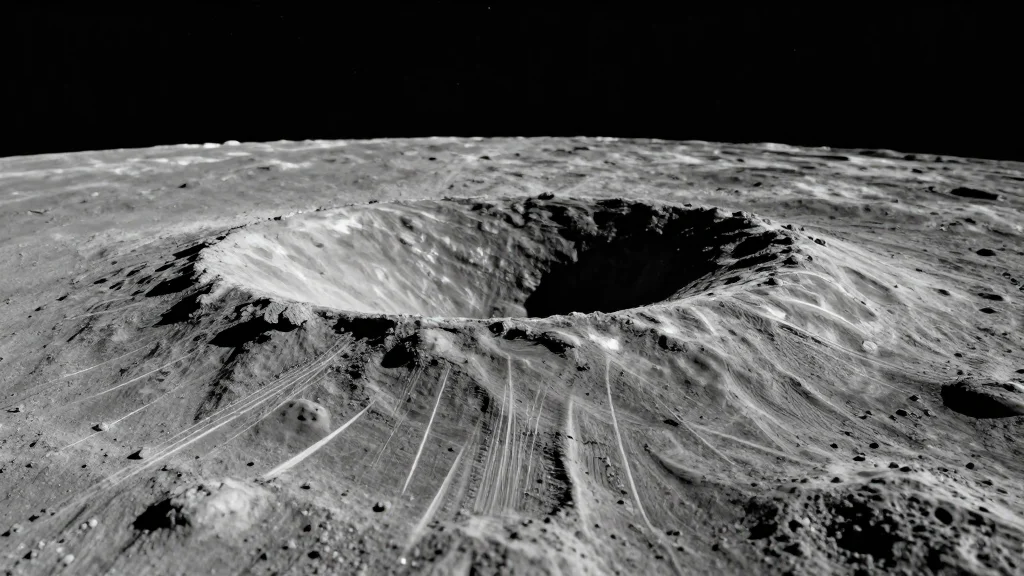
NASA Team Finds 22‑Meter Fresh Crater on Moon, First New Impact Seen in Years

Companies Mentioned

NASA
Why It Matters
The identification of a recent lunar impact provides a concrete benchmark for estimating how often meteoroids strike the Moon, a key variable in assessing the safety of both robotic and crewed missions. Accurate impact‑frequency models help engineers design better shielding and inform the selection of landing zones that minimize debris hazards. Beyond mission safety, the bright ejecta rays serve as a natural experiment for studying space weathering processes. By monitoring how quickly the fresh material darkens, scientists can refine age‑dating techniques for lunar surfaces, improving our understanding of the Moon’s geological history and the broader timeline of Solar System evolution.
Key Takeaways
- •NASA's LROC team discovered a 22‑meter‑wide fresh crater on the Moon.
- •The impact occurred between December 2009 and December 2012, identified via image comparison.
- •Bright ejecta rays make the crater stand out, offering a short‑term laboratory for space‑weathering studies.
- •The find improves impact‑frequency models crucial for spacecraft shielding and landing site safety.
- •Future monitoring will track ray fading and search for additional recent impacts.
Pulse Analysis
The fresh lunar scar arrives at a pivotal moment for lunar exploration. As NASA's Artemis program and a growing cadre of commercial partners race to establish a sustained presence on the Moon, understanding the current meteoroid environment becomes a strategic priority. Historically, impact‑frequency estimates have relied on crater counts of ancient surfaces, extrapolating backward to infer present‑day rates. This new, dated crater injects a rare, ground‑truth data point that can tighten those extrapolations, potentially leading to revised safety margins for habitats and surface assets.
From a scientific perspective, the bright rays provide a living case study of space weathering—a process that has long been inferred from the muted appearance of older craters. By quantifying the rate at which the rays darken, researchers can calibrate the spectral aging models that underpin lunar chronology. This, in turn, refines the timeline of volcanic activity, basin formation, and even the chronology of Earth‑Moon system dynamics.
Looking forward, the LROC team's methodology—systematic, high‑resolution change detection—could be scaled up with machine‑learning pipelines to flag new impacts in near‑real time. Such capability would not only enhance scientific returns but also serve as an early‑warning system for assets operating in lunar orbit or on the surface. In an era where lunar infrastructure is transitioning from experimental to operational, the ability to anticipate and mitigate impact hazards could become as essential as weather forecasting is for Earth‑based aviation.
NASA Team Finds 22‑Meter Fresh Crater on Moon, First New Impact Seen in Years
Comments
Want to join the conversation?
Loading comments...