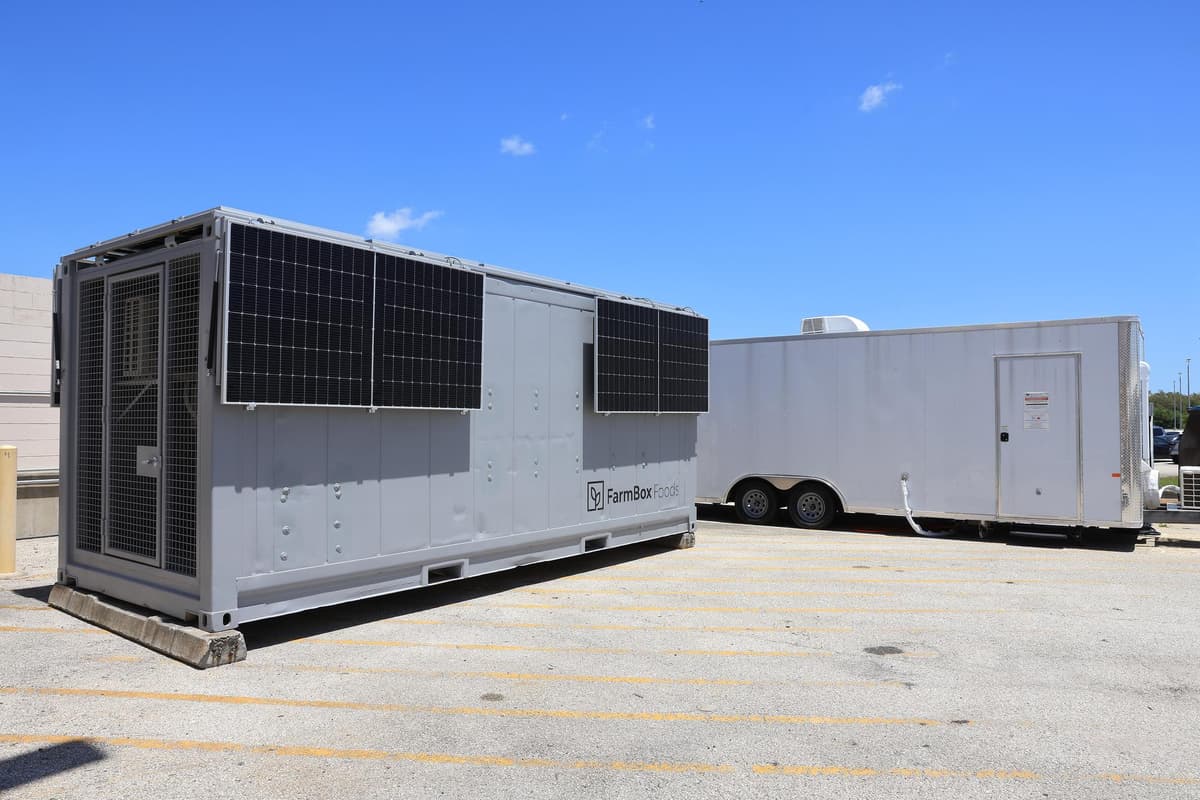
NASA Testing Wastewater Treatment Facility for Future Moon Base
Why It Matters
Closed‑loop water and nutrient recycling are essential for sustainable long‑duration off‑world missions, reducing reliance on costly Earth resupply. Demonstrating the system in a realistic habitat accelerates its readiness for lunar and Martian colonies.
Key Takeaways
- •Facility separates four waste streams for targeted bioreactor treatment
- •Vertical garden uses reclaimed nutrients to grow hydroponic crops
- •UND analog tests evaluate crew training, reliability, and system resilience
- •Success could enable circular economy for water, food, and 3D‑printing materials
Pulse Analysis
NASA’s Divergent Deployable Wastewater Treatment Facility represents a shift from traditional, bulk‑water systems to a compact, modular solution designed for the harsh constraints of lunar and Martian outposts. By housing three distinct bioreactors—anaerobic phototrophic, suspended aerobic, and membrane‑aerated—inside a transportable trailer, the system can process urine, graywater, and solid waste separately, maximizing nutrient recovery and minimizing energy use. This divergent approach mirrors the limited crew sizes envisioned for Artemis missions, where each kilogram of consumable must be justified.
The University of North Dakota’s Integrated Lunar/Martian Analog Habitat provides a near‑realistic testbed, linking the wastewater unit to a bathroom interface that mimics crew operations. Researchers will monitor water‑polishing efficiency, nutrient composition for the vertical garden, and autonomous control software under simulated partial‑gravity conditions. Findings will inform crew training protocols, hardware reliability, and the fidelity of waste simulants versus actual metabolic output, all critical data points for scaling the technology to year‑long isolation missions at Johnson Space Center.
Beyond life‑support, the reclaimed nutrient‑rich water opens pathways for in‑situ manufacturing. NASA is exploring how these streams can feed microbes that produce biopolymers like polylactic acid, a potential binder for 3D‑printing lunar regolith into structural components. By closing the loop on water, food, and material production, the facility underpins a circular economy that could dramatically cut launch mass and cost, making sustained human presence on the Moon—and eventually Mars—more economically viable.
NASA Testing Wastewater Treatment Facility for Future Moon Base
Comments
Want to join the conversation?
Loading comments...