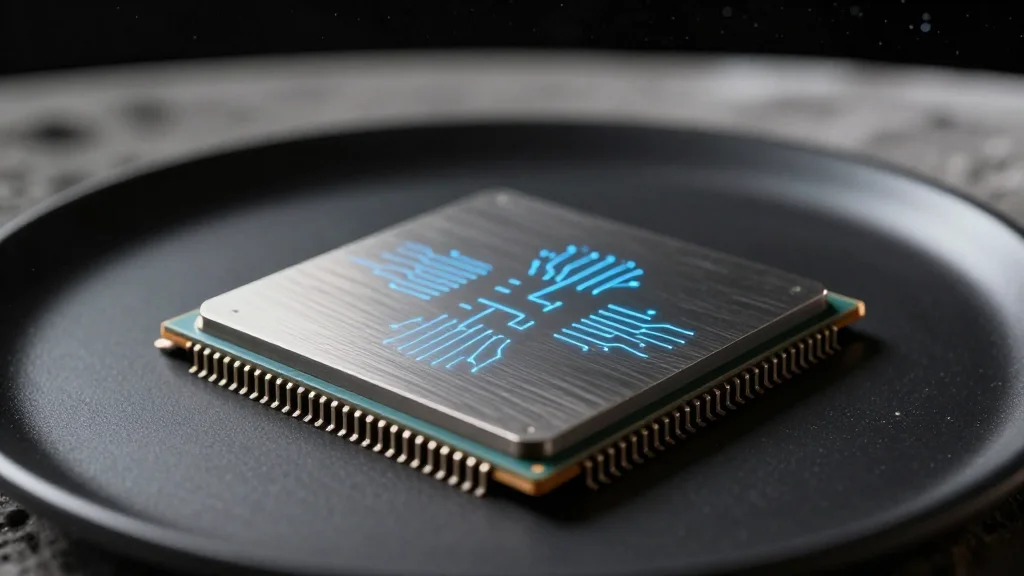
NASA Unveils Hand‑Sized Processor That Boosts Spacecraft Computing 100‑Fold

Companies Mentioned

Why It Matters
The processor represents a paradigm shift in how spacecraft handle computation, moving from limited, ground‑dependent processing to on‑board AI that can react instantly to environmental cues. This capability not only shortens mission timelines but also expands the scientific return of each flight, allowing instruments to filter and prioritize data before transmission. Moreover, the commercial partnership with Microchip means the technology could spill over into critical Earth‑based sectors, enhancing the resilience of aviation and automotive systems that operate under harsh conditions. For the broader science community, the ability to run complex models and analyses directly on a probe opens new research avenues, from real‑time geological assessments on Mars to autonomous navigation through Europa’s icy crust. The chip’s radiation‑hard design also reduces the need for massive shielding, potentially lowering launch mass and cost, thereby accelerating the cadence of deep‑space exploration.
Key Takeaways
- •NASA’s new processor delivers ~100× the computing power of current spaceflight computers.
- •Hand‑sized system‑on‑a‑chip integrates CPUs, memory, networking and I/O in a radiation‑hard package.
- •Developed under NASA’s High Performance Spaceflight Computing project with Microchip Technology.
- •Designed to enable AI‑driven autonomy for lunar, Martian and deep‑space missions.
- •Certification expected by late 2026; potential use on Artemis, Europa Clipper and future Mars rovers.
Pulse Analysis
NASA’s hand‑sized processor is more than a hardware upgrade; it is a strategic enabler for the agency’s long‑term vision of autonomous exploration. Historically, spacecraft have relied on modest processors that could only execute pre‑programmed sequences, with any deviation requiring ground intervention. The 100‑fold performance jump narrows the gap between terrestrial AI capabilities and what can be run in the vacuum of space, effectively turning each probe into a mini‑data center. This shift mirrors the broader industry trend where edge computing is becoming essential for latency‑sensitive applications, from autonomous vehicles to remote industrial IoT.
The partnership with Microchip is also noteworthy. By leveraging a commercial partner, NASA reduces development risk and accelerates technology transfer. Microchip’s intent to adapt the chip for aviation and automotive markets suggests a virtuous cycle: improvements driven by space’s extreme requirements will filter back into Earth‑bound systems, enhancing safety and reliability. Competitors such as SpaceX and Blue Origin, which have historically built their own flight computers, may now feel pressure to match or exceed NASA’s performance benchmarks, potentially spurring a new wave of competition in radiation‑hard computing.
Looking ahead, the processor’s success hinges on certification and integration into flight hardware. If NASA can field the chip on Artemis or Europa missions within the next two years, it will set a new baseline for mission architecture, encouraging designers to embed more sophisticated AI, machine‑learning, and real‑time decision‑making capabilities. The ripple effect could be profound: faster science, reduced reliance on deep‑space communication links, and lower mission costs due to lighter shielding requirements. In short, this breakthrough could redefine the limits of what is possible in autonomous deep‑space exploration.
NASA Unveils Hand‑Sized Processor That Boosts Spacecraft Computing 100‑Fold
Comments
Want to join the conversation?
Loading comments...