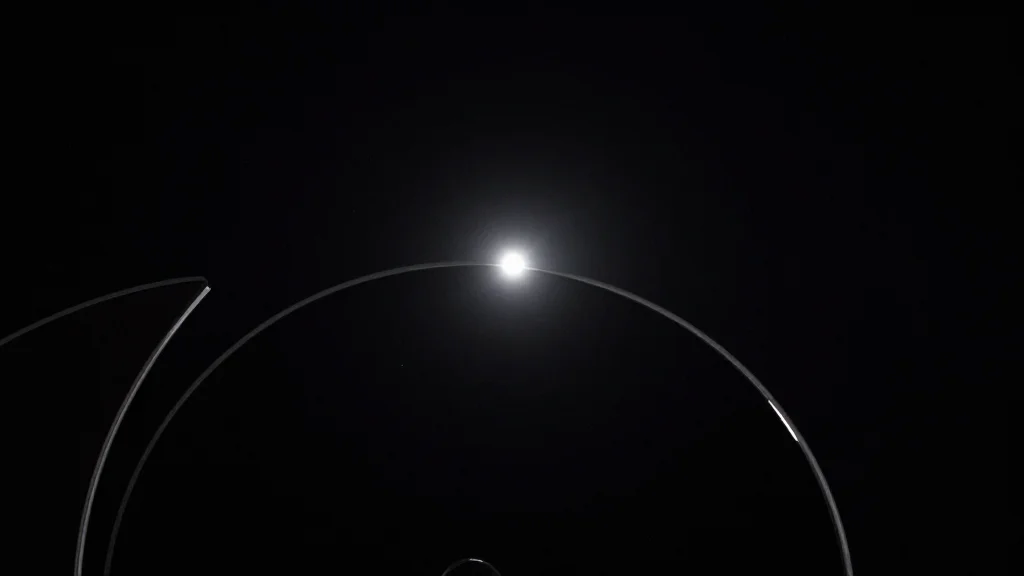
NASA Unveils Ultra-Black Coating to Boost Starshade Exoplanet Imaging

Why It Matters
The ability to directly image Earth‑like exoplanets is a cornerstone of astrobiology. By suppressing stray sunlight to unprecedented levels, NASA’s ultra‑black coating removes a major source of optical noise, making it feasible to detect faint spectral features that indicate the presence of water, oxygen, or other biosignatures. This technical advance not only accelerates the timeline for answering whether life exists elsewhere but also lowers the engineering barriers that have limited starshade deployment to concept studies. Beyond exoplanet science, the coating’s ultra‑thin, highly absorptive properties could find applications in other space instruments that require stray‑light control, such as coronagraphs, solar observatories, and even Earth‑observation platforms where glare reduction improves image quality. The cross‑disciplinary potential underscores the broader impact of materials innovation on NASA’s scientific portfolio.
Key Takeaways
- •NASA and ZeCoat have created an ultra‑black coating only a few hundred nanometers thick.
- •The coating reduces reflected starlight to less than 0.001 across the visible spectrum.
- •Starshade shadows could block starlight to less than one part per billion, enabling direct imaging of Earth‑size exoplanets.
- •Prototype integration is planned for a flight test within the next two years.
- •Successful deployment could lower launch mass and cost for future starshade missions.
Pulse Analysis
NASA’s ultra‑black coating represents a pivotal shift in the engineering of starshades, moving the technology from theoretical promise to practical readiness. Historically, the starshade concept has been hampered by the trade‑off between edge sharpness and stray‑light suppression; thicker edges improve structural integrity but increase scattering, while razor‑thin edges are fragile and still scatter light. By delivering a coating that matches the edge thickness while delivering near‑perfect absorption, ZeCoat effectively decouples these constraints, allowing designers to prioritize mission architecture over material compromises.
The timing aligns with renewed congressional and private sector interest in flagship exoplanet missions. With the James Webb Space Telescope already delivering unprecedented infrared observations, the next logical step is to obtain reflected‑light spectra of terrestrial planets. The ultra‑black coating could be the missing piece that makes a starshade‑telescope pair competitive with large ground‑based coronagraphs, especially given the lower cost and risk profile of a separate starshade platform.
Looking forward, the coating’s durability will be the decisive factor. Spacecraft endure micrometeoroid bombardment, thermal cycling, and radiation that can degrade surface properties. If NASA’s upcoming durability tests confirm long‑term performance, the coating could become a standard for any mission requiring extreme light suppression, from future lunar observatories to deep‑space probes studying faint astrophysical phenomena. In that scenario, the technology not only accelerates the search for life but also establishes a new materials benchmark for the broader aerospace community.
NASA Unveils Ultra-Black Coating to Boost Starshade Exoplanet Imaging
Comments
Want to join the conversation?
Loading comments...