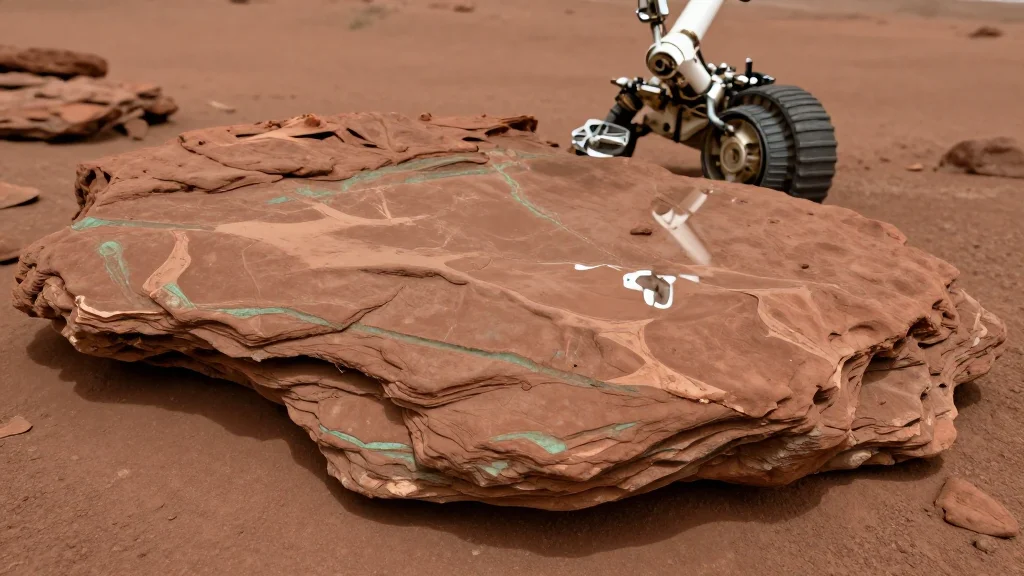
NASA Uses Mineralogical Marker to Understand Ancient Martian Climate
Why It Matters
The presence of ancient, water‑altered clays confirms that early Mars could have supported habitable environments, reshaping our understanding of planetary evolution. This insight directly influences the scientific priorities of upcoming sample‑return missions and the search for past life.
Key Takeaways
- •Curiosity detected phyllosilicate‑rich layers in Gale Crater
- •Layers date to ~3.5 billion years ago, indicating ancient wet climate
- •Mineral marker suggests sustained surface water and neutral pH conditions
- •Findings refine models of Mars atmospheric loss over time
- •Data guides landing site selection for upcoming Perseverance and sample‑return missions
Pulse Analysis
The latest Mars discovery hinges on a mineralogical fingerprint that scientists have traced to ancient clay deposits in Gale Crater. Using Curiosity’s CheMin X‑ray diffraction instrument, researchers confirmed the presence of phyllosilicates—minerals that form only in the presence of liquid water. Complementary orbital data from the Mars Reconnaissance Orbiter’s CRISM sensor helped map the extent of these deposits, allowing a precise age estimate of roughly 3.5 billion years. This multi‑instrument approach provides a robust proxy for reconstructing the planet’s early climate.
These clay‑rich layers rewrite the narrative of Mars’ early environment. Phyllosilicates form under neutral‑pH, relatively stable water conditions, suggesting that ancient Mars was not just intermittently wet but sustained a temperate climate capable of supporting life‑friendly chemistry. Compared with earlier findings of sulfates—indicative of acidic, evaporative settings—the new evidence points to a prolonged habitable window. This nuanced climate timeline aligns with models of a thicker CO₂ atmosphere that gradually thinned as solar wind stripped away the planet’s magnetic shield.
Looking ahead, the mineral marker will shape the roadmap for NASA’s upcoming missions. Sample‑return strategies now prioritize sites where phyllosilicates are abundant, maximizing the chances of retrieving biosignature‑preserving material. Moreover, the data feed into global climate simulations that guide the selection of future landing zones for crewed exploration. By anchoring Mars’ ancient climate to tangible mineral evidence, NASA strengthens the scientific case for the Red Planet as a once‑habitable world, bolstering public and stakeholder support for continued investment.
NASA Uses Mineralogical Marker to Understand Ancient Martian Climate
Comments
Want to join the conversation?
Loading comments...