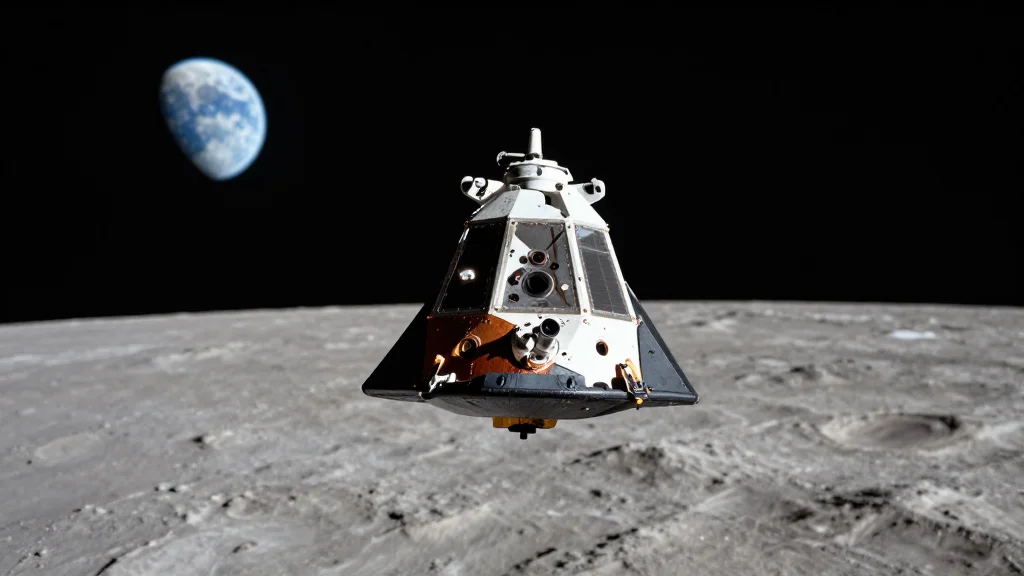
NASA’s Artemis II Astronauts Break Apollo’s Distance Record
Why It Matters
Breaking the far‑distance record validates NASA’s lunar‑loop architecture and paves the way for sustained human presence on the Moon and eventual crewed missions to Mars.
Key Takeaways
- •Artemis II reached 248,655 miles from Earth.
- •Surpasses Apollo 13's 1970 record.
- •Moon's orbital position influences mission distance.
- •Crew flies 4,000 miles above lunar surface.
- •Record highlights Artemis program's deep‑space capabilities.
Pulse Analysis
The Artemis II flight marks a watershed moment in human spaceflight, not merely for the raw numbers but for what they represent. By surpassing the Apollo 13 distance—originally set under duress—NASA demonstrates that a purpose‑built Orion capsule and the SLS launch system can reliably carry astronauts on a deep‑space trajectory. This milestone draws a clear line between the Apollo era’s one‑off lunar trips and a new, repeatable architecture designed for longer stays, scientific research, and commercial partnerships.
Two orbital mechanics factors dictated the record distance: the Moon’s position in its elliptical orbit and the spacecraft’s closest approach altitude. When the Moon is near apogee (about 405,500 km from Earth), a lunar‑looping mission naturally stretches farther from home. Artemis II’s flight path kept the Orion capsule roughly 6,500 km above the lunar surface, a deliberate choice to balance fuel constraints, radiation exposure, and mission objectives. Understanding these variables is crucial for planning Artemis III’s landing and future missions that will require precise navigation, high‑energy transfers, and robust life‑support systems.
Beyond the technical triumph, the record carries strategic weight. It signals to international partners and commercial investors that the United States is re‑establishing a sustainable presence beyond low‑Earth orbit. The achievement bolsters confidence in upcoming lunar surface operations, the construction of the Gateway outpost, and the eventual crewed voyages to Mars. As Artemis II returns, the data gathered will refine trajectory models, improve astronaut safety protocols, and shape policy discussions about deep‑space exploration funding and collaboration.
NASA’s Artemis II astronauts break Apollo’s distance record
Comments
Want to join the conversation?
Loading comments...