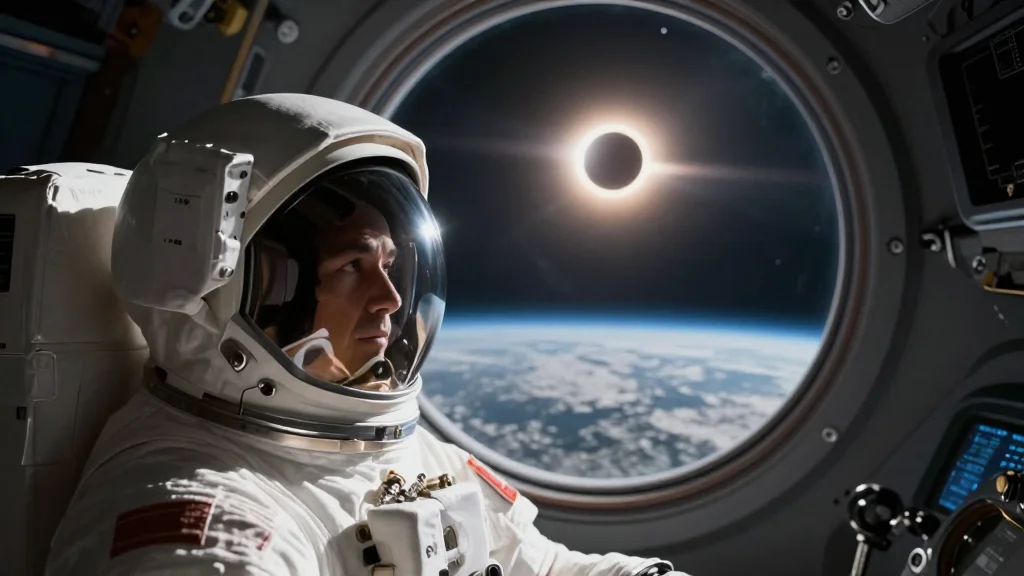
NASA’s Artemis II Astronauts Celebrate Epic Lunar Flyby with Stunning New Images
Why It Matters
The flyby validates Orion’s deep‑space capabilities and reignites public interest, while the budget debate could shape the pace of America’s return to the Moon.
Key Takeaways
- •Record‑breaking distance: 4,067 miles above lunar surface.
- •First Earthrise seen by astronauts since 1972.
- •Captured total solar eclipse and micrometeoroid flashes.
- •President Trump’s call highlighted looming NASA budget cuts.
- •Data will inform Artemis III landing site selection.
Pulse Analysis
Artemis II marks the first crewed deep‑space flight of NASA’s Orion capsule since the Apollo era, looping around the Moon on a free‑return trajectory that leverages lunar gravity to steer the spacecraft home. The four‑person crew—Reid Wiseman, Victor Glover, Christina Koch and Canadian astronaut Jeremy Hansen—spent six days in lunar proximity, reaching a peak altitude of roughly 4,000 miles above the surface. This maneuver not only demonstrated the vehicle’s navigation and life‑support systems in a high‑radiation environment, but also set a new record for human distance from Earth, surpassing Apollo 13 by a narrow margin.
The crew’s scientific payload focused on high‑resolution imaging of the Moon’s far side, a region that has never been viewed directly by humans. Using Orion’s panoramic windows and handheld cameras, they documented ridges, bright craters and fresh lava flows, providing texture data that will refine geological maps used for Artemis III landing site selection. In addition, the mission captured a full Earthrise and a one‑hour total solar eclipse, during which micrometeoroid impacts lit the lunar surface with brief flashes. These observations enrich our understanding of lunar albedo variations and the dynamics of Earth‑shine.
The flight unfolded against a contentious policy backdrop, as President Donald Trump’s administration proposed a 23 percent cut to NASA’s budget and a 47 percent reduction to its science portfolio. The crew’s brief call with the president underscored the political stakes surrounding America’s lunar ambitions. Nonetheless, the technical successes and scientific returns of Artemis II provide a compelling case for sustained investment, signaling to commercial partners and international rivals that the United States remains committed to a permanent, sustainable presence on the Moon.
NASA’s Artemis II astronauts celebrate epic lunar flyby with stunning new images
Comments
Want to join the conversation?
Loading comments...