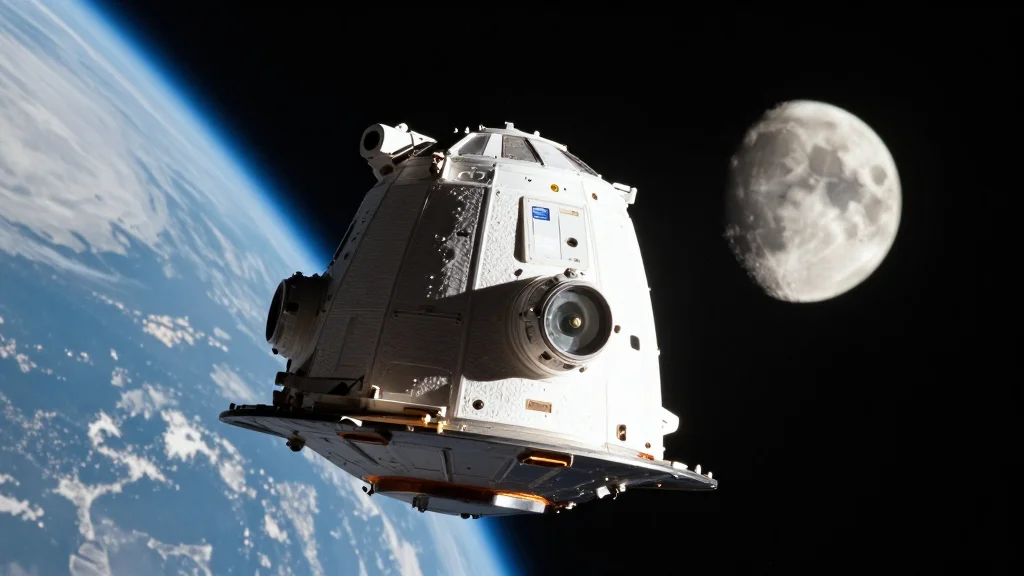
NASA’s Artemis II Moon Mission Reaches Greatest Distance From Earth
Why It Matters
The distance record validates Orion’s capability for longer, deeper missions, reinforcing confidence in NASA’s Artemis roadmap and commercial lunar ambitions. It also demonstrates autonomous crew operations during communication gaps, a prerequisite for Mars travel.
Key Takeaways
- •Artemis II reached 252,756 miles from Earth
- •Crew passed Apollo 13 distance record by 4,101 miles
- •40‑minute communications blackout occurred at lunar closest approach
- •Mission demonstrates Orion’s deep‑space capabilities
- •Data collection continues for two hours after blackout
Pulse Analysis
The Artemis II flight marks the first crewed deep‑space test since the Apollo era, pushing humanity to a new horizon of 252,756 miles (406,771 km) from Earth. By eclipsing the Apollo 13 record by more than 4,000 miles, NASA demonstrates that the Orion spacecraft and its service module can sustain longer, more distant missions than ever before. This milestone validates the engineering upgrades introduced after the Orion Development Flight Test and reassures stakeholders that the hardware can survive the thermal and radiation environment of a lunar flyby. The achievement also fuels public enthusiasm for returning humans to the Moon.
During the mission’s 40‑minute loss‑of‑signal window, the crew operated autonomously while the Moon blocked all radio contact, a scenario that mirrors the communication gaps expected on future Mars trajectories. Orion’s onboard navigation, life‑support, and fault‑management systems performed without ground intervention, providing real‑time data on system resilience. Simultaneously, the astronauts gathered high‑resolution imagery and radiation measurements from a distance of 6,545 km above the lunar surface, enriching scientific models of the Moon’s exosphere. These observations will inform the design of habitats and surface operations for Artemis III and beyond.
Looking ahead, Artemis II’s success accelerates NASA’s broader lunar architecture, which includes the Gateway space station, commercial lander contracts, and the planned 2025 crewed landing on the Moon’s south pole. The record‑breaking distance reassures investors and international partners that the United States can deliver reliable deep‑space transport, opening opportunities for private payloads, lunar resource scouting, and eventual crewed missions to Mars. As the program progresses, the data harvested from this flyby will shape safety protocols, propulsion choices, and mission‑planning tools, cementing Artemis as a cornerstone of the next space economy.
NASA’s Artemis II moon mission reaches greatest distance from Earth
Comments
Want to join the conversation?
Loading comments...