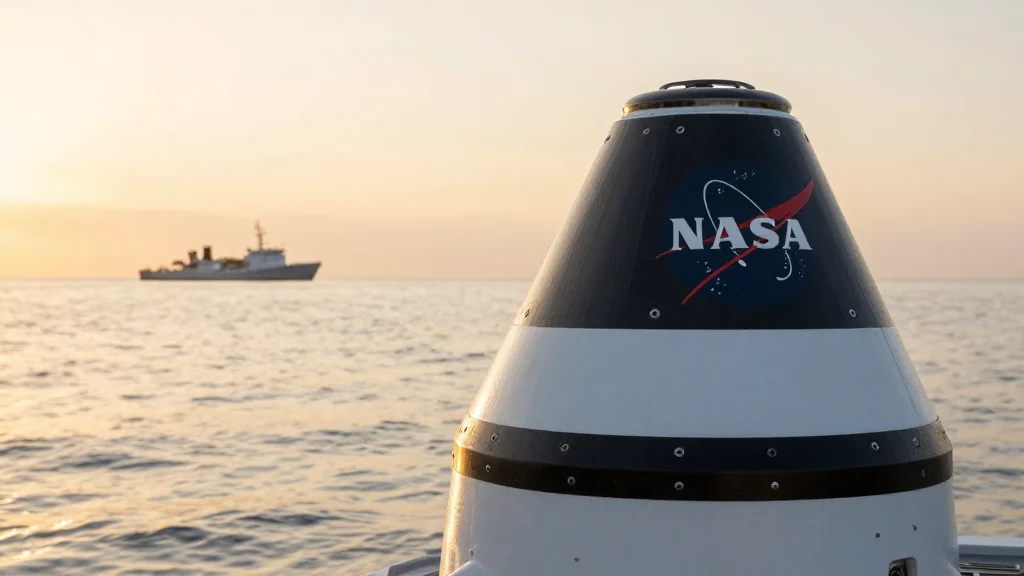
NASA's Artemis II Orion Capsule Returns to Kennedy Space Center After First Crewed Lunar Flyby

Why It Matters
Artemis II’s safe return validates Orion’s ability to protect astronauts during high‑speed re‑entry from lunar distances, a prerequisite for any future crewed missions beyond low‑Earth orbit. The data gathered will shape the engineering of Artemis III’s docking operations, a cornerstone of NASA’s plan to establish a permanent lunar gateway and eventually a sustainable presence on the Moon. Moreover, the mission re‑energizes international partnerships, exemplified by Canada’s participation, and signals to policymakers that the Artemis program remains on track despite earlier funding debates. The mission also provides a benchmark for commercial and international competitors eyeing deep‑space crewed flights. Demonstrating reliable heat‑shield performance and life‑support systems strengthens confidence in the United States’ ability to lead future lunar and Martian endeavors, influencing both public perception and private investment in space technologies.
Key Takeaways
- •Orion capsule Integrity returned to Kennedy Space Center on April 28, 2026 after a 10‑day lunar flyby.
- •Crew: Reid Wiseman, Victor Glover, Christina Koch, and Jeremy Hansen completed the first crewed lunar mission since Apollo.
- •NASA will conduct a detailed heat‑shield analysis to inform Artemis III’s 2027 docking demo.
- •Post‑flight processing includes recycling electronic boxes and cataloguing research equipment.
- •Mission success bolsters support for the Artemis program amid budget and schedule scrutiny.
Pulse Analysis
NASA’s Artemis II marks a turning point not because it was the first crewed lunar flight in decades, but because it proved that the Orion spacecraft can survive the thermal and structural stresses of a deep‑space re‑entry. The heat‑shield data will likely drive a redesign of the ablative material for Artemis III, where multiple dockings are expected, reducing the need for extensive refurbishment between flights. Historically, each successful re‑entry has spurred confidence in subsequent missions; the Apollo program’s iterative improvements to heat‑shield technology enabled longer lunar stays and eventually the Skylab and Shuttle programs.
From a market perspective, Artemis II’s return may accelerate commercial partnerships. Companies such as SpaceX and Blue Origin have been lobbying for a share of lunar logistics; a validated Orion platform could serve as a benchmark for private crew vehicles seeking certification for deep‑space missions. Additionally, the involvement of a Canadian astronaut underscores the growing multinational nature of lunar exploration, potentially opening procurement opportunities for Canadian aerospace firms.
Looking forward, the key risk lies in translating Orion’s performance into a reliable docking system for Artemis III. Docking in lunar orbit introduces new navigation challenges and requires flawless autonomous control. If NASA can leverage the Artemis II data to mitigate these risks, it will set a precedent for future crewed missions to Mars, where similar docking and refueling operations will be essential. Failure, however, could reignite budgetary concerns and delay the broader lunar architecture. The next few months of testing and review will therefore be critical in determining whether Artemis III proceeds on schedule and whether the Artemis program can maintain its momentum.
NASA's Artemis II Orion Capsule Returns to Kennedy Space Center After First Crewed Lunar Flyby
Comments
Want to join the conversation?
Loading comments...