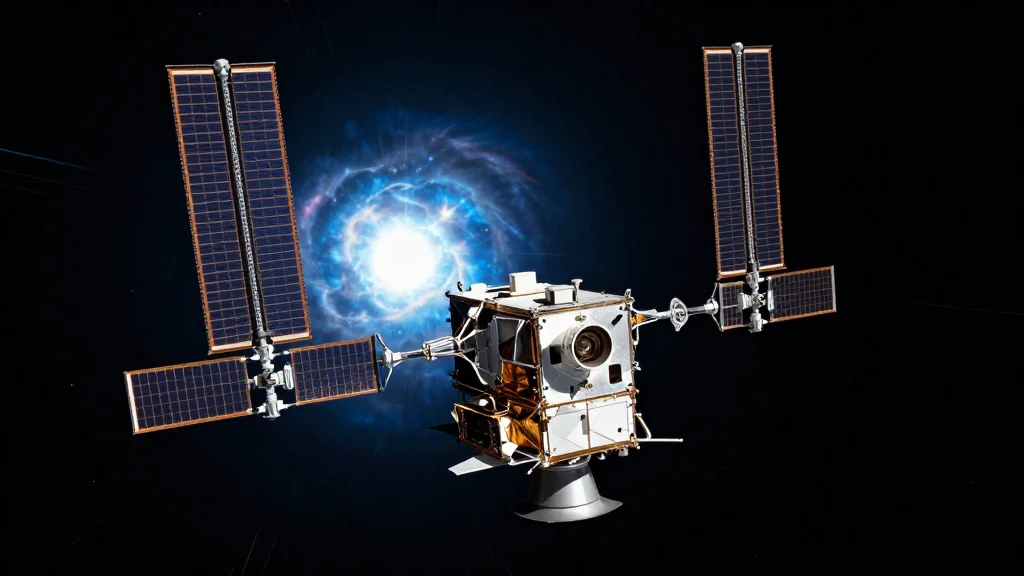
NASA’s Fermi Glimpses Power Source of Supercharged Supernovae
Why It Matters
Confirming magnetars as the power source reshapes our understanding of stellar death and informs models of cosmic‑ray production, influencing future space‑based observatories and fundamental physics research.
Key Takeaways
- •Fermi detected gamma rays from superluminous supernova SN2023xyz.
- •High-energy emission persisted over 30 days post-explosion.
- •Findings support magnetar spin-down as power source.
- •Data refine estimates of magnetar magnetic field strength.
- •Results guide design of next-gen gamma-ray observatories.
Pulse Analysis
The Fermi Gamma‑ray Space Telescope’s latest detection marks a watershed moment for high‑energy astronomy. By capturing gamma‑ray photons from a superluminous supernova (SLSN) weeks after its optical outburst, Fermi has supplied the missing observational evidence that a magnetar—a newborn neutron star with an ultra‑strong magnetic field—can sustain the extraordinary luminosity of these events. The prolonged high‑energy emission aligns with spin‑down models, allowing researchers to back‑calculate the magnetar’s initial spin period and magnetic field, parameters that were previously speculative.
Beyond confirming the magnetar engine, the discovery has ripple effects across multiple astrophysical domains. Superluminous supernovae are key contributors to the chemical enrichment of the early universe and potential sources of high‑energy cosmic rays. Accurate measurements of their power sources improve simulations of galaxy evolution and help refine the role of massive star deaths in seeding interstellar media with heavy elements. Moreover, the data provide a natural laboratory for testing extreme physics, such as quantum electrodynamics in ultra‑strong magnetic fields, offering insights that complement ground‑based particle experiments.
Looking ahead, the findings will shape the design priorities of upcoming gamma‑ray missions like the All‑Sky Medium Energy Gamma‑ray Observatory (AMEGO) and the Cherenkov Telescope Array. Enhanced sensitivity and broader energy coverage will enable systematic surveys of SLSNe, building a statistical sample to probe variations in magnetar properties. For the broader scientific community, the result underscores the value of multi‑wavelength coordination, encouraging tighter collaboration between optical transient surveys and space‑based high‑energy observatories to capture the full lifecycle of cosmic explosions.
NASA’s Fermi Glimpses Power Source of Supercharged Supernovae
Comments
Want to join the conversation?
Loading comments...