NASA’s Lucy Mission Reveals an Asteroid’s Hidden History
Why It Matters
Understanding Donaldjohanson’s age and evolution demonstrates Lucy’s ability to extract high‑resolution geological data from brief encounters, a prerequisite for deciphering the primordial Trojans and refining models of solar‑system formation.
Key Takeaways
- •Lucy flew by asteroid Donaldjohanson in April 2025.
- •Study shows asteroid is ~155 million‑year‑old Erigone family fragment.
- •Crater counts reveal surface aging and recent landslide activity.
- •Water‑altered minerals indicate parent body experienced early aqueous alteration.
- •Findings validate Lucy’s instruments for upcoming Trojan asteroid observations.
Pulse Analysis
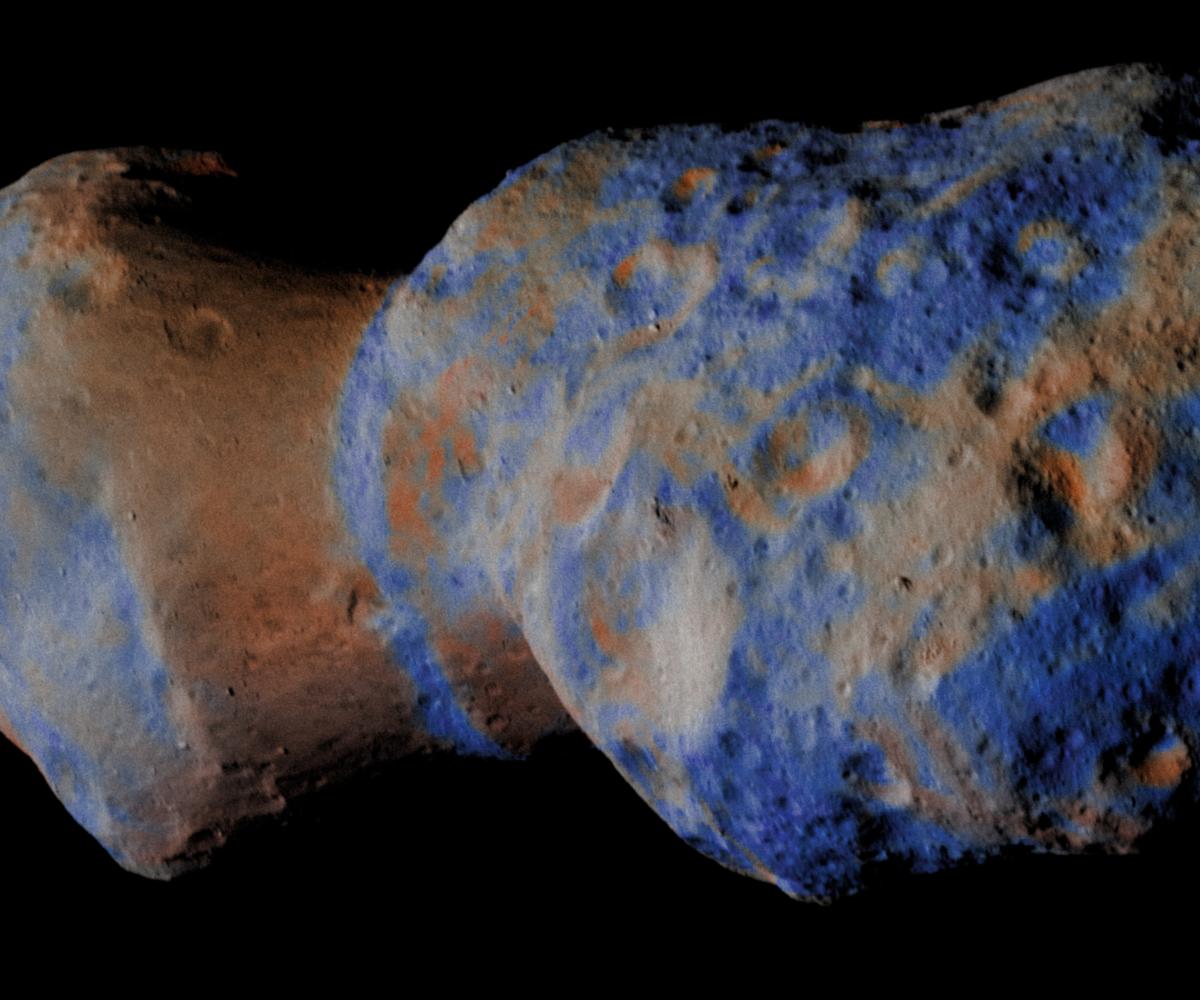
NASA’s Lucy spacecraft, launched in 2021, is on a six‑year cruise to Jupiter’s Trojan asteroid clouds, the first mission designed to sample these ancient bodies. While en route, Lucy has taken advantage of “opportunity” flybys of main‑belt asteroids, most recently the peanut‑shaped Donaldjohanson in April 2025. The close‑up observations, captured by Lucy’s high‑resolution cameras and spectrometers, demonstrate the probe’s ability to acquire detailed compositional and morphological data during brief encounters. This capability is crucial because the Trojans lie over 600 million miles away, making each flyby a rare chance to test instruments before the primary science phase begins.
Analysis of Donaldjohanson revealed a carbon‑rich surface consistent with the Erigone family, a collisional fragment group formed about 150 million years ago. By cataloguing craters as small as 0.5 km, researchers estimated the asteroid’s surface age at roughly 155 million years, confirming its status as a relatively fresh “anchor point” for studying post‑formation processes. The detection of water‑altered minerals indicates that the parent body experienced aqueous alteration before the catastrophic impact that created the family. Moreover, the asteroid’s elongated shape and a crater‑free neck suggest that solar‑induced torques slowed its spin, triggering landslides that erased smaller impacts—a dynamic rarely observed on such small bodies.
These findings provide a proof‑of‑concept for Lucy’s upcoming Trojan campaign, where the spacecraft will encounter larger, more distant targets like Eurybates and its moon Queta starting in 2027. Demonstrating that Lucy can extract age, composition, and surface‑evolution data from a brief flyby bolsters confidence that the mission will unravel the Trojans’ primordial secrets, shedding light on the early solar system’s migration history and the delivery of water and organics to the inner planets. For the broader space industry, Lucy’s success underscores the value of multi‑target missions that combine deep‑space exploration with opportunistic science, informing future probe designs and commercial asteroid‑resource ventures.
NASA’s Lucy mission reveals an asteroid’s hidden history
Comments
Want to join the conversation?
Loading comments...