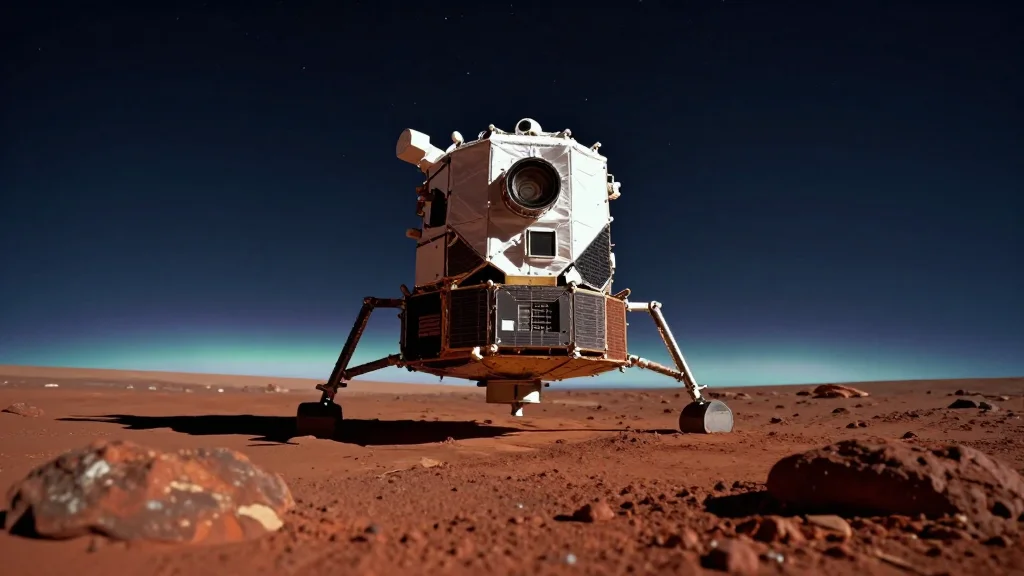
NASA's MAVEN Makes First Discovery of Atmospheric Effect at Mars
Why It Matters
The discovery sharpens our understanding of how solar activity strips planetary atmospheres, informing both Mars’ climate history and the design of future crewed missions that must contend with space‑weather hazards.
Key Takeaways
- •MAVEN recorded a 15‑fold rise in ion escape during solar storm
- •Measured loss reached roughly 100 kg per second of atmospheric gas
- •Findings validate long‑standing models of Mars’ gradual atmospheric thinning
- •Data improves predictions for spacecraft safety during solar events
- •Insight aids assessment of Mars’ past habitability potential
Pulse Analysis
MAVEN, NASA’s flagship mission orbiting Mars since 2014, carries a suite of instruments designed to monitor the planet’s upper atmosphere and its interaction with the solar wind. In late April, the spacecraft’s Solar Wind Ion Analyzer and Supra‑Thermal and Thermal Ion Composition sensor captured an unprecedented surge in ion outflow as a coronal mass ejection slammed into Mars’ magnetosphere‑free environment. The event produced a measurable loss of about 100 kilograms of carbon dioxide‑derived ions per second, a rate far exceeding the typical background escape of a few kilograms per second.
Scientists have long theorized that episodic solar storms play a disproportionate role in Mars’ atmospheric depletion, but direct evidence remained elusive. The new measurements provide the missing link, confirming that high‑energy solar particles can dramatically amplify ion escape mechanisms. By quantifying the loss during a single storm, researchers can now refine models that estimate the total atmospheric mass lost over the planet’s 4.5‑billion‑year history, shedding light on why Mars transitioned from a warm, wet world to the cold desert we see today.
The implications extend beyond academic curiosity. Accurate forecasts of ion escape are critical for protecting orbiters, landers, and eventual human habitats from radiation spikes and surface erosion. Moreover, understanding Mars’ atmospheric evolution offers a comparative framework for Earth’s own climate resilience against solar variability. As NASA and private partners plan the next wave of Mars exploration, MAVEN’s findings will guide spacecraft shielding requirements and inform the selection of landing sites less vulnerable to rapid atmospheric loss.
NASA's MAVEN Makes First Discovery of Atmospheric Effect at Mars
Comments
Want to join the conversation?
Loading comments...