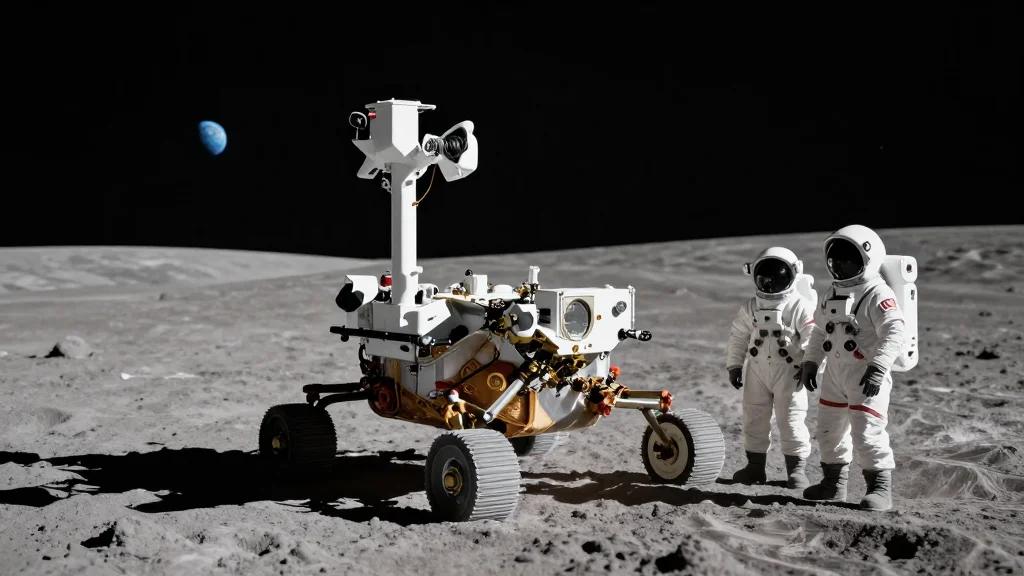
NASA’s Moon Base Plan Adds Two Rovers for Its Astronauts
Companies Mentioned

NASA
Lunar Outpost
Why It Matters
The rovers will extend crew mobility and scientific reach on the Moon, accelerating NASA’s Artemis outpost timeline. Their availability could set a new standard for commercial lunar transportation.
Key Takeaways
- •NASA awards $440 M total for two lunar rovers
- •Each LTV weighs ~1 ton and carries two astronauts
- •Rovers can climb 20‑degree slopes and operate autonomously
- •Vehicles aim for Artemis IV landing in 2028
Pulse Analysis
NASA’s Artemis program has moved from a vision of distant lunar habitats to a concrete, near‑term roadmap, and the latest rover contracts are a keystone of that shift. By funding Lunar Outpost of Colorado and Venturi Astrolab of California with roughly $220 million each, the agency is securing modern lunar terrain vehicles that echo the iconic Apollo buggies while adding 21st‑century technology. The vehicles’ one‑ton mass, two‑astronaut capacity, and ability to tackle 20‑degree inclines address the practical challenges of traversing the Moon’s rugged south‑pole region, where future habitats and resource extraction sites are planned.
Beyond raw performance, the new LTVs embody a hybrid operational model: they can be driven manually by crew, piloted remotely from Earth, or run autonomously when no astronauts are aboard. This flexibility reduces the need for constant human presence on the surface and opens the door for extended scientific campaigns, such as sample‑return excursions and in‑situ resource surveys. Compared with the earlier design brief that called for a 9.3 mph top speed and a robotic arm, the streamlined specifications cut complexity and cost, aiming for a 2028 deployment ahead of the original 2030 timeline.
The contracts also signal a maturing commercial lunar ecosystem. By partnering with two private firms, NASA is leveraging private‑sector innovation while retaining oversight of critical mission hardware. Successful delivery could spur a new market for lunar mobility services, encouraging additional vendors to propose modular, reusable rovers for future Artemis missions and private lunar ventures. In turn, enhanced surface mobility will accelerate scientific discovery, resource utilization, and the broader goal of establishing a sustainable human presence on the Moon.
NASA’s Moon Base Plan Adds Two Rovers for Its Astronauts
Comments
Want to join the conversation?
Loading comments...