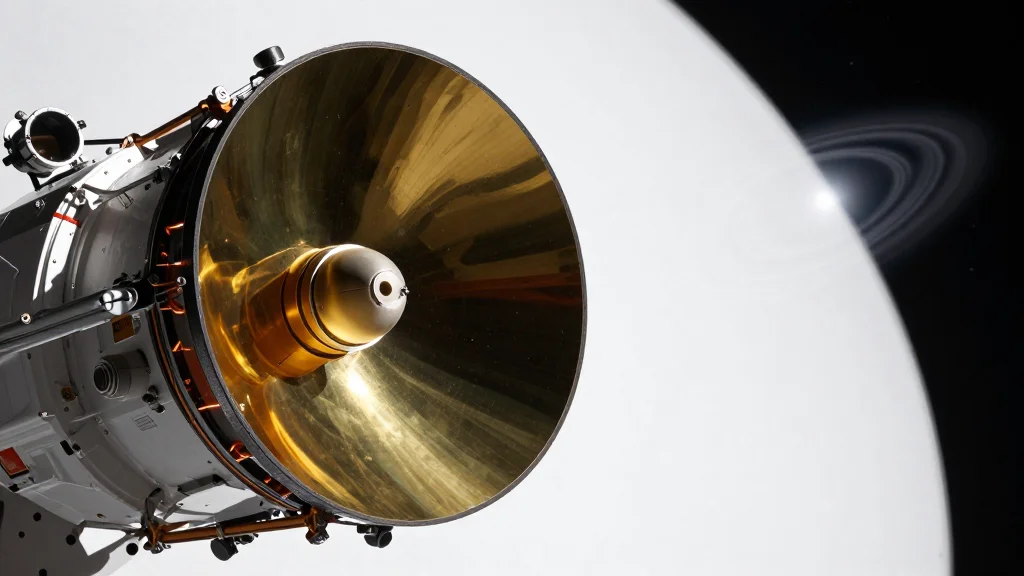
NASA's Roman Poised to Transform Hunt for Elusive Neutron Stars
Why It Matters
A comprehensive neutron‑star inventory will sharpen predictions for gravitational‑wave events and deepen our understanding of dense‑matter physics, positioning Roman as a cornerstone for multi‑messenger astronomy.
Key Takeaways
- •Roman will survey 2000 square degrees in infrared
- •Telescope’s 0.28‑arcsecond resolution rivals Hubble’s clarity
- •Microlensing can reveal isolated neutron stars invisible otherwise
- •Expected detection of thousands of compact objects by 2030
- •Data will refine neutron-star mass‑radius models for GW forecasts
Pulse Analysis
The Nancy Grace Roman Space Telescope represents a leap forward for astrophysical surveys, combining Hubble‑class resolution with a field of view 100 times larger. This capability is crucial for gravitational microlensing studies, where the brief brightening of background stars betrays the presence of massive, dark lenses such as isolated neutron stars. By continuously monitoring millions of stars in the Galactic bulge, Roman can capture the subtle, short‑duration events that smaller telescopes miss, dramatically expanding the catalog of known compact objects.
Beyond sheer numbers, Roman’s infrared sensitivity penetrates dust‑obscured regions of the Milky Way, revealing neutron stars hidden in the dense stellar backdrop. The resulting mass and velocity distribution will feed directly into equations of state for ultra‑dense matter, a long‑standing puzzle in nuclear physics. Moreover, a robust census of neutron‑star populations refines merger rate estimates for ground‑based gravitational‑wave detectors like LIGO and Virgo, improving the accuracy of future event forecasts.
The mission’s open‑data policy ensures that the broader scientific community can leverage the findings for a range of investigations, from dark‑matter constraints to stellar evolution pathways. As the first large‑scale, space‑based microlensing survey, Roman sets a new standard for multi‑messenger astronomy, linking electromagnetic observations with gravitational‑wave science. Stakeholders in both academia and industry should watch Roman’s progress closely, as its discoveries will likely drive the next generation of astrophysical models and technology investments.
NASA's Roman Poised to Transform Hunt for Elusive Neutron Stars
Comments
Want to join the conversation?
Loading comments...