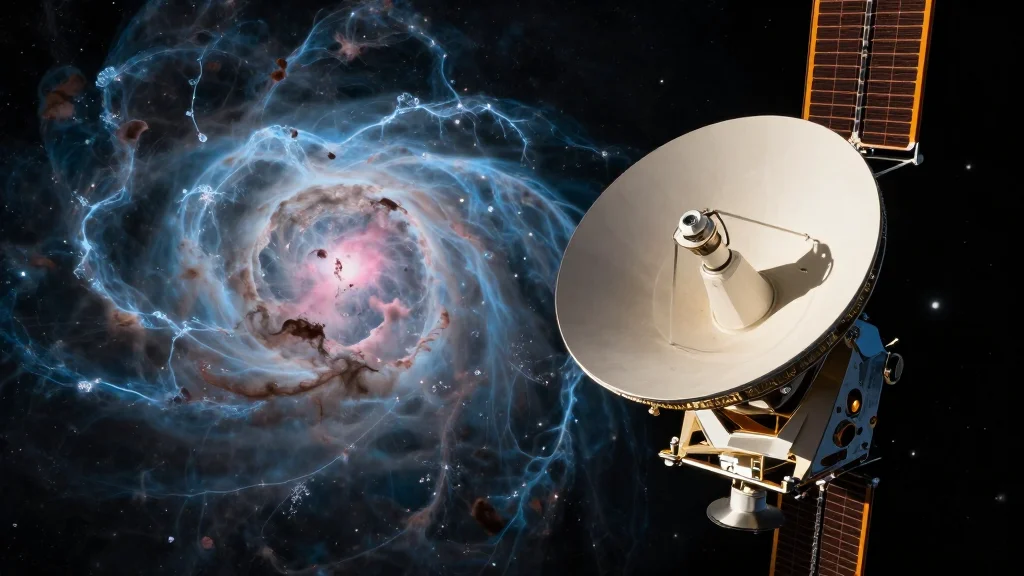
NASA’s SPHEREx Maps Water Ice Across Milky Way, Boosting Astrobiology Prospects

Why It Matters
The SPHEREx water‑ice map bridges astrophysics and planetary science, providing concrete evidence that the essential ingredient for life is a built‑in component of many planetary systems. This shifts the probability calculus for habitable exoplanets, suggesting that oceans may be common rather than exceptional. For space exploration, the data inform ISRU planning, reducing reliance on Earth‑supplied water and enhancing mission sustainability. In the broader scientific arena, the discovery fuels interdisciplinary collaboration between astronomers, chemists, and space‑medicine researchers. By linking ice chemistry to human health considerations for deep‑space crews, SPHEREx underscores how cosmic observations can have direct, practical implications for the design of life‑support infrastructure and the long‑term viability of human presence beyond Earth.
Key Takeaways
- •SPHEREx mapped water ice in over 15 million spectra across the Milky Way.
- •The $242 million mission confirms ice is widespread in star‑forming molecular clouds.
- •Lead scientist Dr. Jamie Bock says the finding reshapes models of planetary water acquisition.
- •International partners from Korea and Taiwan contributed to the mission’s instrumentation.
- •Results will guide ISRU strategies for NASA’s Moon‑to‑Mars program and future exoplanet studies.
Pulse Analysis
SPHEREx’s galaxy‑wide ice inventory arrives at a pivotal moment for both astrobiology and human spaceflight. Historically, the scarcity of direct water‑ice observations limited confidence in models that assumed abundant volatiles during planet formation. By delivering a statistically robust, high‑resolution map, SPHEREx removes a major uncertainty, allowing theorists to refine simulations of disk chemistry and accretion processes. This, in turn, sharpens the criteria used by exoplanet surveys to prioritize targets for atmospheric characterization, potentially accelerating the detection of biosignatures.
From an operational perspective, the mission’s findings dovetail with NASA’s push toward sustainable deep‑space habitats. Water is not only a life‑support commodity but also a feedstock for oxygen generation and rocket propellant via electrolysis. Knowing that ice is likely to be present in many lunar and Martian locales reduces the logistical burden of transporting water from Earth, lowering mission costs and risk. Space‑medicine programs can now incorporate realistic water‑availability scenarios into health‑risk models, improving crew‑health protocols for long‑duration flights.
Looking ahead, the SPHEREx dataset will serve as a reference baseline for next‑generation infrared observatories. Its spectral catalog can be cross‑matched with upcoming surveys of exoplanet atmospheres, enabling a holistic view of how interstellar ice chemistry translates into planetary water reservoirs. The mission exemplifies how large‑scale, publicly funded science can generate immediate, cross‑sector benefits—fueling both the search for extraterrestrial life and the practical engineering of humanity’s next steps into the cosmos.
NASA’s SPHEREx Maps Water Ice Across Milky Way, Boosting Astrobiology Prospects
Comments
Want to join the conversation?
Loading comments...