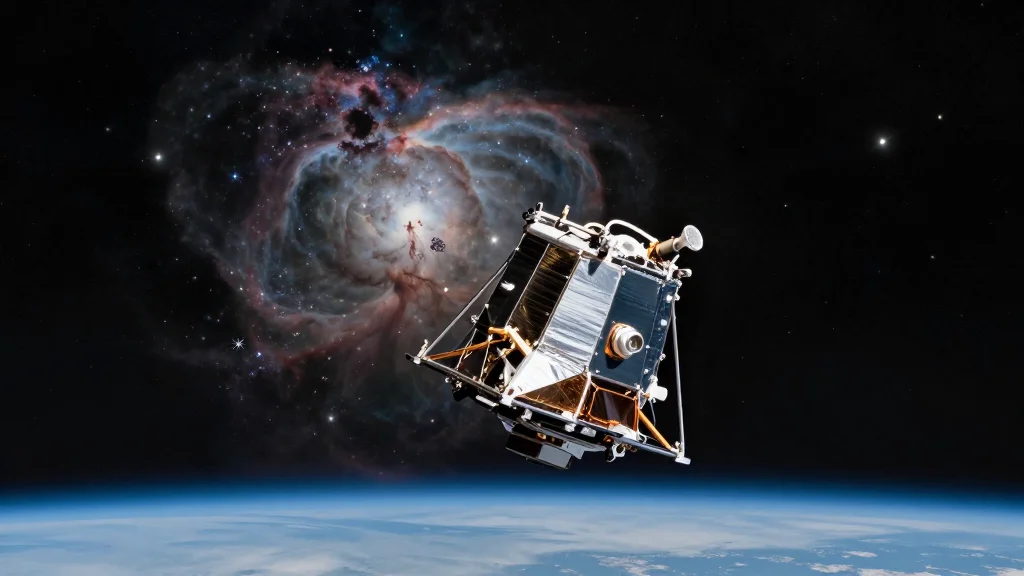
NASA's SPHEREx Maps Water Ice Across Milky Way, Boosting Astrobiology Prospects

Why It Matters
The SPHEREx discovery bridges astrophysics and human spaceflight by confirming that water—a prerequisite for life and a critical life‑support resource—is not a rare byproduct but a pervasive component of star‑forming environments. For astrobiologists, this expands the habitable‑zone concept to include planets that inherit water directly from their birth clouds, increasing the odds of finding life‑bearing worlds. For engineers and mission planners, the data provide a scientific foundation for ISRU strategies, reducing reliance on Earth‑launched water and lowering mission costs for lunar and Martian habitats. Furthermore, the interdisciplinary link to space‑medicine underscores how cosmic observations can inform terrestrial health research. Reliable water supplies are essential for preventing physiological degradation in microgravity; knowing where and how water can be sourced in space directly supports crew health and mission success.
Key Takeaways
- •SPHEREx mapped water ice in over 15 million spectra across the Milky Way.
- •The $242 million mission confirms ice is widespread in stellar nurseries.
- •Lead scientist Dr. Jamie Bock says ice may be incorporated directly into forming planets.
- •Findings support NASA’s Moon‑to‑Mars ISRU plans and space‑medicine risk assessments.
- •Next data release slated for early 2027, with follow‑up observations by JWST and Roman.
Pulse Analysis
NASA’s SPHEREx ice survey arrives at a pivotal moment when the space sector is transitioning from exploration to sustainable presence. Historically, water in the solar system was viewed as a localized resource—primarily in comets, asteroids, and polar caps. By demonstrating that water ice is a galactic norm, SPHEREx reframes water as a strategic commodity rather than a scarce find, potentially reshaping the economics of deep‑space logistics. Companies developing ISRU technologies can now argue for a broader market, targeting not only lunar and Martian extraction but also the harvesting of ice‑laden regolith on near‑Earth objects.
Scientifically, the confirmation of chemically processed ices aligns with models that predict early organic synthesis on grain surfaces. This bolsters the hypothesis that the building blocks of life are seeded during the earliest stages of planetary assembly, a narrative that could accelerate funding for missions aimed at detecting biosignatures on exoplanets within ice‑rich star‑forming regions. The upcoming JWST and Roman observations will likely focus on the spectral fingerprints of complex organics, turning SPHEREx’s broad brushstrokes into high‑resolution portraits of prebiotic chemistry.
From a policy perspective, the data give NASA and its international partners concrete evidence to justify continued investment in infrared spectroscopy missions. The success of SPHEREx may spur a new generation of all‑sky surveys, each tuned to different molecular tracers, creating a layered map of the galaxy’s chemical inventory. Such a roadmap would be invaluable for future crewed missions, enabling planners to select landing sites with optimal resource availability, thereby reducing the mass and cost of water transport from Earth.
Overall, SPHEREx’s water‑ice map is more than an astronomical catalog; it is a strategic asset that links planetary formation theory, astrobiology, resource extraction, and crew health into a single, data‑driven narrative that will shape the next decade of space exploration.
NASA's SPHEREx Maps Water Ice Across Milky Way, Boosting Astrobiology Prospects
Comments
Want to join the conversation?
Loading comments...