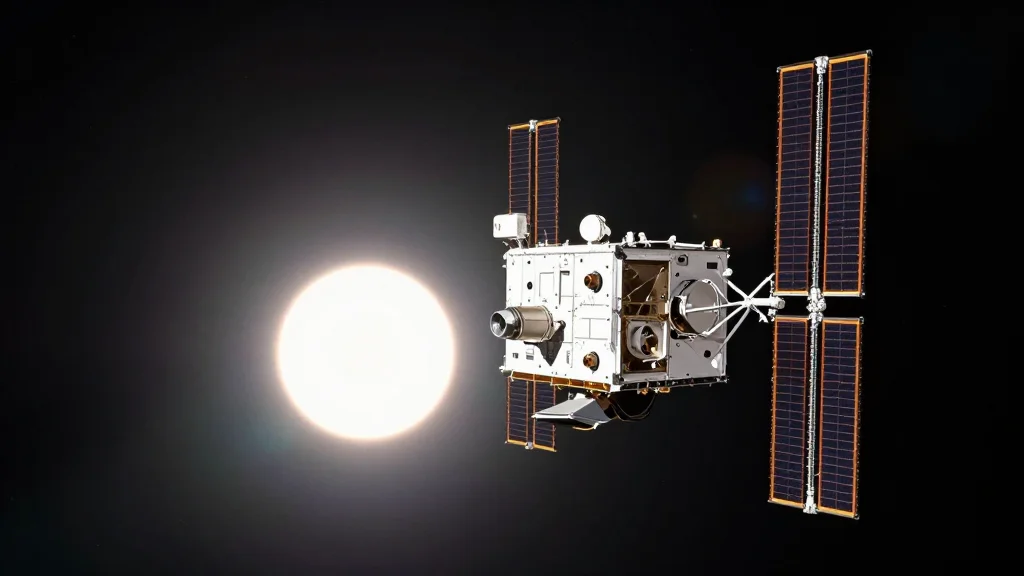
NASA’s TESS Spacecraft Identifies Rare and Unprecedented Planetary System
Why It Matters
The discovery forces a rethink of planetary formation models and validates Antarctica’s emerging role in exoplanet detection, potentially accelerating funding for similar dual‑platform projects.
Key Takeaways
- •TESS and ASTEP jointly detected a multi‑planet system with odd orbital spacing.
- •System includes at least one ultra‑short‑period planet under 0.5 days.
- •Planets span sizes from Earth‑like to Neptune‑class in same orbit.
- •Unusual resonances challenge current formation models.
- •Discovery showcases Antarctica’s high‑precision photometry value.
Pulse Analysis
The Transiting Exoplanet Survey Satellite, launched in 2018, has become the workhorse of modern exoplanet hunting, scanning nearly the entire sky for the faint dimming of stars caused by orbiting worlds. By pairing TESS’s broad‑field observations with the Antarctic Search for Transiting ExoPlanets, astronomers exploit the continent’s stable, dry atmosphere, which offers continuous night during the polar winter and minimal atmospheric turbulence. This synergy allows for deeper, longer‑duration light curves that can reveal subtle transit signals missed by space‑only surveys.
The newly identified system stands out because it packs a diverse roster of planets into a compact orbital architecture. One planet circles its star in less than 12 hours, while others occupy resonant orbits that are neither evenly spaced nor in simple integer ratios. Such a configuration is rare among the thousands of known exoplanets and suggests that migration, gravitational interactions, or early disk conditions played an atypical role. Researchers are already modeling the system to test hypotheses about rapid inward migration and planet‑planet scattering, which could reshape prevailing theories of how multi‑planet systems evolve.
Beyond the scientific intrigue, this breakthrough signals a strategic shift for the exoplanet community. Demonstrating that Antarctic observatories can complement space missions may attract new public‑private partnerships and justify investment in remote, high‑precision telescopes. As the industry eyes next‑generation missions like the James Webb Space Telescope’s successors, the ability to pre‑screen promising targets from the ground will streamline observation time and boost the return on costly space assets. The find underscores the growing economic and research value of integrating diverse observation platforms to accelerate discovery.
NASA’s TESS Spacecraft Identifies Rare and Unprecedented Planetary System
Comments
Want to join the conversation?
Loading comments...