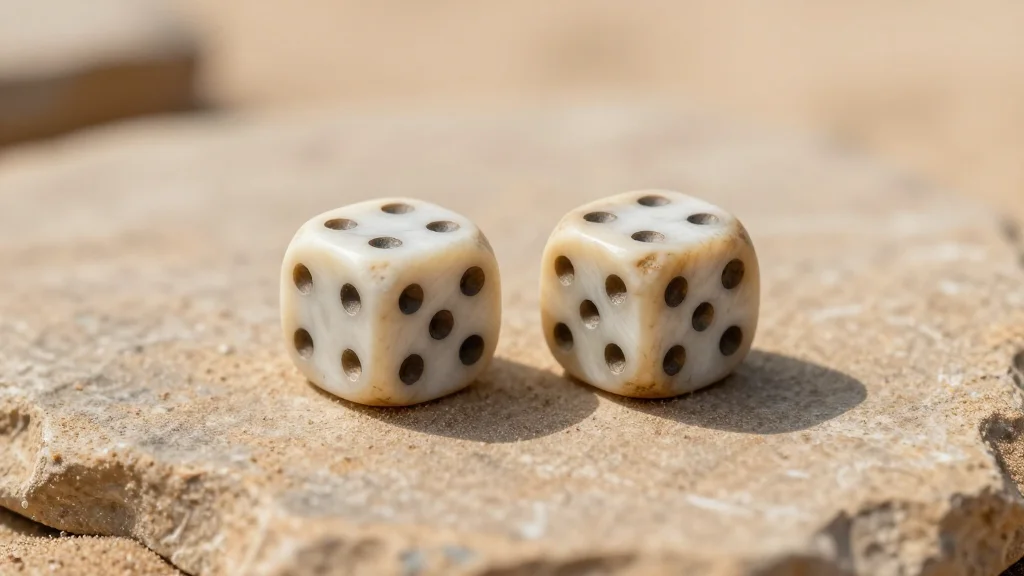
Native Americans Played Dice Games Far Earlier Than Previously Known, Study Shows
Why It Matters
The findings rewrite the chronology of gaming and probabilistic thought, showing that structured chance‑based play emerged far earlier in North America than scholars previously believed, reshaping our understanding of cultural innovation across continents.
Key Takeaways
- •Dice found dating 12,800–12,200 years ago in Great Plains
- •Ancient dice were two‑sided bone or wood, not six‑sided
- •Findings push gaming origins back 7,000 years before Mesopotamia
- •Study reclassifies older artifacts using new attribute checklist
- •Continuity of dice games persists into modern Indigenous cultures
Pulse Analysis
The new study overturns a long‑standing assumption that dice originated in ancient Mesopotamia around 5,500 years ago. By dating bone and wooden artifacts to the late Pleistocene, researchers demonstrate that hunter‑gatherer societies on the Great Plains were already experimenting with binary chance devices. This pushes the emergence of formalized gaming by several millennia and suggests that the cognitive leap toward probabilistic reasoning may have been a shared human development rather than a regional invention.
Beyond the archaeological surprise, the discovery reframes the narrative of early human ingenuity. Two‑sided dice, simple yet effective, indicate that early peoples devised mechanisms to introduce randomness into social interaction, a precursor to the complex probability models that underpin modern finance, science, and technology. The fact that these artifacts predate the rise of agriculture challenges the notion that sophisticated abstract thinking required settled societies, hinting that mobile groups cultivated abstract concepts alongside survival strategies.
The continuity of dice games into contemporary Indigenous cultures underscores a living tradition that bridges millennia. Modern videos of Native groups playing these ancestral games illustrate cultural resilience and provide a tangible link to prehistoric practices. For scholars, the study opens avenues to reassess other artifacts through the newly created attribute checklist, potentially uncovering further evidence of early symbolic behavior. As the field of archaic gaming expands, it promises richer insights into how early humans conceptualized chance, decision‑making, and communal entertainment.
Native Americans Played Dice Games Far Earlier Than Previously Known, Study Shows
Comments
Want to join the conversation?
Loading comments...