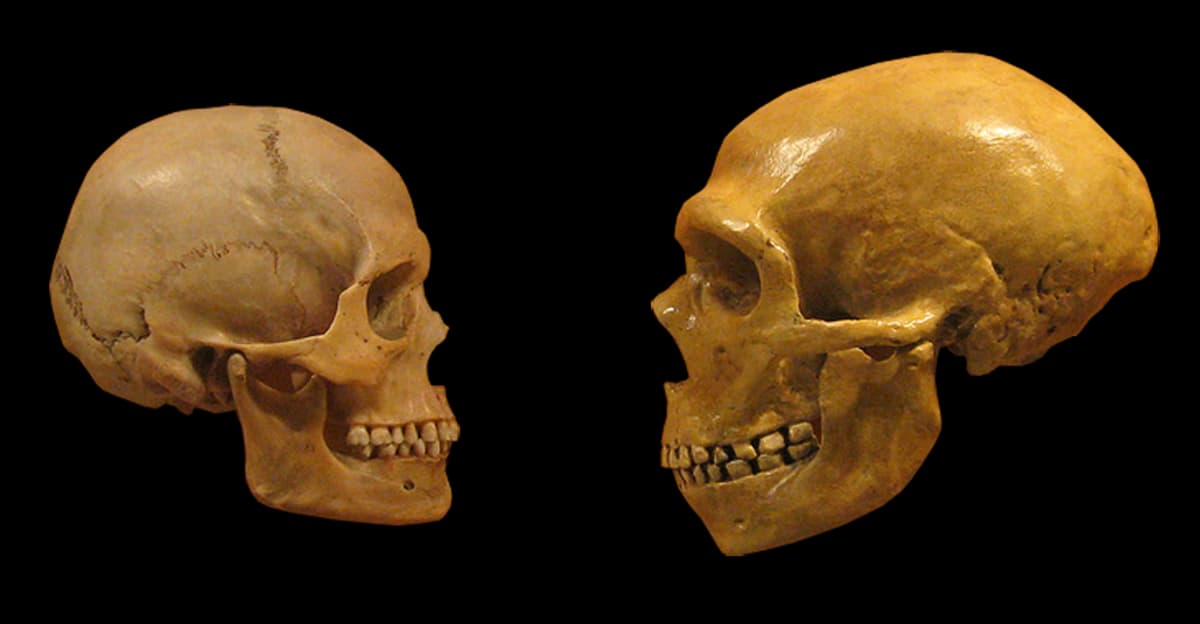
Neanderthal Brains Measure up to Ours—Literally
Why It Matters
The research undermines the idea that brain size drove Homo sapiens’ dominance, prompting a reassessment of how we interpret Neanderthal cognition and their place in human evolution.
Key Takeaways
- •Neanderthal brain volumes fall within modern human variation
- •Study used MRI scans of 400 people across two populations
- •Brain size differences show little link to cognitive ability
- •Findings challenge notion that larger brains drove human dominance
Pulse Analysis
The 2026 PNAS paper leverages high‑resolution MRI data from 200 European‑descent Americans and 200 Han Chinese participants to create a robust baseline of modern brain anatomy. By overlaying these scans onto endocasts derived from Neanderthal crania, the team quantified thirteen regional volumes, revealing that the spread of modern human brain sizes dwarfs the modest differences previously reported between Neanderthals and early Homo sapiens. This methodological leap—combining large‑scale neuroimaging with paleo‑anthropological specimens—provides a statistically sound context that earlier studies, limited to a handful of fossils, lacked.
Beyond the raw numbers, the study reinforces a growing consensus in neuroscience: absolute brain volume is a poor predictor of individual intelligence within a species. While primate comparisons still rely on encephalization quotients to explain broad cognitive gaps, intra‑species variation in humans is too subtle to affect performance on standard cognitive tests. The authors cite decades of research showing weak or nonexistent correlations between regional size and specific mental functions, emphasizing that cultural, environmental, and network‑level factors drive the bulk of cognitive diversity.
For paleoanthropology, the implications are profound. If Neanderthal brains were not outliers in size, then their sophisticated toolkits, symbolic art, and complex social structures likely reflect cognitive capacities on par with modern humans. This bolsters arguments that Neanderthals should be viewed as a subspecies rather than a distinct species, reshaping narratives about competition and replacement. Future work may focus on microstructural brain features or genetic underpinnings to refine our picture of hominin cognition, but the current evidence already calls for a more nuanced, less brain‑size‑centric view of human evolution.
Neanderthal brains measure up to ours—literally
Comments
Want to join the conversation?
Loading comments...