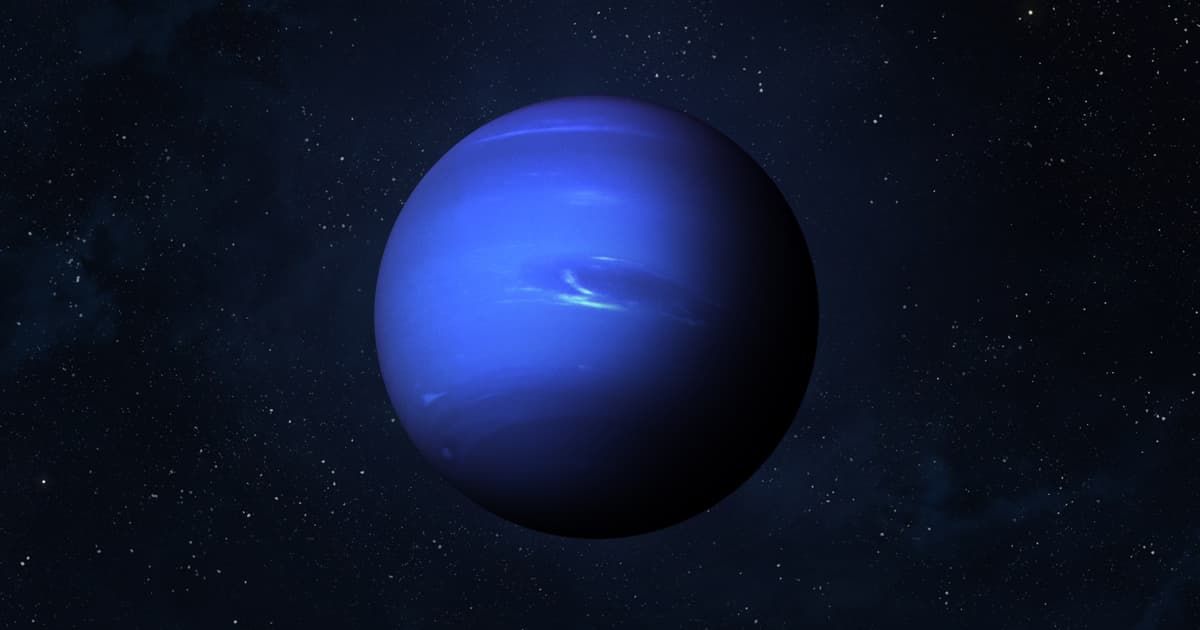
Neptune Was Found Not by Anyone Scanning the Night Sky but by Mathematics — Urbain Le Verrier Noticed Uranus Being Tugged Off Its Predicted Path, Worked Out Where the Hidden Planet Had to Be, and Astronomers in Berlin Who Pointed a Telescope at that Patch of Sky Found Neptune Within a Degree of His Prediction that Same Night.
Why It Matters
The episode proves that precise mathematical modeling can locate new worlds before they are seen, a principle that underpins modern exoplanet discovery and highlights the need for accurate gravitational theory.
Key Takeaways
- •Le Verrier predicted Neptune’s position using Uranus’s orbital deviations
- •Johann Galle and Heinrich d’Arrest confirmed the planet within one degree
- •John Couch Adams independently calculated a similar location but published later
- •Le Verrier’s later Vulcan hypothesis failed, leading to Einstein’s relativity
Pulse Analysis
The discovery of Neptune stands as a landmark in scientific prediction, showing how 19th‑century astronomers turned a puzzling discrepancy in Uranus’s orbit into a precise celestial target. At the time, astronomers relied on painstaking visual surveys, yet the growing mismatch between observed and calculated positions of Uranus hinted at an unseen mass. By applying Newtonian mechanics and leveraging Bode’s law as a rough guide, Urbain Le Verrier derived a narrow region of the sky where the perturbing planet should appear, turning a theoretical anomaly into a practical hunting ground.
Le Verrier’s calculations were swiftly tested when he mailed his coordinates to Johann Galle at the Berlin Observatory. Armed with a freshly completed star chart, Galle and his assistant Heinrich d’Arrest scanned the specified patch on the night of 23 September 1846. Within an hour they identified a moving point of light not listed on the chart—Neptune—lying less than one degree from the predicted spot. A parallel effort by English mathematician John Couch Adams produced a comparable estimate, but his results were published only after Berlin’s success, and earlier observations by James Challis had failed to recognize the planet despite recording it. The episode underscores the power of rigorous orbital dynamics combined with rapid observational follow‑up.
The legacy of Neptune’s mathematically driven discovery reverberates through contemporary astronomy. Modern exoplanet hunters employ similar techniques—detecting stellar wobbles via radial‑velocity measurements or transit timing variations—to infer unseen planets. Yet the story also warns of the limits of theory: Le Verrier’s subsequent Vulcan hypothesis, intended to explain Mercury’s perihelion shift, proved false, ultimately leading to Einstein’s general relativity. The contrast illustrates that while precise calculations can reveal new worlds, unexplained anomalies may instead signal deeper gaps in our physical understanding, a lesson that continues to shape the search for planets beyond our solar system.
Neptune was found not by anyone scanning the night sky but by mathematics — Urbain Le Verrier noticed Uranus being tugged off its predicted path, worked out where the hidden planet had to be, and astronomers in Berlin who pointed a telescope at that patch of sky found Neptune within a degree of his prediction that same night.
Comments
Want to join the conversation?
Loading comments...