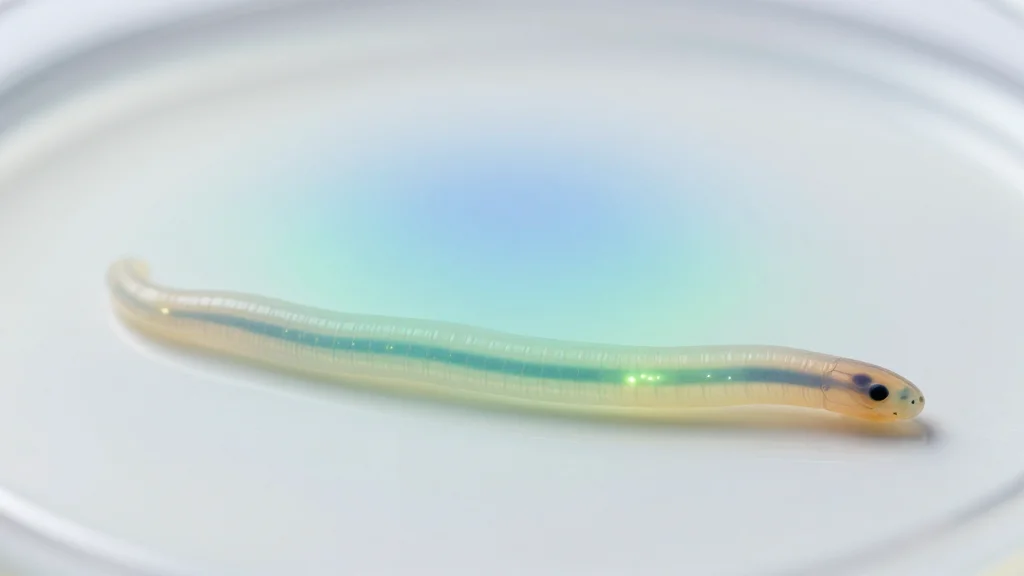
Neural Sequences Underlying Directed Turning in Caenorhabditis Elegans
Why It Matters
The work reveals fundamental principles of how compact nervous systems translate sensory information into directed movement, informing broader neuroscience and bio‑inspired navigation technologies.
Key Takeaways
- •C. elegans modulates turn angles to correct heading errors.
- •Whole‑brain calcium imaging reveals stereotyped neural sequence during each turn.
- •Head‑steering neurons SMD, RMD, RIV encode turn direction and amplitude.
- •SAAV activity predicts upcoming turn direction before movement execution.
- •Tyramine signaling is essential for proper turn‑related circuit dynamics.
Pulse Analysis
Across the animal kingdom, navigation relies on distributed circuits that separate sensory processing from motor execution. In mammals, hippocampal place cells map location, while insects use a central complex to maintain heading. Caenorhabditis elegans offers a uniquely tractable platform: a fully mapped connectome of just 302 neurons and robust, quantifiable chemotaxis behaviors. Recent advances in pan‑neuronal calcium indicators and NeuroPAL barcoding now permit brain‑wide activity recording in freely moving worms, opening a window onto the real‑time dynamics of navigation circuits.
The new study shows that C. elegans does more than a biased random walk; it actively corrects heading errors by modulating the angle of each reorientation. Whole‑brain imaging captured a repeatable cascade of neuronal activation: SMD and RMD neurons oscillate with head swings, RIV scales activity with turn magnitude, and the SAAV interneuron spikes before a reversal, forecasting the dorsal or ventral turn that will follow. Importantly, tyramine, a biogenic amine, was found to gate this sequence, underscoring the role of neuromodulators in fine‑tuning sensorimotor loops. These results provide a mechanistic bridge between sensory gradient detection and the motor commands that steer the animal.
Understanding such compact, sequenced neural architectures has implications far beyond nematodes. The principles of error‑correcting turns and modular neural sequences can inspire algorithms for autonomous robots navigating uncertain environments. Moreover, the identified tyramine‑dependent modulation parallels dopamine‑driven decision making in higher organisms, offering a comparative framework for studying neuromodulatory disorders. As imaging technologies scale to larger brains, the C. elegans model will continue to serve as a benchmark for dissecting how distributed neural networks generate purposeful behavior.
Neural sequences underlying directed turning in Caenorhabditis elegans
Comments
Want to join the conversation?
Loading comments...