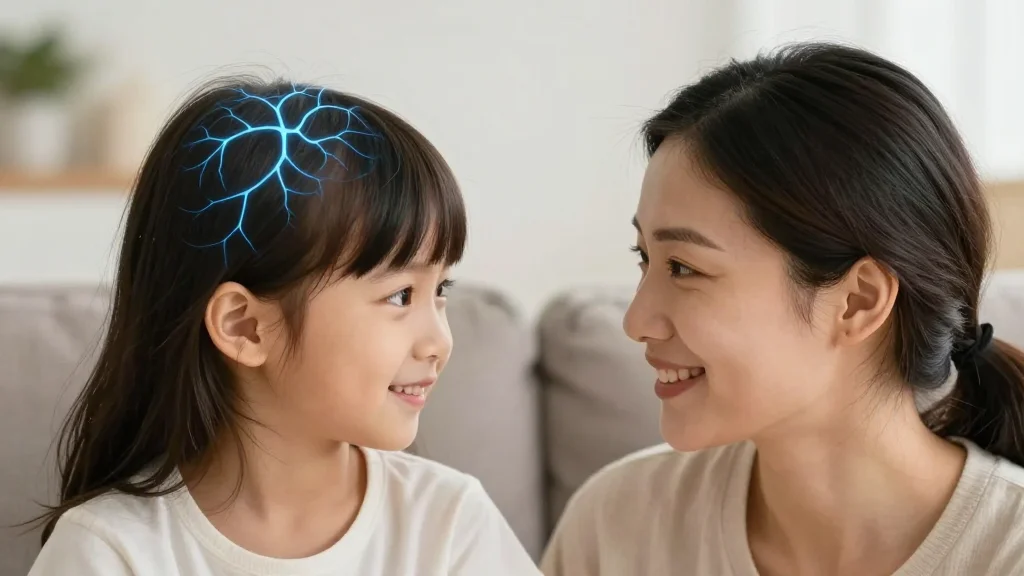
Neural Synchrony Between Mothers and Daughters Linked to Better Mental Health
Why It Matters
The findings highlight a biological pathway through which everyday family conversations influence children’s emotional resilience, offering a new target for early‑intervention programs and parenting guidance.
Key Takeaways
- •Neural synchronization observed in right inferior frontal gyrus of daughters
- •Higher mother-daughter brain coupling linked to fewer emotional problems
- •Study involved 37 families with girls aged six to eight
- •Maternal marital satisfaction amplified the protective effect of neural sync
- •Future work should include fathers and diverse family structures
Pulse Analysis
Passive observation has long been recognized as a subtle teacher in child development, but the new Shanghai Normal University study provides the first direct neural evidence of this process. By using functional near‑infrared spectroscopy, researchers captured real‑time oxygenation changes in the right inferior frontal gyrus—a region critical for decoding emotional tone—while daughters silently watched their mothers discuss romantic plans. The resulting brain‑to‑brain alignment suggests that children internalize social cues even without active participation, extending the classic model of direct parent‑child interaction.
The practical implications are profound for early mental‑health strategies. Higher mother‑daughter neural coupling correlated with reduced emotional difficulties, especially when mothers reported strong marital satisfaction. This points to the home’s emotional climate as a lever that can be adjusted through relationship counseling or family‑focused interventions, potentially lowering the risk of anxiety, hyperactivity, or peer‑relationship problems before they manifest. Clinicians might soon incorporate observational metrics or simple conversation‑based assessments into routine pediatric screenings to identify children who could benefit from enriched emotional environments.
Nevertheless, the study’s limitations temper immediate policy shifts. The sample size was modest, fathers were not scanned, and the laboratory setting may not capture the complexity of everyday family dynamics. Future research should broaden demographics, include father‑son and mixed‑gender dyads, and employ multimodal neuroimaging to map whole‑family synchrony. If larger trials confirm these findings, educators and mental‑health professionals could design curricula that teach parents how to model healthy emotional exchanges, turning ordinary conversations into powerful developmental tools.
Neural synchrony between mothers and daughters linked to better mental health
Comments
Want to join the conversation?
Loading comments...