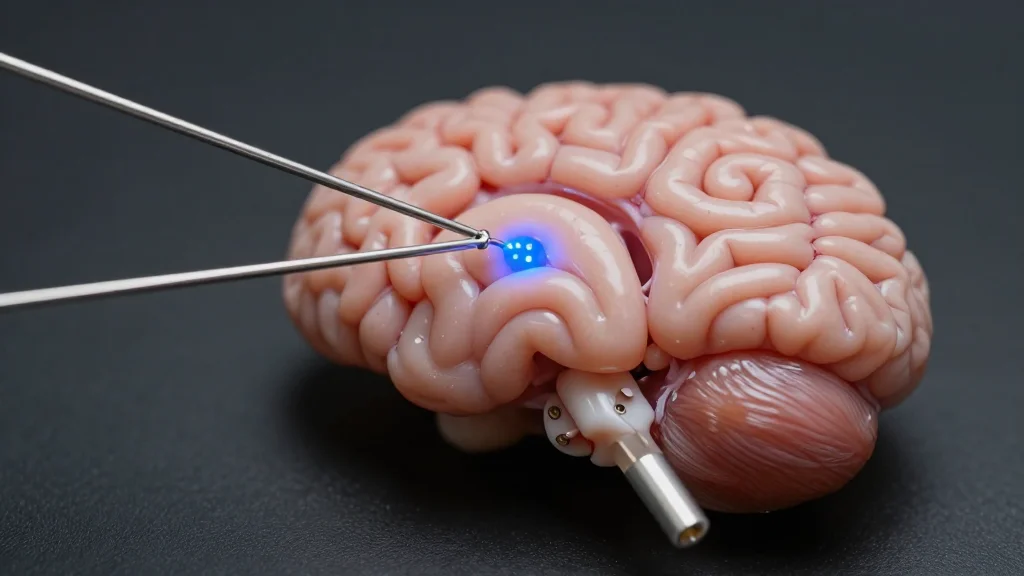
Neuropixels Opto Integrates Electrophysiology and Optogenetics to Probe Neuronal Function
Why It Matters
By uniting recording and manipulation in a single probe, Neuropixels Opto accelerates discovery of circuit‑level disease mechanisms and could inform more precise therapeutic targets.
Key Takeaways
- •960 electrical sites and 28 light emitters on 70‑µm probe.
- •Records hundreds of neurons while delivering blue and red light.
- •Shows cortical neurons can act independently, not just as a mass.
- •Enables causal testing of neural circuits in health and disease.
Pulse Analysis
High‑density electrophysiology and optogenetics have long been the twin pillars of systems neuroscience, yet researchers have typically relied on separate probes to record and to control neural activity. This split approach creates spatial mismatches, especially in deep brain structures, and limits the ability to draw direct causal inferences. Neuropixels Opto bridges that gap by embedding 960 recording contacts and two arrays of 14 blue‑ and red‑light emitters onto a single 70‑micrometer‑wide shank, delivering unprecedented spatial precision without sacrificing signal fidelity.
The integrated probe captures the electrical signatures of hundreds of individual neurons while simultaneously delivering patterned light pulses to targeted cell populations. In mouse cortex experiments, investigators observed that activation of a small subset of neurons produced highly localized effects, contradicting the prevailing view that cortical cells operate only as a densely interwoven network. The ability to address neurons with independent blue and red wavelengths also permits bidirectional control—excitation and silencing—in the same recording session, opening new avenues for dissecting excitatory‑inhibitory balance and synaptic plasticity at the circuit level.
Beyond basic science, Neuropixels Opto holds promise for translational research into Alzheimer’s disease, schizophrenia, Parkinson’s disease and other disorders marked by disrupted neural communication. By providing a clear, causal map of how specific cell types influence broader network dynamics, the technology can accelerate target validation for pharmaceutical pipelines and inform the design of neuromodulation therapies. As the platform matures, scaling to larger animal models and eventually human‑compatible designs could reshape neuro‑diagnostics and precision medicine strategies.
Neuropixels Opto Integrates Electrophysiology and Optogenetics to Probe Neuronal Function
Comments
Want to join the conversation?
Loading comments...