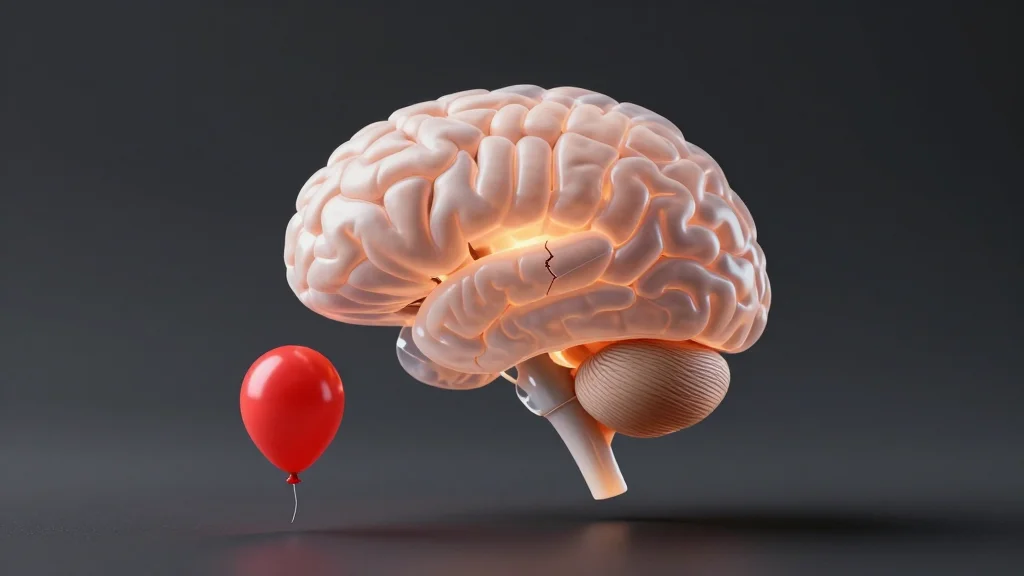
Neuroscientists Identify Brain Regions that Drive Curiosity for What Might Have Been
Why It Matters
Understanding that counterfactual curiosity engages the same reward pathways as tangible incentives explains why people compulsively seek hindsight, influencing financial, consumer, and risk‑taking behaviors. This insight can inform strategies to manage regret‑driven decisions in markets and mental‑health contexts.
Key Takeaways
- •Striatum activity spikes when participants choose to view counterfactual info.
- •Seeking the hidden balloon limit occurs in 52% of bank trials.
- •Regret after learning missed points drives riskier choices in subsequent rounds.
- •Dopamine-rich regions signal 'wanting' for information like monetary rewards.
- •Study limited to young university students; generalizability remains uncertain.
Pulse Analysis
The new study bridges a gap between classic reward neuroscience and the puzzling human habit of chasing hindsight. By tracking brain activity during a modified Balloon Analogue Risk Task, researchers identified the caudate and nucleus accumbens lighting up when participants opted to learn the balloon's pop point. These regions, long associated with monetary and food rewards, also responded to the pure informational lure of "what might have been," confirming that curiosity itself is treated as a valuable internal payoff.
Behaviorally, the experiment revealed a paradox: participants willingly endured a waiting cost to uncover useless data, yet the emotional fallout—heightened regret—prompted them to take bigger risks in the next round. This pattern mirrors real‑world scenarios where investors obsess over missed stock gains or shoppers lament unpurchased deals, often leading to impulsive, higher‑stakes decisions. Recognizing that the brain’s reward system fuels such hindsight‑driven risk taking can help financial advisors and marketers design interventions that temper regret‑induced volatility.
While the findings are compelling, they stem from a narrow sample of 21‑year‑old university students, limiting broader applicability. Future work should explore age‑related differences, personality traits, and clinical populations prone to compulsive information seeking, such as those with anxiety or obsessive‑compulsive tendencies. Mapping how sub‑regions of the striatum interact across diverse contexts could also inform AI models that predict consumer behavior, as well as therapeutic approaches aimed at reducing maladaptive regret cycles. The study thus opens a pathway to translate neural curiosity mechanisms into practical tools for business and mental‑health fields.
Neuroscientists identify brain regions that drive curiosity for what might have been
Comments
Want to join the conversation?
Loading comments...