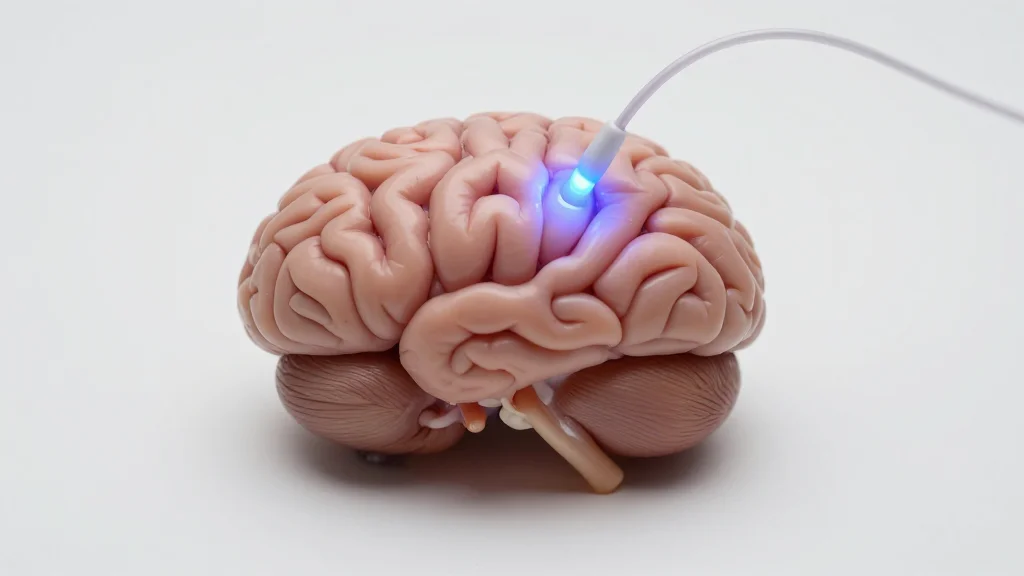
Neuroscientists Use Light to Restore Lost Memories in a Mouse Model of Alzheimer’s Disease
Why It Matters
Loss of smell predicts Alzheimer’s, so pinpointing the piriform‑infralimbic circuit failure offers a diagnostic target and a proof‑of‑concept for memory restoration via neuromodulation.
Key Takeaways
- •fMRI reveals weakened piriform‑infralimbic connectivity in mild cognitive impairment.
- •Optogenetic stimulation restores odor‑fear memory in Alzheimer’s mice.
- •Deficient AMPA‑receptor insertion underlies synaptic transmission failure.
- •Non‑invasive neuromodulation could become an early Alzheimer’s diagnostic tool.
Pulse Analysis
Early olfactory deficits are among the first clinical signs of Alzheimer’s disease, often appearing years before overt memory loss. Recent functional MRI analyses of over 350 participants have identified a specific drop in connectivity between the piriform cortex, which processes smells, and the infralimbic prefrontal region that stores related memories. This network disruption correlates with mild cognitive impairment, positioning it as a promising biomarker for pre‑clinical detection and a focus for targeted imaging studies.
In a parallel animal study, researchers engineered mice to accumulate amyloid plaques and then trained them to associate a citrus scent with a mild foot shock. While the mice could encode the odor, they failed to retrieve the memory as the disease progressed, reflecting reduced activity in piriform‑infralimbic engram cells. By applying high‑frequency optogenetic pulses to the pathway, the team artificially boosted synaptic firing, compensating for a lack of AMPA‑receptor‑mediated long‑term potentiation. This intervention restored the fear response, demonstrating that synaptic strengthening can be temporarily rescued even in a diseased circuit.
The findings open two practical avenues. First, mapping piriform‑infralimbic connectivity via non‑invasive imaging could serve as an early screening tool, flagging individuals at risk before cognitive decline becomes apparent. Second, the success of precise, light‑driven stimulation suggests that future neuromodulation technologies—such as transcranial magnetic or ultrasound approaches—might one day target the same circuitry without surgery. Translating these results will require overcoming technical hurdles, but the study provides a compelling proof‑of‑concept that restoring synaptic communication can reverse specific memory deficits in Alzheimer’s models.
Neuroscientists use light to restore lost memories in a mouse model of Alzheimer’s disease
Comments
Want to join the conversation?
Loading comments...