New AI Body Map Reveals Obesity’s Hidden Attack on Facial Nerves
Why It Matters
The discovery exposes a hidden facet of obesity‑related nerve damage and provides a scalable AI tool to map disease across entire organisms, speeding target identification for metabolic and neurodegenerative therapies.
Key Takeaways
- •MouseMapper maps 31 organs, nerves, immune cells in whole mouse
- •Obesity reduces trigeminal nerve branches, impairing facial sensation
- •Identical molecular signatures appear in obese human facial tissue
- •Researchers released whole‑body imaging datasets for open access
- •Tool promises faster discovery for diabetes, cancer, neurodegeneration
Pulse Analysis
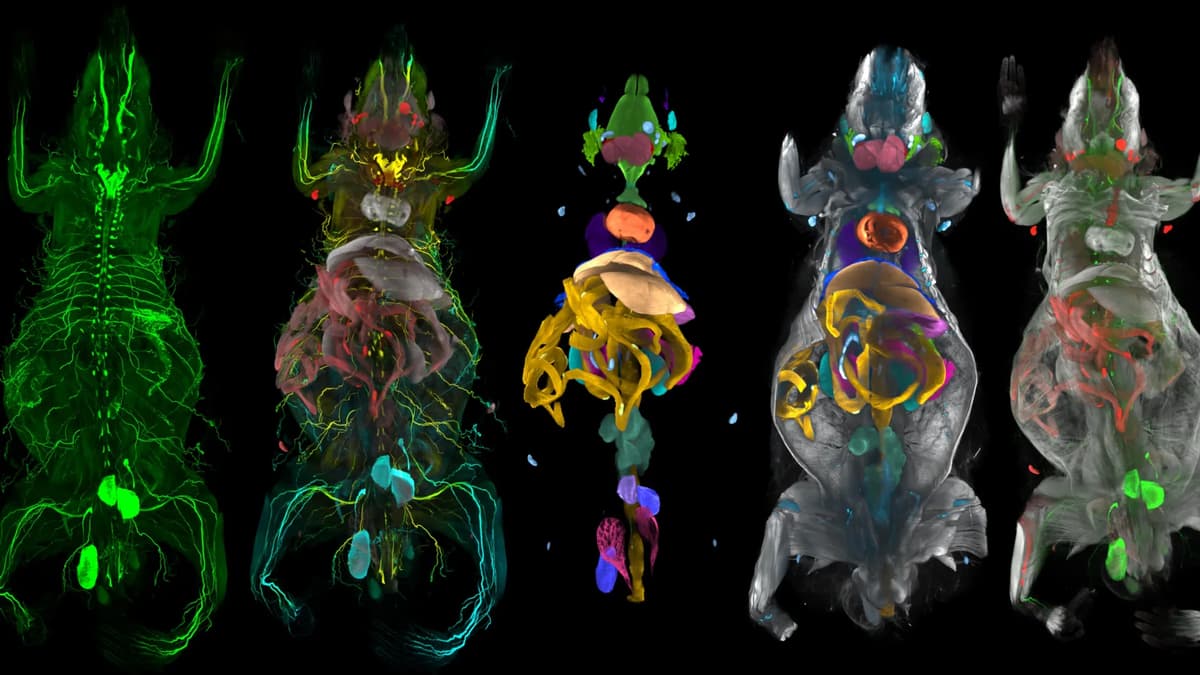
MouseMapper represents a leap forward in biomedical imaging by marrying advanced light‑sheet microscopy with foundation‑model deep learning. The platform ingests terabytes of three‑dimensional data, automatically annotates 31 distinct organs and tissue types, and traces nerve and immune‑cell networks at single‑cell resolution. This level of automation eliminates the need for labor‑intensive sectioning and region‑specific sampling, enabling researchers to view the body as an integrated system rather than a collection of isolated parts.
When the technology was applied to a mouse model of diet‑induced obesity, the AI uncovered a surprising pattern: the trigeminal nerve, which governs facial sensation, lost a substantial proportion of its peripheral branches. Behavioral assays confirmed diminished sensory responsiveness, and spatial proteomics linked the structural loss to inflammatory remodeling. Crucially, the same molecular fingerprints were detected in facial tissue from obese humans, suggesting that obesity’s impact on facial nerves may be a broader, under‑recognized health concern with potential implications for quality of life and neurological screening.
Beyond this specific finding, MouseMapper’s open‑source datasets and scalable pipeline promise to accelerate research across a spectrum of complex diseases. By providing a whole‑body, cell‑level atlas, the system can pinpoint early disease hotspots in diabetes, cancer, neurodegeneration, and autoimmune disorders, guiding more precise therapeutic interventions. The long‑term vision of creating digital twins of mice could dramatically reduce animal use, shorten preclinical timelines, and usher in a new era of in silico drug discovery.
New AI body map reveals obesity’s hidden attack on facial nerves
Comments
Want to join the conversation?
Loading comments...