New Atlas Aims to Help Save Africa’s Disappearing Wetlands
Why It Matters
Wetlands are critical for food security, flood control, and climate mitigation; the atlas provides a data‑driven basis for investment and policy prioritization. It helps governments and funders target resources where wetlands deliver the greatest economic and environmental returns.
Key Takeaways
- •Wetlands International released an interactive Wetland Atlas for Sahel, Horn of Africa.
- •Atlas combines spatial, climate, socioeconomic, and protection-status data.
- •Wetlands cover <10% of Sahel but support >75% of people, >85% GDP.
- •Tool aims to counter “wetland blindness” among policymakers.
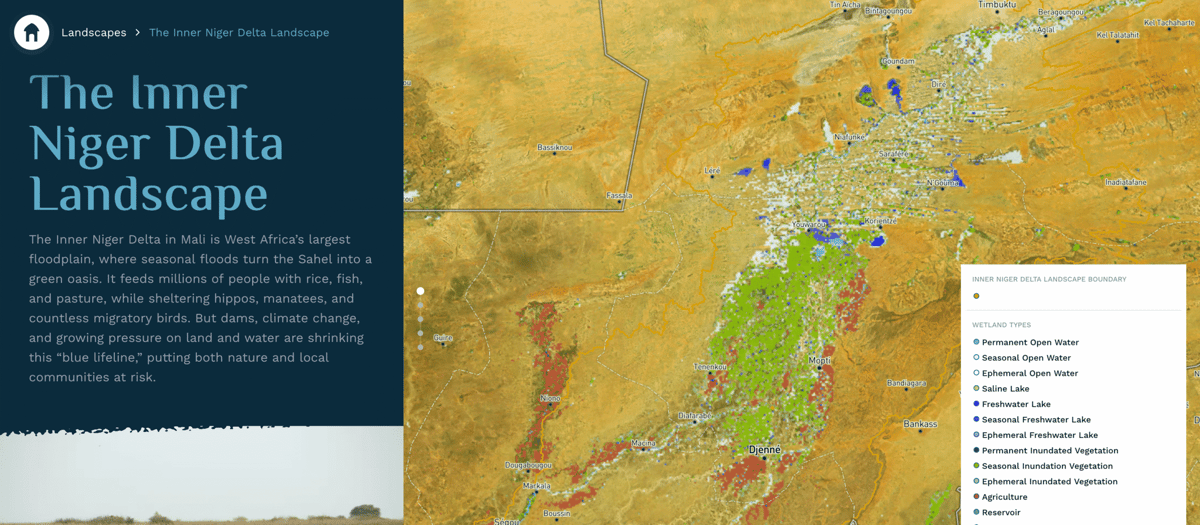
- •Highlights threats like upstream dams and climate change to Inner Niger Delta.
Pulse Analysis
Globally, wetlands are vanishing three times faster than forests, with a third lost since 1970. The scarcity of integrated, user‑friendly data has left many policymakers unaware of the ecosystems’ economic and climate benefits. Wetlands International’s new atlas fills that gap by layering biophysical maps with climate‑mitigation scores, population dependence, and legal protection layers, turning raw geography into actionable insight for investors and regulators alike.
In the Sahel and Horn of Africa, wetlands occupy a fraction of the landscape yet sustain the majority of livelihoods. The Inner Niger Delta alone fuels fisheries, rice production, and tourism while acting as a natural flood buffer. By quantifying that less than 10% of land supports over 75% of the region’s people and 85% of its GDP, the atlas underscores the sector’s outsized contribution to economic resilience. It also flags emerging threats—upstream dam projects, shifting rainfall patterns, and land‑use change—providing a clear risk matrix for adaptation planning.
For the finance community, the atlas reframes wetlands from a perceived cost center to a viable investment opportunity. Climate‑focused funds can now assess carbon‑sequestration potential alongside social returns, while development banks can prioritize projects that protect high‑value wetlands. As the platform expands beyond its pilot zones, it promises to standardize wetland valuation worldwide, supporting more transparent climate‑finance reporting and enabling governments to meet biodiversity and net‑zero commitments with concrete, data‑backed strategies.
New atlas aims to help save Africa’s disappearing wetlands
Comments
Want to join the conversation?
Loading comments...