New Bioluminescent Materials Sustain Light Across 4 Weekly Cycles
Why It Matters
The breakthrough enables reusable, biologically powered light sources for environmental sensors, soft robotics, and bio‑electronics, expanding the practical deployment window from one‑off flashes to month‑long operation.
Key Takeaways
- •Acid stimulation yields 2.4× higher luminescence than base.
- •Constructs retain >75% light output after four weekly cycles.
- •3D‑printed alginate beads support cell proliferation six‑fold over 30 days.
- •Combined chemical‑mechanical trigger more than doubles cumulative light output.
Pulse Analysis
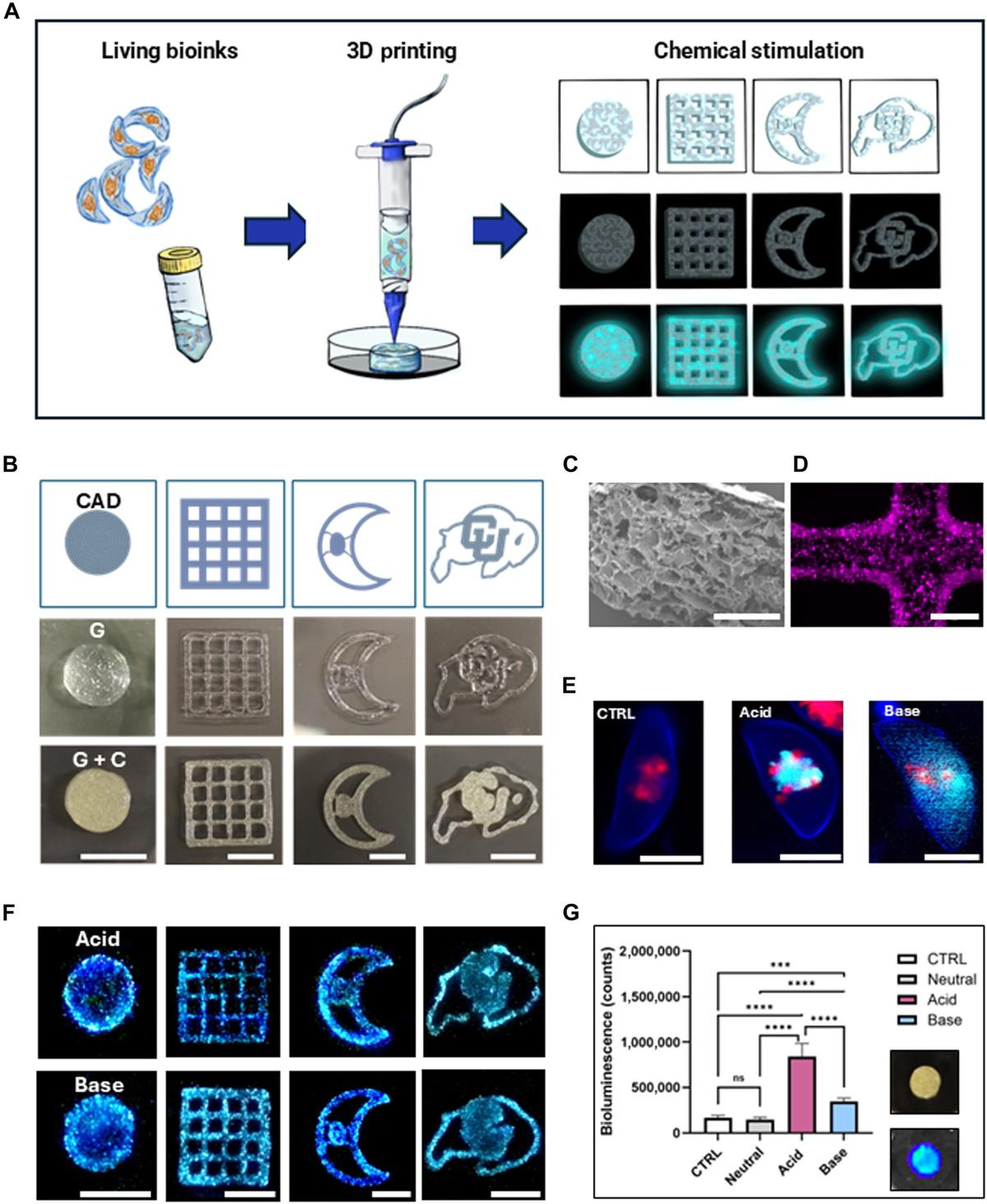
Bioluminescence has long fascinated scientists, but translating a fleeting natural glow into a reliable engineered material has remained elusive. Traditional approaches rely on mechanical agitation to trigger the light‑producing luciferin‑luciferase reaction, which quickly damages cellular structures and limits reuse. The University of Colorado Boulder team sidestepped this hurdle by leveraging the pH‑sensitive biochemistry of Pyrocystis lunula, allowing precise chemical cues to initiate illumination while preserving cell integrity. This strategy aligns with broader trends in bio‑fabrication, where living cells are embedded in printable matrices to create functional, responsive structures.
In the study, dinoflagellates were encapsulated within 4 wt % sodium alginate hydrogels and printed into millimeter‑scale beads that maintain nutrient flow and gas exchange. Acidic stimulation (pH 4) produced a concentrated, high‑intensity photon burst—approximately 112 000 counts—while basic treatment yielded a weaker, diffuse signal. Over a 30‑day period, low‑density cultures proliferated six‑fold, demonstrating that the matrix supports not just survival but active growth. When the acid‑conditioned constructs were later compressed, luminescence more than doubled, indicating that chemical priming sensitizes cells to mechanical inputs.
The ability to restimulate the same living material weekly for a month opens practical pathways for sustainable lighting, real‑time environmental monitoring, and soft‑robotic actuation. Industries seeking low‑power, self‑renewing illumination—such as offshore sensor networks or biodegradable wearables—can now consider biologically sourced light as a viable component rather than a laboratory curiosity. Future work will likely explore multiplexed chemical triggers and integration with electronic control systems, pushing bioluminescent inks toward commercial scalability.
New Bioluminescent Materials Sustain Light Across 4 Weekly Cycles
Comments
Want to join the conversation?
Loading comments...