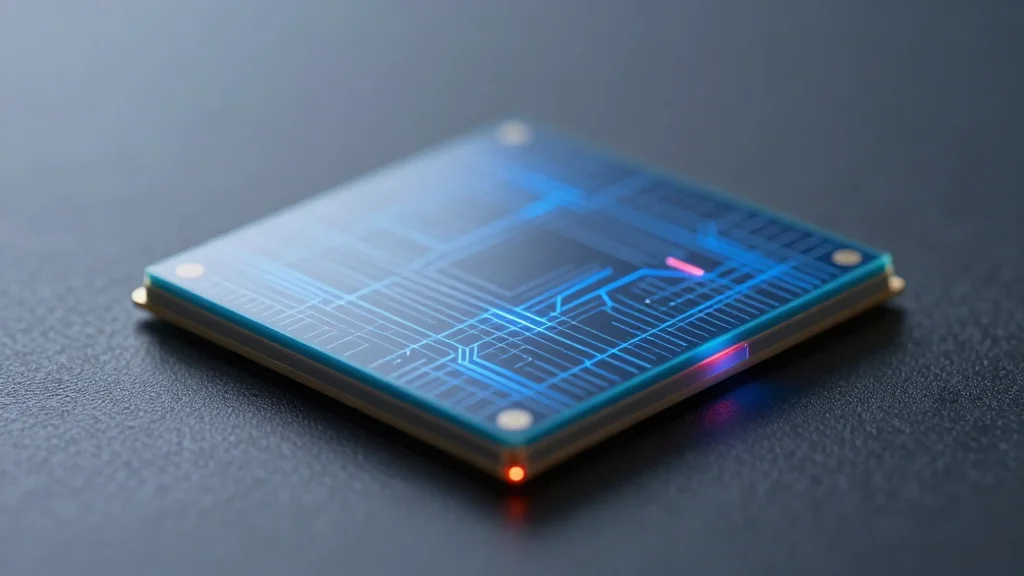
New Chip Offers Way to Make Use of Quantum System 'Imperfections'
Why It Matters
Controlled loss lets developers test quantum algorithms under realistic noise, speeding fault‑tolerant hardware development. It also creates opportunities to harness dissipation as a functional resource in emerging quantum technologies.
Key Takeaways
- •Programmable photonic chip simulates quantum system loss
- •Side waveguide acts as tunable environmental channel
- •Turns decoherence into a resource for quantum research
- •Supports design of noise‑resilient quantum processors
Pulse Analysis
Quantum computing promises exponential speedups, but real‑world devices are plagued by decoherence, leakage, and environmental noise that degrade performance. Traditional theoretical models often assume ideal, closed systems, leaving a gap between simulations and experimental realities. Researchers therefore need tools that can faithfully reproduce the messy conditions of actual hardware, allowing algorithm developers to gauge robustness before costly hardware iterations. The KTH team’s new photonic chip directly addresses this gap by providing a controllable laboratory for loss, bridging theory and practice.
The chip is an integrated silicon photonic circuit where photons travel through microscopic waveguides, much like electrons in conventional chips. A specially engineered side track functions as a loss channel; electrical signals adjust its coupling strength, dictating whether photons stay on the main path, split into superpositions, or are siphoned off to the environment. By measuring the diverted photons, scientists can map how quantum information dissipates, offering unprecedented insight into coherent absorption and the role of Fock‑state light in noisy settings. This programmable “railway junction” transforms loss from a passive defect into an active experimental parameter.
Beyond basic physics, the technology has clear commercial implications. Quantum processors and sensors must operate reliably despite inevitable imperfections, and the ability to emulate those imperfections accelerates the development of error‑correction codes and noise‑aware algorithms. Companies building photonic quantum hardware can use the chip to benchmark designs, while academic groups can explore novel protocols that exploit dissipation for tasks like state preparation or quantum thermodynamics. As the quantum industry matures, tools that turn noise into a resource will be pivotal in achieving scalable, real‑world applications.
New chip offers way to make use of quantum system 'imperfections'
Comments
Want to join the conversation?
Loading comments...