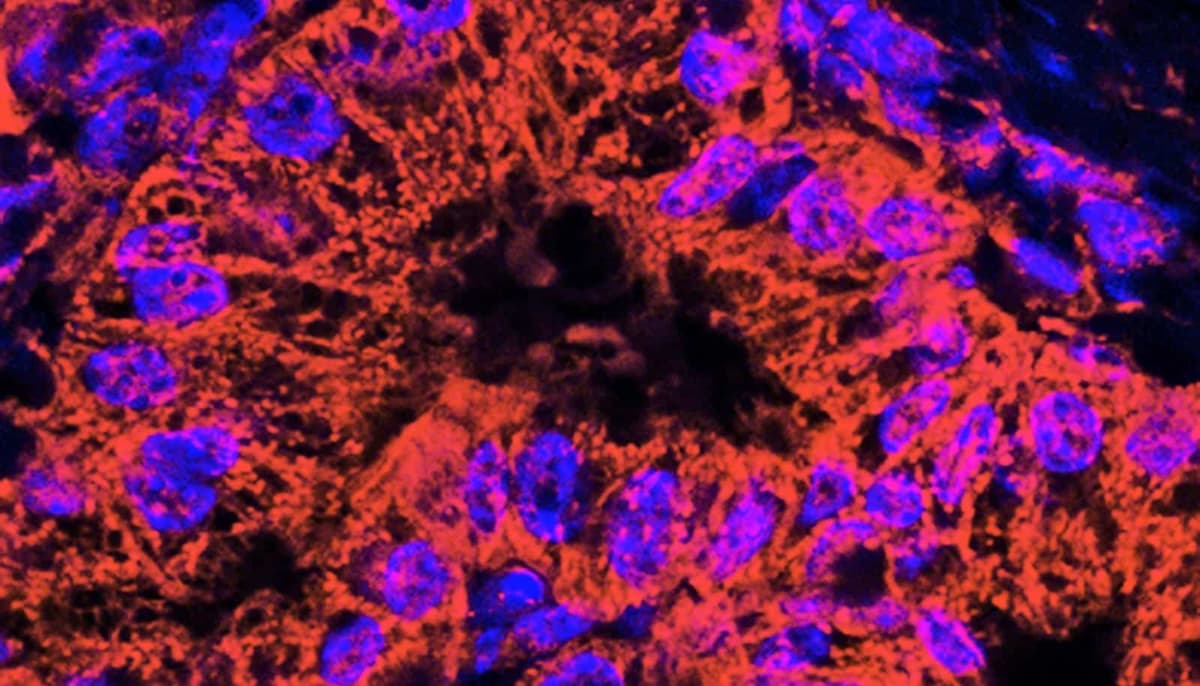
New Clues Shed Light on Why Pancreatic Cancer Is so Hard to Treat
Why It Matters
Dec2’s role links tumor immune evasion to circadian biology, offering a novel angle to improve pancreatic cancer outcomes. Targeting this pathway could enhance immunotherapy response rates in a disease with a 13% five‑year survival rate.
Key Takeaways
- •Dec2 gene masks pancreatic tumor cells from T‑cell detection
- •Knocking out Dec2 restores immune recognition in laboratory models
- •Dec2 expression follows a circadian rhythm, affecting therapy timing
- •Morning immunotherapy may be more effective due to Dec2 fluctuations
- •Targeting Dec2 could improve response rates to mRNA vaccines
Pulse Analysis
Pancreatic adenocarcinoma remains one of the deadliest cancers, with a five‑year survival hovering around 13 percent. Traditional chemotherapy and radiation have limited impact, and the disease’s notorious ability to hide from the immune system has thwarted the success of checkpoint inhibitors that transformed treatment for melanoma and lung cancer. The recent discovery that the transcription factor Dec2 cloaks tumor cells from cytotoxic T‑cells adds a molecular explanation to this clinical puzzle, positioning Dec2 as a promising target for next‑generation immunotherapies.
Beyond its immune‑masking function, Dec2 follows a daily oscillation driven by the body’s circadian clock. Researchers observed that T‑cell killing efficiency varied with the time of day, aligning with peaks and troughs of Dec2 expression. This chronobiological insight dovetails with emerging evidence that administering immunotherapy in the morning yields better outcomes than evening dosing. By integrating chronotherapy principles, clinicians could synchronize drug delivery with the tumor’s biological rhythms, potentially amplifying response rates without increasing toxicity.
The implications extend to the nascent field of mRNA cancer vaccines, which rely on robust T‑cell activation. In a small trial at Memorial Sloan Kettering, only half of the participants generated a durable immune response, a shortfall that Dec2‑mediated immune evasion may help explain. Combining Dec2 inhibition—whether through small‑molecule inhibitors, gene‑editing approaches, or timed dosing—with mRNA vaccine platforms could lift response rates and translate into longer survivorship. As biotech firms race to commercialize pancreatic cancer vaccines, integrating circadian‑aware strategies may become a differentiator, attracting investment and accelerating regulatory pathways for therapies that finally move the needle on this lethal disease.
New clues shed light on why pancreatic cancer is so hard to treat
Comments
Want to join the conversation?
Loading comments...