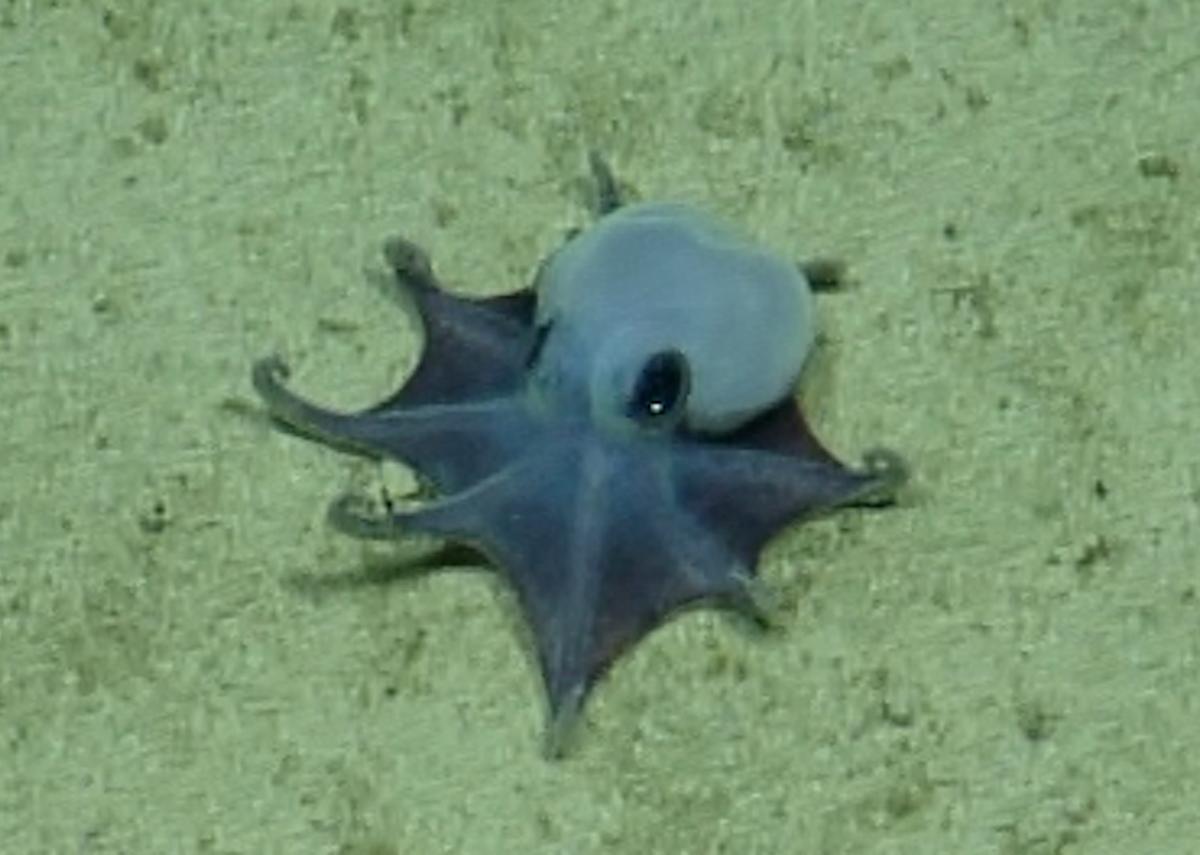
New Golf-Ball Sized Blue Octopus Species Now Identified in the Galapagos
Why It Matters
The discovery expands the catalog of deep‑sea biodiversity, highlighting gaps in marine taxonomy and the potential for many more unknown species that could inform ecology and conservation strategies.
Key Takeaways
- •New species *Microeledone galapagensis* discovered at 1,773 m depth.
- •Octopus is golf‑ball sized, blue, with short stubby arms.
- •CT scanning created 3D model without dissecting sole specimen.
- •Findings highlight vast, unexplored deep‑sea biodiversity in Pacific.
- •Researchers expect many more undiscovered deep‑sea octopus species.
Pulse Analysis
Deep‑sea exploration has entered a new era thanks to advances in remotely operated vehicles and high‑resolution imaging. The 2015 ROV dive off Darwin Island captured a tiny, vivid‑blue octopus that had never been seen by science. By preserving the sole specimen and transporting it to the Field Museum, researchers were able to apply computed‑tomography, generating a precise 3‑D reconstruction that revealed internal anatomy without damaging the animal. This non‑invasive approach is reshaping taxonomy, allowing scientists to describe new species while preserving valuable material for future study.
The anatomical quirks of *Microeledone galapagensis* raise intriguing ecological questions. Its compact body and unusually short arms, equipped with few suckers, suggest a feeding strategy that differs from the classic predatory grasp of larger octopods. Researchers hypothesize the octopus may sift sediment or ambush micro‑prey, an adaptation to the resource‑limited abyss. Such morphological specializations provide clues about evolutionary pressures in the deep ocean, where energy is scarce and habitats are isolated, prompting unique body plans that challenge conventional cephalopod models.
Beyond the novelty of a new species, the find signals a broader scientific imperative. The Pacific’s abyssal plains cover more area than all land masses combined, yet systematic surveys remain sparse. Each new discovery, like this blue octopus, underscores the hidden diversity that could influence ecosystem models, climate‑change impact assessments, and even biotechnological applications derived from novel marine compounds. Continued investment in deep‑sea ROV missions, coupled with cutting‑edge imaging and genetic tools, will likely reveal many more taxa, reinforcing the need for international collaboration to protect these fragile, largely unknown ecosystems.
New golf-ball sized blue octopus species now identified in the Galapagos
Comments
Want to join the conversation?
Loading comments...