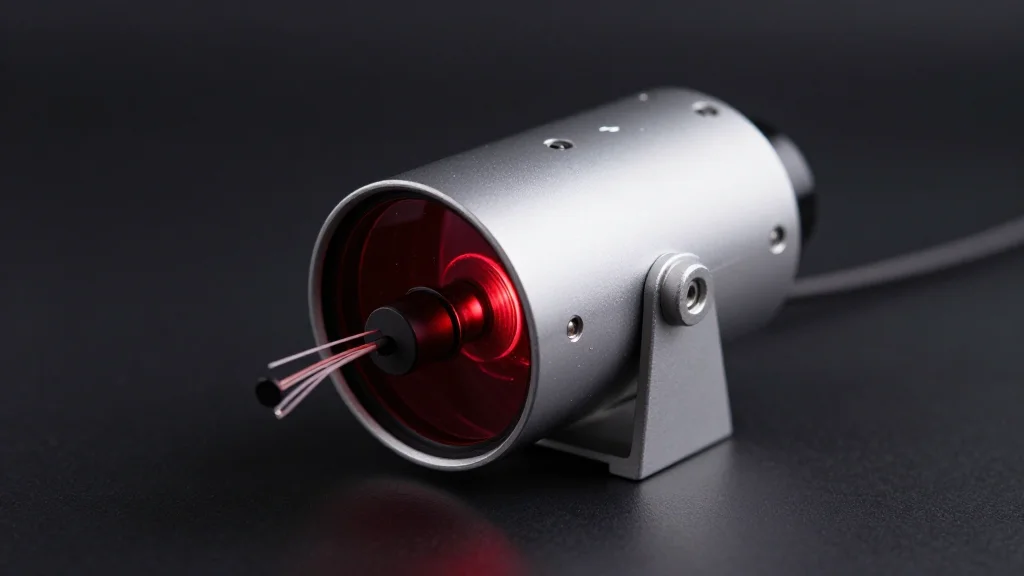
New Instrument Will Map the Formation of Early Galaxies
Why It Matters
Understanding how the first galaxies assembled reshapes cosmological models and guides future space‑telescope missions, making this instrument a pivotal tool for astrophysics research.
Key Takeaways
- •Instrument operates in near‑infrared, targeting redshift z>6
- •Resolves galaxy structures down to 1 kpc scales
- •Enables direct measurement of star‑formation rates in early universe
- •Complements JWST observations with wider field coverage
- •Cornell leads development, collaborating with NASA and ESA
Pulse Analysis
The early universe remains one of the most enigmatic epochs in cosmology, with the first galaxies forming under conditions vastly different from today. Traditional observations rely heavily on space‑based telescopes like JWST, which excel at deep, narrow fields but struggle to capture the broader cosmic web. By introducing a ground‑based instrument capable of surveying large swaths of sky in the near‑infrared, astronomers can bridge this gap, constructing three‑dimensional maps that reveal how primordial gas clouds coalesced into the first luminous structures.
Technically, the new spectrograph employs an array of micro‑lenslets coupled to high‑resolution detectors, delivering integral‑field data across a field of view ten times larger than comparable JWST instruments. Its sensitivity to wavelengths between 0.9 and 2.5 microns enables detection of key emission lines, such as Lyman‑alpha and H‑alpha, even from galaxies at redshift six and beyond. The collaboration between Cornell, NASA, and ESA ensures access to cutting‑edge detector technology and shared data pipelines, accelerating the turnaround from observation to scientific insight. Moreover, the instrument’s modular design allows future upgrades, keeping it relevant as next‑generation telescopes come online.
The scientific payoff promises to be transformative. Precise measurements of star‑formation rates, metallicity gradients, and dark‑matter halo masses will refine models of galaxy evolution and inform the design of upcoming missions like the Nancy Grace Roman Space Telescope. For the broader research ecosystem, the instrument offers a cost‑effective, high‑throughput platform that can support large survey programs, fostering collaborations across universities and industry partners focused on data analytics and instrumentation. In essence, this development not only deepens our grasp of cosmic origins but also strengthens the infrastructure supporting next‑generation astrophysical discovery.
New Instrument Will Map the Formation of Early Galaxies
Comments
Want to join the conversation?
Loading comments...