Why It Matters
The find fills a critical gap in pterosaur evolution, clarifying how early monofenestratans gave rise to later pterodactyloids. It also underscores the Mühlheim locality as a key window into Jurassic aerial ecosystems.
Key Takeaways
- •New genus Laueropterus vitriolus adds to Jurassic pterosaur diversity.
- •Wingspan ~1 m makes it largest known early monofenestratan.
- •Fossil from Mörnsheim Formation dates to 150‑143 Mya, Late Jurassic.
- •Shows mix of primitive and derived traits, informing pterosaur evolution.
- •Highlights Mühlheim locality as hotspot for non‑pterodactyloid monofenestratans.
Pulse Analysis
The discovery of Laueropterus vitriolus arrives at a pivotal moment for pterosaur research, as scientists strive to map the evolutionary bridge between basal flyers and the iconic pterodactyloids. Early monofenestratans, recognized only a decade ago, represent a fleeting but informative stage in vertebrate flight development. By situating this new genus within the Late Jurassic timeline, researchers can refine phylogenetic models that track morphological innovations such as the merged nostril‑antorbital opening, a hallmark of more derived forms.
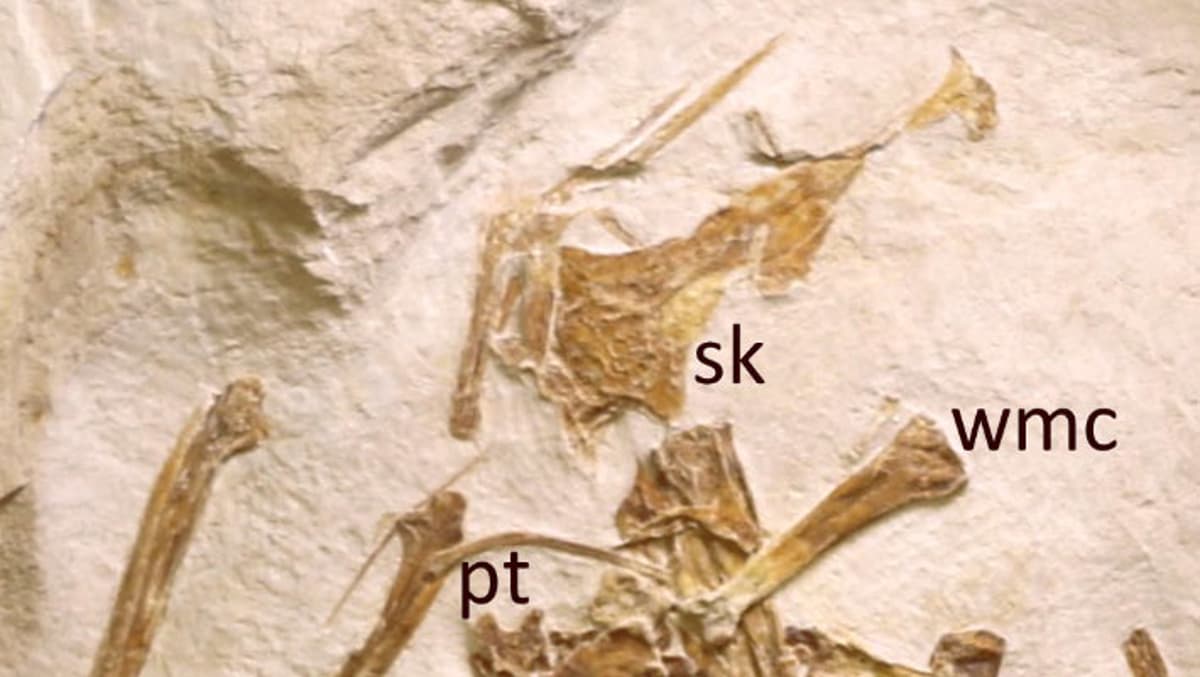
Laueropterus vitriolus boasts a roughly one‑meter wingspan, positioning it as the largest known early monofenestratan. Its skeleton preserves a blend of ancestral features—short wing elements and a robust skull—and advanced traits like the single cranial fenestra. These mixed characteristics suggest a mosaic evolutionary pattern, where functional adaptations emerged unevenly across the lineage. The specimen’s exceptional preservation on a limestone slab allows detailed study of delicate structures, including sternal plates and vertebral articulations, offering fresh data points for comparative anatomy and biomechanical modeling.
Beyond taxonomy, the find highlights the Mühlheim locality’s significance within the broader Solnhofen archipelago, long celebrated for yielding iconic fossils such as Archaeopteryx. The concentration of non‑pterodactyloid monofenestratans here hints at niche partitioning among Jurassic aerial predators and scavengers. As more specimens emerge, paleontologists anticipate uncovering ecological dynamics that shaped early flight ecosystems. This research not only enriches our understanding of prehistoric biodiversity but also informs modern discussions on evolutionary innovation and extinction patterns.
New Jurassic Pterosaur Unearthed in Germany
Comments
Want to join the conversation?
Loading comments...