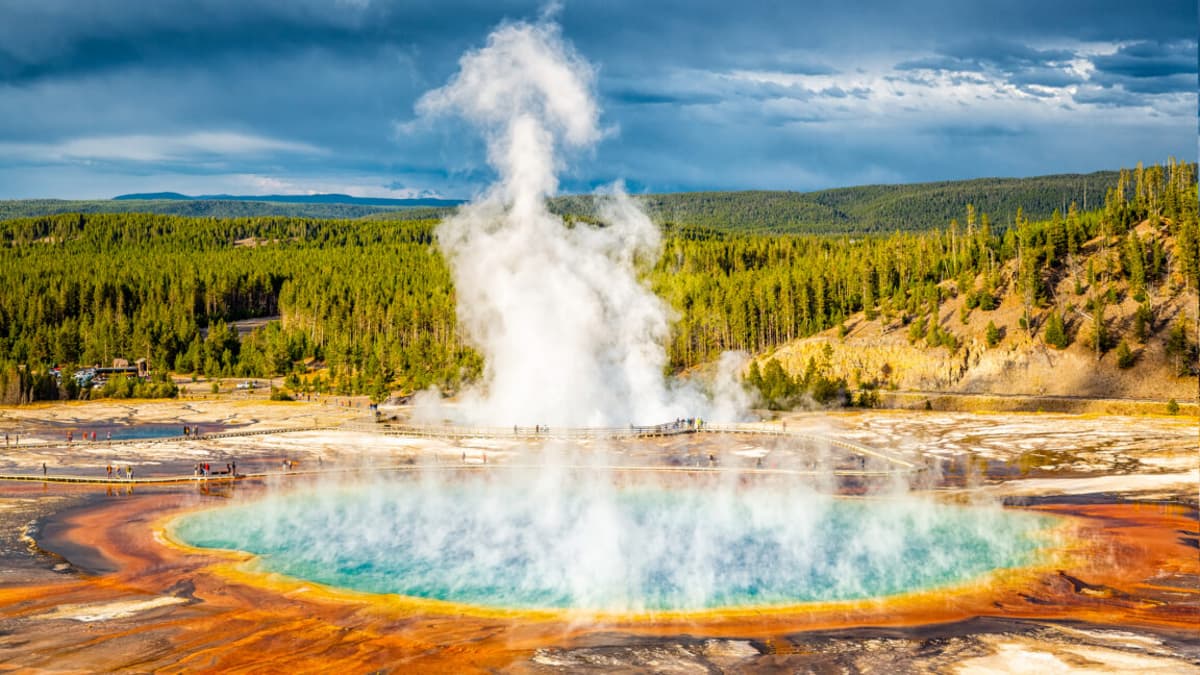
New Paper Argues History, Not Mantle Plume, Powers Yellowstone
Why It Matters
If correct, the study reshapes how geologists interpret continental hotspots, affecting volcanic risk assessments and resource exploration. It underscores the lasting influence of ancient plate dynamics on present‑day surface processes.
Key Takeaways
- •Farallon plate remnants drive stresses beneath Yellowstone, shaping magma pathways
- •New model replaces mantle plume with crustal stress‑induced conduits
- •Two magma arms feed Yellowstone caldera and Snake River Plain separately
- •Stress balance creates a volcano‑free gap between the two volcanic tracks
- •Findings highlight importance of tectonic history in hotspot behavior
Pulse Analysis
The Yellowstone hotspot has long been a textbook example of a mantle plume—a deep‑seated upwelling of hot rock that remains fixed while the North American plate drifts overhead. This paradigm explains the age‑progressive volcanic chain across the Snake River Plain but struggles with chemical differences between eruptions and a puzzling volcanic‑free zone. Recent debates have highlighted these inconsistencies, prompting researchers to search for alternative mechanisms that can reconcile the geological record with observable mantle dynamics.
In the latest Science article, a team of geophysicists builds a detailed model of the translithospheric magma plumbing system (TLMPS) beneath Yellowstone. By integrating seismic imaging, crustal thickness data, and the legacy of the Farallon plate’s subduction, they show that compressive and downward‑drag stresses carve two distinct pathways from the asthenosphere: one feeding the Yellowstone caldera, the other the Snake River Plain. These stress‑generated conduits allow mantle melt to ascend without the need for a focused plume, and they naturally produce the observed gap where volcanic activity is absent.
The implications extend beyond Yellowstone. If ancient plate remnants can dictate hotspot behavior, geologists may need to revisit other continental volcanic systems previously attributed to plumes. This stress‑driven framework could refine eruption forecasting, guide geothermal energy exploration, and improve our understanding of how tectonic inheritance shapes surface hazards. Future work will likely focus on dynamic simulations that trace the evolution of these stresses over millions of years, offering a more nuanced picture of Earth’s internal plumbing.
New paper argues history, not mantle plume, powers Yellowstone
Comments
Want to join the conversation?
Loading comments...