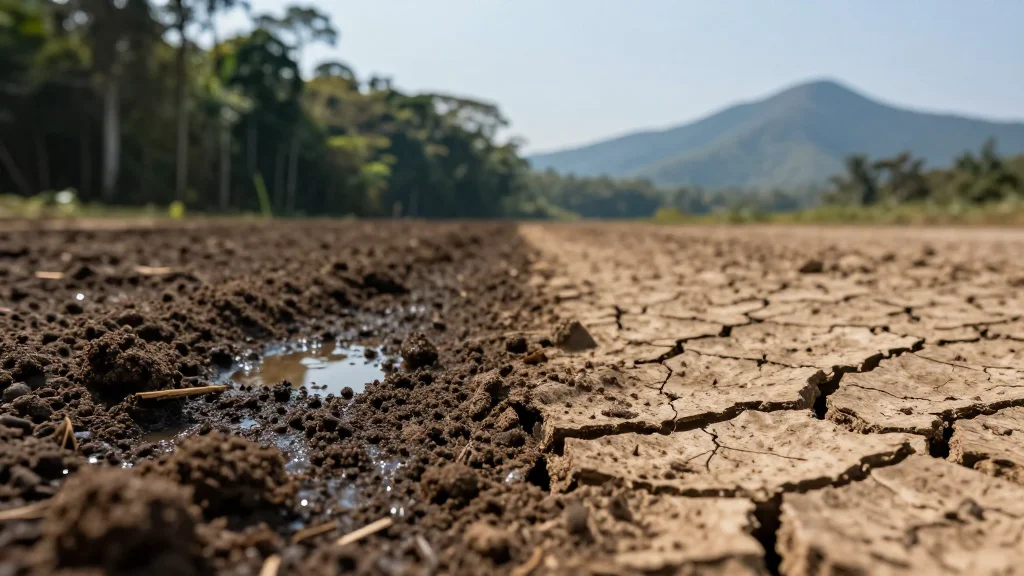
New Paper Shows Surges of Concentrated Precipitation Can Lead to Dryer Landscapes
Why It Matters
The mechanism links precipitation intensity to drought risk, challenging water‑resource planning that assumes total rainfall alone predicts supply. It signals that the American West’s dams and allocation agreements could become increasingly unreliable.
Key Takeaways
- •Concentrated storms increase surface runoff, boosting evaporation.
- •Amazon and U.S. West show strongest precipitation‑concentration trends.
- •Same annual rainfall can still produce severe drought conditions.
- •Existing Western water infrastructure may be maladapted to new volatility.
- •Study combines observations and simulations, confirming real‑world pattern.
Pulse Analysis
The paper by Justin Mankin and Corey Lesk introduces precipitation concentration as a missing link in the aridification puzzle. By analyzing multiple long‑term precipitation datasets, the authors demonstrate that when a region receives its yearly moisture in a handful of extreme events, the soil quickly becomes saturated, creating temporary ponds that evaporate rapidly. This process diverts water that would otherwise infiltrate groundwater or flow into streams, effectively reducing the hydrological yield of a catchment. Their global map highlights two clear hotspots— the Amazon basin and the American West, especially Wyoming and Colorado— where this trend has accelerated since the 1980s.
The findings upend the conventional assumption that total precipitation alone dictates water availability. In the Colorado River basin, for example, water managers have long relied on historical averages to allocate releases from reservoirs such as Lake Powell and Glen Canyon. If future winters deliver the same inches of rain and snow but in fewer, more intense storms, evaporation losses could rise sharply, leaving less water for agriculture, municipal use, and hydroelectric power. The study therefore raises urgent questions about the resilience of century‑old dam networks, water‑rights contracts, and interstate compacts that were designed for a more evenly distributed precipitation regime.
From a climate‑change perspective, precipitation concentration is a logical outcome of a warmer atmosphere that holds more moisture and releases it in heavier bursts. The research adds a quantitative dimension to the growing body of literature on ‘compound extremes,’ where flooding and drought coexist in the same season. Policymakers and insurers will need to incorporate this dual risk into adaptation strategies, ranging from revising floodplain maps to investing in water‑storage technologies that capture runoff more efficiently. As the authors note, further work linking El Niño forecasts to concentration patterns could improve seasonal planning for the West and other vulnerable regions.
New Paper Shows Surges of Concentrated Precipitation Can Lead to Dryer Landscapes
Comments
Want to join the conversation?
Loading comments...