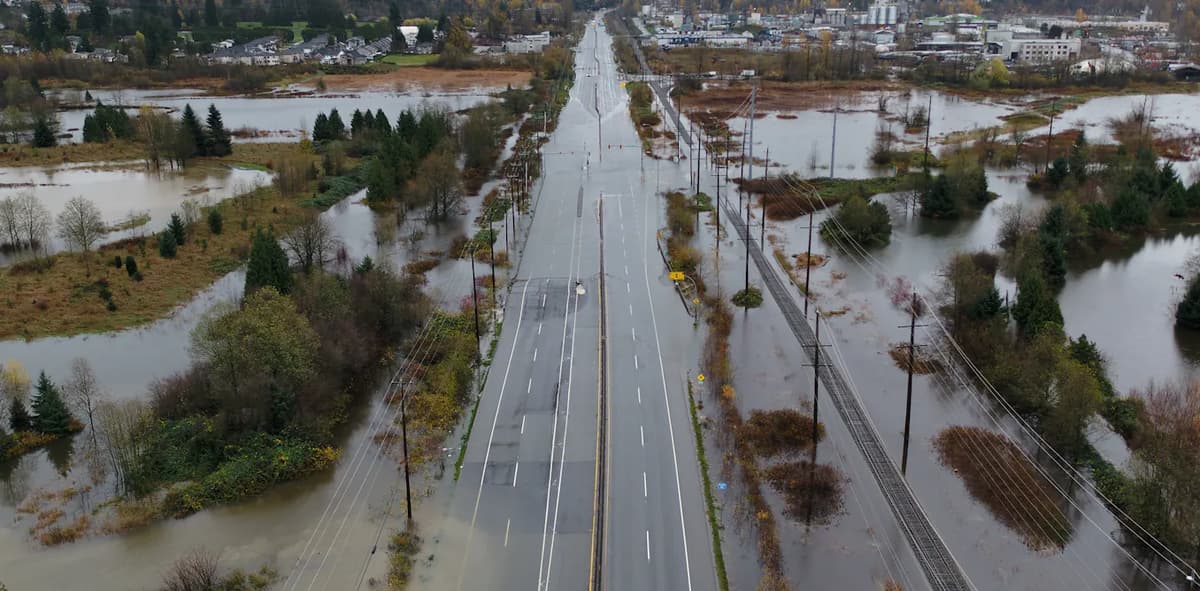
New Research Shows How Forests Can Prevent Floods of All Sizes
Why It Matters
Recognizing forests’ role in mitigating large floods reshapes risk assessments and justifies investment in nature‑based flood defenses, potentially reducing costly damages and enhancing community resilience.
Key Takeaways
- •Forests reduce frequency of large floods, not just small ones
- •Causal methods reveal stronger flood mitigation impact than non‑causal approaches
- •Traditional infrastructure aging; nature‑based solutions offer complementary protection
- •Degraded upland forests can trigger downstream flooding events
- •Causal science shift could unlock funding for forest flood management
Pulse Analysis
As climate change intensifies precipitation patterns, communities worldwide are grappling with more frequent and severe flooding. Conventional defenses such as dikes, levees, and dams are aging and increasingly insufficient, prompting a surge of interest in nature‑based solutions that can absorb and slow water flow. Forested landscapes, in particular, act as natural sponges—enhancing soil infiltration, moderating snowpack melt, and returning moisture to the atmosphere—thereby reducing runoff that fuels flood peaks.
The new study overturns a long‑standing assumption in forest hydrology by employing a causal analytical framework that directly links changes in forest cover to flood frequency and magnitude. Unlike the dominant non‑causal approach, which only tracks flood size shifts, the causal method accounts for all possible flood‑generating combinations, revealing that forest loss can dramatically raise the probability of even the largest flood events. Empirical evidence from multiple regions shows that intact forests can halve the likelihood of extreme floods, while deforestation can double or triple those odds.
These insights carry profound policy implications. By quantifying the protective value of forests across the full spectrum of flood sizes, the research provides a robust economic case for integrating forest conservation and restoration into flood‑risk management plans. Governments can leverage this evidence to unlock funding for large‑scale reforestation, incentivize sustainable land‑use practices, and design hybrid systems that blend engineered structures with ecosystem services. Such a shift not only safeguards lives and property but also delivers co‑benefits like carbon sequestration, biodiversity preservation, and water quality improvement, positioning forests as a cornerstone of resilient, climate‑smart infrastructure.
New research shows how forests can prevent floods of all sizes
Comments
Want to join the conversation?
Loading comments...