New Research Suggests Dark Matter Clusters Around Black Holes
Why It Matters
If dark matter clusters near black holes, it reshapes theories of galaxy evolution and offers novel signatures for astrophysical observations, potentially accelerating the hunt for dark‑matter detection.
Key Takeaways
- •Study uses simulations to map dark matter density near black holes.
- •Findings show dark matter spikes up to 100 times background density.
- •Enhanced dark matter concentration could boost black hole growth rates.
- •Observational signatures may appear in gravitational wave and gamma‑ray data.
Pulse Analysis
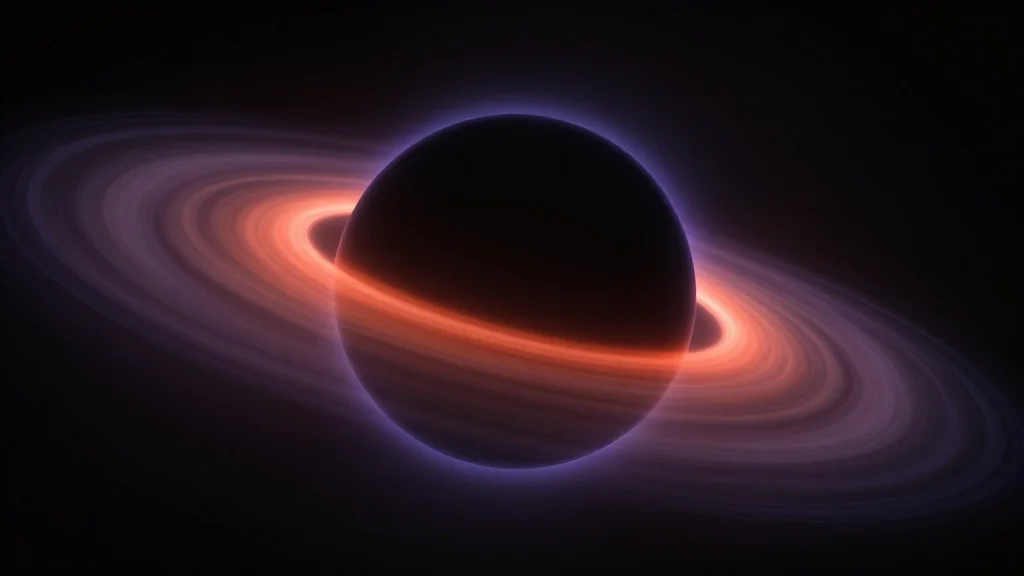
The discovery stems from a suite of ultra‑high‑resolution N‑body simulations that model the interplay between black‑hole gravity and surrounding dark‑matter particles. By tracking particle trajectories over billions of years, researchers observed a pronounced “spike” in dark‑matter density forming within a few Schwarzschild radii of the event horizon. This concentration exceeds the typical halo density by orders of magnitude, suggesting that black holes act as cosmic lenses that focus dark matter much like they do light.
These dense dark‑matter spikes have far‑reaching implications for astrophysics. A higher local dark‑matter density can increase the rate at which black holes accrete mass, potentially accelerating their growth in the early universe. Moreover, the spikes may produce distinctive signals—such as enhanced annihilation radiation or subtle modulations in gravitational‑wave waveforms—that could be captured by next‑generation observatories like LISA and the Cherenkov Telescope Array. Detecting such signatures would provide a rare indirect probe of dark‑matter particle properties, bridging the gap between cosmology and particle physics.
Looking ahead, the research community is poised to refine these models with more sophisticated simulations that incorporate baryonic feedback and relativistic effects. Parallel observational campaigns will target regions around supermassive black holes in nearby galaxies, seeking excess gamma‑ray or neutrino emission that aligns with spike predictions. If confirmed, the phenomenon could rewrite our understanding of dark‑matter distribution on small scales and inform the design of future dark‑matter detection experiments, underscoring the synergy between theoretical insight and empirical discovery.
New Research Suggests Dark Matter Clusters Around Black Holes
Comments
Want to join the conversation?
Loading comments...