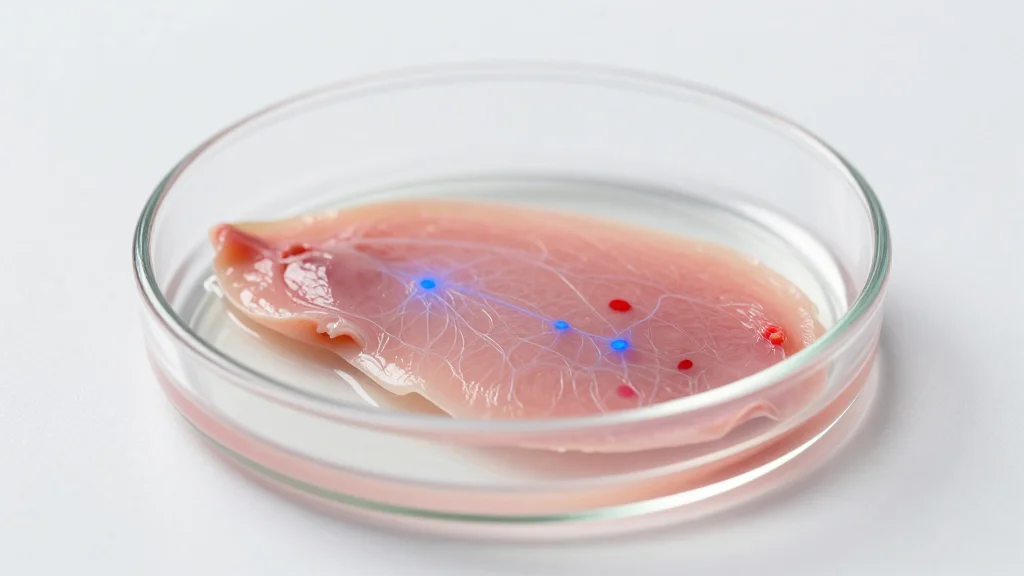
New Scoring Tool Shows Radiation Can Reprogram Pancreatic Tumor Environment
Why It Matters
By turning the tumor’s surrounding stroma into a measurable target, the HOST‑Factor could help personalize radiation strategies and improve outcomes for a disease with historically low survival rates. Its adoption may also extend to other solid tumors where the microenvironment drives resistance.
Key Takeaways
- •HOST‑Factor provides a single numeric score of pancreatic tumor microenvironment.
- •PLDR chemoradiation shifts CAF/ECM toward anti‑tumor state, halving support.
- •Composite score detected changes missed by individual biomarkers in lab models.
- •Phase I trial tests safety of escalated PLDR doses in resectable PDAC.
- •Researchers will apply HOST‑Factor to patient samples and other solid tumors.
Pulse Analysis
Pancreatic ductal adenocarcinoma remains one of the deadliest cancers, largely because its dense, fibrous stroma creates a protective niche for tumor cells. Traditional staging focuses on the cancer itself, ignoring the surrounding cancer‑associated fibroblasts (CAFs) and extracellular matrix that can either suppress or fuel disease progression. The lack of a unified metric to assess this microenvironment has hampered efforts to predict treatment response and develop stroma‑targeted therapies.
The newly introduced HOST‑Factor addresses that gap by integrating multiple CAF and matrix biomarkers into a single quantitative score. In vitro experiments demonstrated that pulsed low‑dose‑rate (PLDR) chemoradiation drives the stromal compartment toward an anti‑tumor state, cutting the tumor‑supportive capacity of CAF‑derived scaffolds roughly in half compared with conventional regimens. This shift was captured only by the composite HOST‑Factor, highlighting its sensitivity over isolated markers and suggesting that PLDR could be a more effective radiation strategy for reprogramming the tumor niche.
Translating these findings, Fox Chase has launched a Phase I trial to assess the safety of escalated PLDR doses in patients with resectable pancreatic cancer. Ongoing analysis will apply the HOST‑Factor to pre‑ and post‑treatment biopsies, aiming to validate the score as a predictive diagnostic tool. If successful, the approach could be expanded to other solid tumors where the microenvironment plays a pivotal role, offering clinicians a new lever to tailor therapies and potentially improve survival across a range of hard‑to‑treat cancers.
New scoring tool shows radiation can reprogram pancreatic tumor environment
Comments
Want to join the conversation?
Loading comments...