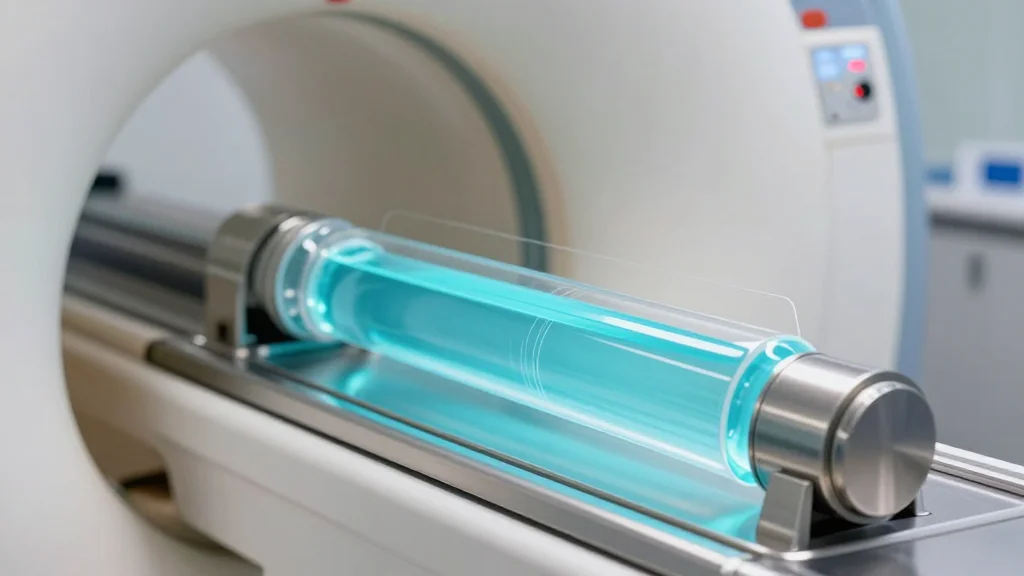
New Sensor Could Allow MRIs to See Molecular-Level Changes
Why It Matters
By turning MRI into a molecular‑sensing platform, the technology could accelerate disease‑mechanism studies and drug testing while reducing reliance on invasive animal procedures. Its modularity also lowers the barrier for researchers to develop custom imaging probes.
Key Takeaways
- •Genetic sensor enables MRI molecular imaging.
- •MAPPER uses modular aquaporin‑based probes.
- •Allows real‑time tracking of disease processes in animals.
- •Reduces need for sacrificial animal studies.
- •Customizable for various cellular targets.
Pulse Analysis
Magnetic resonance imaging has long been prized for its non‑invasive, high‑resolution view of anatomy, yet its inability to report on biochemical changes has limited its utility in early‑stage disease detection. Traditional molecular imaging relies on optical reporters such as fluorescent proteins, which cannot penetrate deep tissue in living organisms. By harnessing synthetic biology, the UCSB team created a genetically encoded sensor that translates intracellular water‑flux alterations into MRI‑detectable contrast, effectively giving the scanner a molecular "glow" without ionizing radiation.
The core of the new platform, dubbed MAPPER, integrates aquaporin channels—natural water conduits in cell membranes—with interchangeable protein domains that respond to specific cellular events. When a target process, such as calcium influx or protease activity, triggers the attached domain, the resulting change in water movement modifies the local magnetic environment, producing a distinct MRI signal. This LEGO‑like architecture enables researchers to assemble up to ten different detection circuits from a single scaffold, dramatically shortening development cycles compared with designing bespoke MRI sensors from scratch.
Beyond academic curiosity, MAPPER could reshape preclinical pipelines by allowing longitudinal imaging of the same animal, capturing disease progression and therapeutic response in real time. Such continuous monitoring reduces animal numbers, improves statistical power, and offers richer datasets for drug developers. While translation to human diagnostics will require safety validation and signal‑to‑noise optimization, the approach opens a pathway toward MRI‑based molecular biomarkers that could complement existing imaging modalities and inform precision medicine strategies.
New sensor could allow MRIs to see molecular-level changes
Comments
Want to join the conversation?
Loading comments...