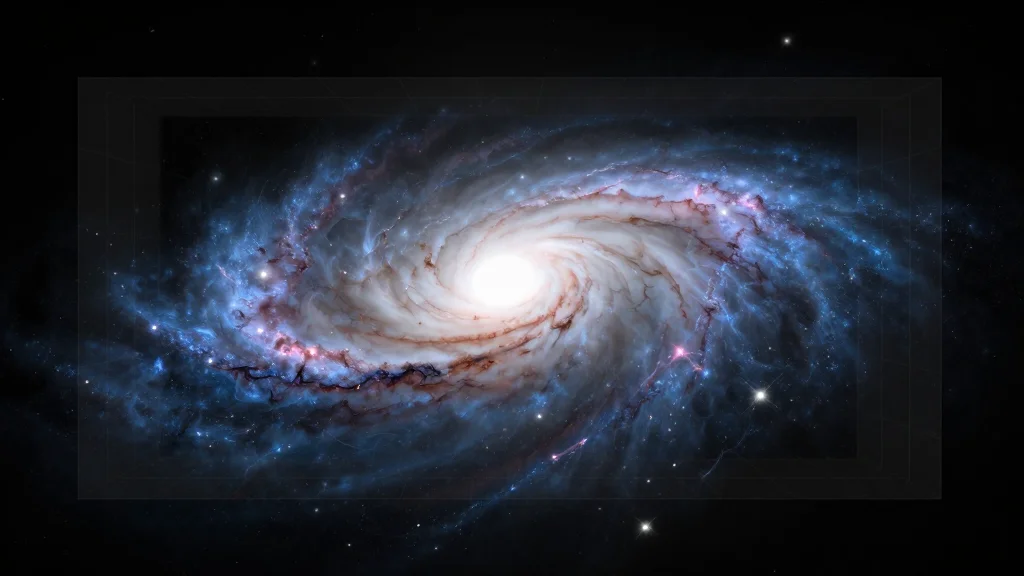
New Simulations Reveal the Cold, Dusty Reality of Galaxy Formation
Why It Matters
By highlighting the dominant role of cold, dusty gas, the study forces a revision of galaxy‑formation models and improves the interpretation of upcoming observations from JWST and next‑generation surveys.
Key Takeaways
- •Cold, dusty gas drives most early galaxy growth
- •Simulations resolve structures below 1 kpc across 100 Mpc volume
- •Dust cooling boosts star‑formation efficiency by ~30%
- •Model predictions align with JWST high‑z galaxy data
Pulse Analysis
The conventional picture of galaxy assembly has long emphasized hot, ionized halos that gradually cool to feed star formation. Recent advances in computational power now allow astrophysicists to embed sophisticated dust physics into large‑scale simulations, revealing a starkly different environment. In the new models, cold streams of metal‑rich, dust‑laden gas plunge directly into galactic cores, bypassing the slow cooling of hot halos and igniting rapid starbursts. This paradigm shift is supported by high‑resolution treatment of grain‑size distributions and radiative transfer, which together lower gas temperatures and enhance fragmentation.
Technical details underscore the breakthrough. The simulation suite spans a cubic 100‑megaparsec region, achieving sub‑kiloparsec resolution that captures the turbulent interplay between gas, dust, and radiation. By tracking dust production from supernovae and asymptotic giant branch stars, the models quantify how dust grains act as efficient coolants, shortening cooling times by up to a factor of three. Star‑formation rates emerging from these conditions reproduce the observed stellar mass function from the local universe to redshift six, narrowing a long‑standing gap between theory and observation.
The implications extend beyond academic curiosity. With the James Webb Space Telescope already delivering unprecedented views of dusty, high‑redshift galaxies, these simulations provide a vital interpretive framework. They suggest that future surveys—such as those planned with the Nancy Grace Roman Space Telescope and the Euclid mission—should prioritize dust‑sensitive diagnostics to accurately trace galaxy growth. Ultimately, integrating cold‑dust physics into cosmological models promises more reliable forecasts of galaxy evolution, informing everything from dark‑matter halo mapping to the planning of next‑generation observatories.
New Simulations Reveal the Cold, Dusty Reality of Galaxy Formation
Comments
Want to join the conversation?
Loading comments...