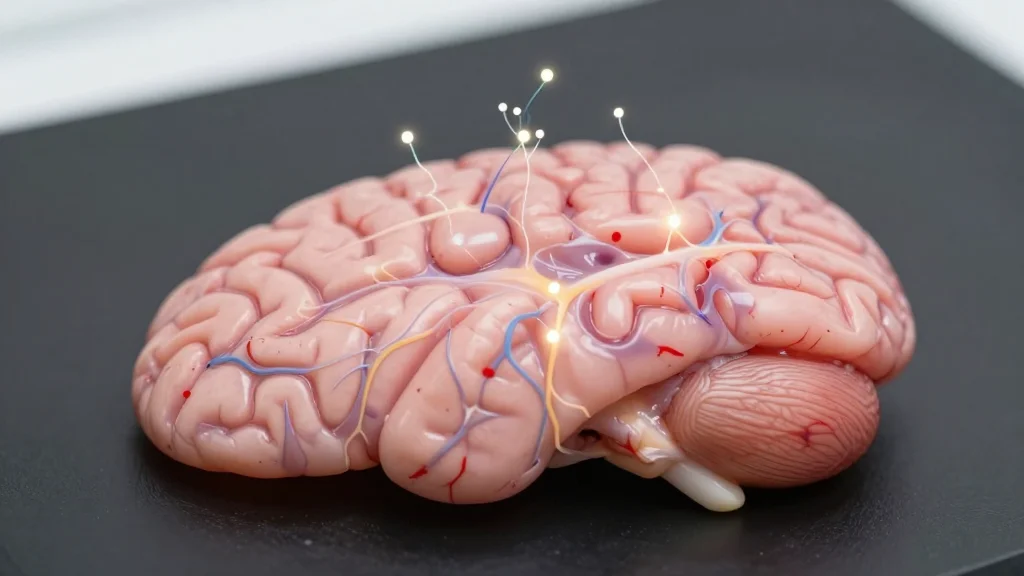
New Tool Can See How Different Brain Cell Types Work Together
Why It Matters
PhysMAP gives researchers a scalable way to link cell‑type activity to disease mechanisms, accelerating therapeutic target discovery for circuitopathies. Its open‑data foundation also lowers barriers for future innovation in neural recording analysis.
Key Takeaways
- •PhysMAP separates electrical signatures of distinct brain cell types
- •Tool trained on seven open optotagged datasets, outperforms prior methods
- •Enables cell-type analysis without genetic tagging in new recordings
- •Supports research into circuitopathies like schizophrenia and epilepsy
- •Shows open data can accelerate neuroscience tool creation
Pulse Analysis
Neural electrophysiology has long captured the aggregate firing of millions of neurons, yet the field has struggled to attribute those signals to specific cell types. Traditional approaches rely on genetic markers or optotagging, which require invasive manipulation and limit studies to specialized labs. The inability to discern the contributions of inhibitory versus excitatory populations hampers our understanding of how precise cellular circuits compute information and go awry in mental illness. As a result, therapeutic strategies often target broad network activity rather than the cellular roots of pathology.
PhysMAP addresses this gap by leveraging machine‑learning to decode the unique waveform features of individual neuronal classes directly from raw recordings. Using seven open datasets that paired electrophysiology with optotagged cell identities, the team taught the algorithm to recognize patterns associated with parvalbumin‑positive, somatostatin‑positive, and other key cell types. Benchmarks show PhysMAP matches or exceeds the accuracy of prior tools like WaveMAP, while its ability to operate on untaged datasets expands its utility to any high‑density probe experiment. The open‑source nature of the training data exemplifies how shared resources can catalyze rapid methodological breakthroughs.
The implications for psychiatry and neurology are profound. By pinpointing which cell types drive abnormal oscillations in disorders labeled as "circuitopathies," researchers can design interventions that modulate precise neuronal subpopulations, potentially improving efficacy and reducing side effects. Moreover, pharmaceutical pipelines may incorporate PhysMAP‑derived biomarkers to assess drug impact on targeted circuits in vivo. As high‑density electrode technologies become standard, tools like PhysMAP will be essential for translating massive data streams into actionable biological insight, ushering a new era of cell‑type‑specific neuroscience.
New tool can see how different brain cell types work together
Comments
Want to join the conversation?
Loading comments...