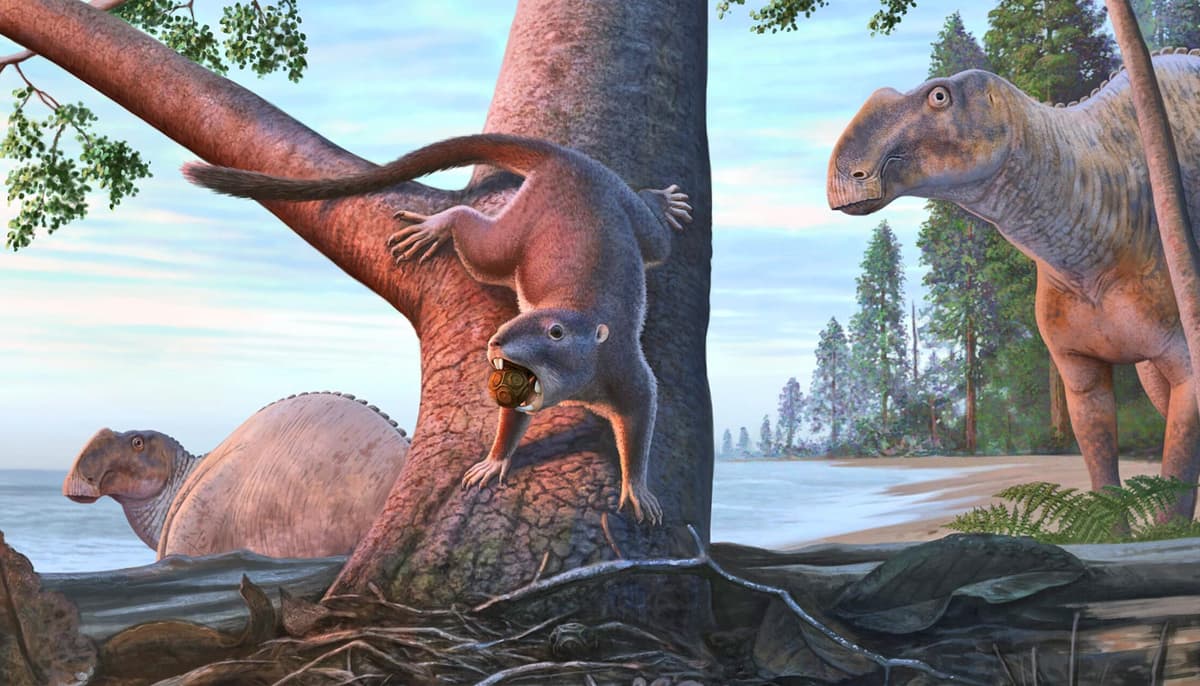
Newly Discovered Hamster-Sized Mammal Lived Alongside Dinosaurs
Why It Matters
The discovery clarifies how small, omnivorous mammals endured the mass extinction that wiped out the dinosaurs, shedding light on the evolutionary roots of today’s mammalian diversity. It also demonstrates the power of advanced imaging to extract detailed data from rare fossil fragments.
Key Takeaways
- •Cimolodon desosai measured about the size of a golden hamster
- •Fossil includes teeth, skull, femur, and ulna for detailed study
- •Micro‑CT imaging revealed high‑resolution dental morphology for species identification
- •Small, omnivorous traits likely helped multituberculates survive the K‑Pg extinction
Pulse Analysis
The Late Cretaceous landscape of western North America was dominated by towering dinosaurs, yet tiny mammals like multituberculates quietly thrived beneath their shadows. *Cimolodon desosai*—named after field assistant Michael de Sosa—represents one of the best‑preserved members of this ancient order, offering a rare glimpse into the anatomy of a creature that measured roughly 10 cm, comparable to a modern golden hamster. By situating this species within the broader *Cimolodon* genus, paleontologists can refine biogeographic maps of mammalian dispersal along the Pacific coast, illustrating how these resilient mammals occupied both ground and arboreal niches.
The research team leveraged micro‑computed tomography to generate high‑resolution, three‑dimensional images of the fossil’s dental and skeletal elements. This non‑destructive technique revealed subtle cusp patterns on the molars that differentiate *C. desosai* from its relatives, confirming it as a distinct species. The presence of a relatively complete femur and ulna further enables biomechanical modeling of its locomotor capabilities, suggesting a versatile lifestyle that combined climbing with swift terrestrial movement. Such detailed morphological data are crucial for reconstructing evolutionary pathways and for testing hypotheses about mammalian survival strategies during the Cretaceous‑Paleogene (K‑Pg) boundary event.
Understanding why certain small mammals endured the catastrophic asteroid impact that eliminated 75 percent of Earth’s species informs broader discussions about resilience in the face of environmental upheaval. The omnivorous diet and diminutive size of *C. desosai* likely conferred adaptive advantages—flexible feeding habits and lower resource demands—that helped multituberculates persist while larger vertebrates perished. Insights from this discovery not only enrich the fossil record but also provide analogues for modern conservation, highlighting how ecological generalists may better weather rapid climate shifts. Future excavations along the Pacific margin, combined with advanced imaging, promise to uncover additional specimens that will further illuminate the early evolutionary experiments leading to today’s mammalian megadiversity.
Newly discovered hamster-sized mammal lived alongside dinosaurs
Comments
Want to join the conversation?
Loading comments...