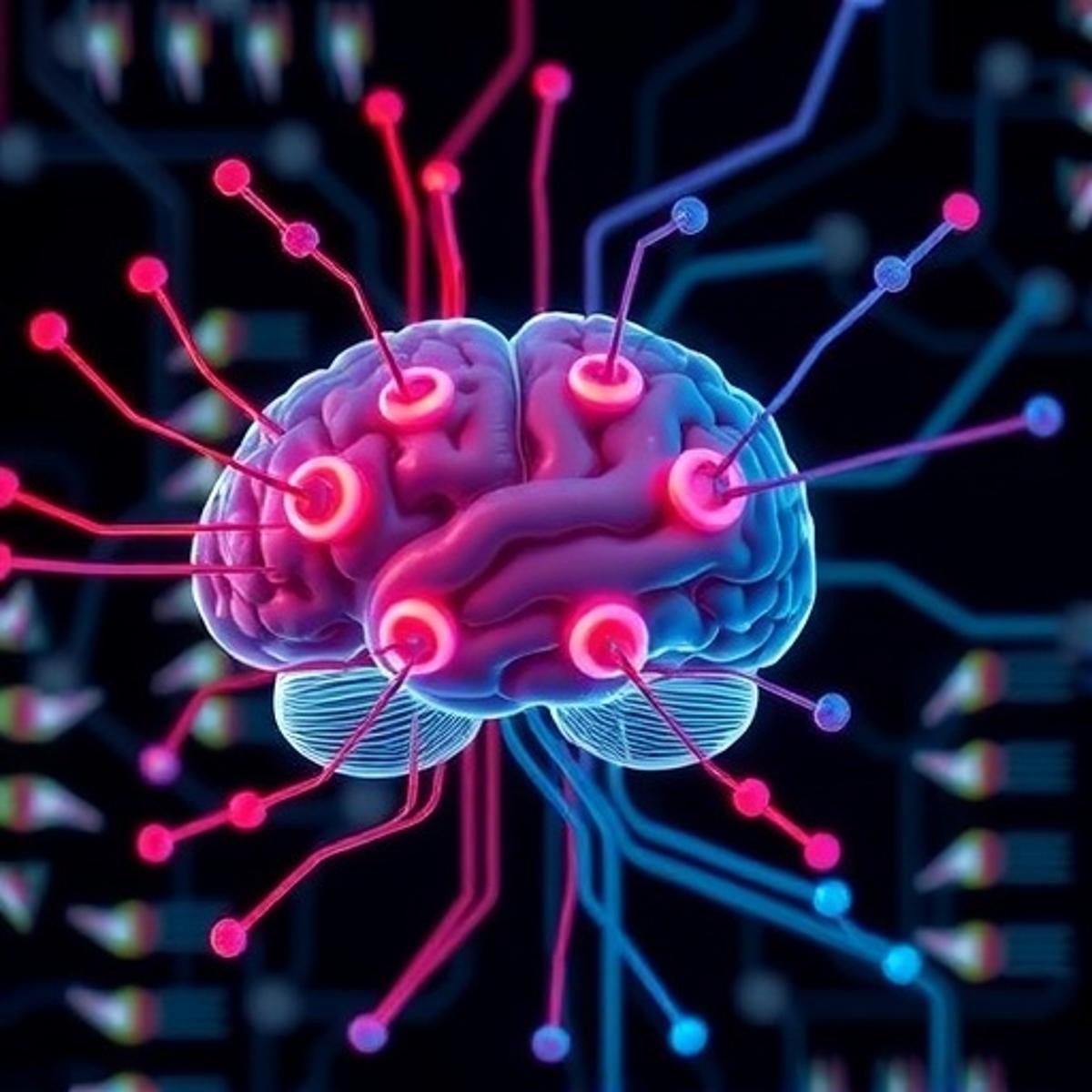
Newly Discovered ‘Switchboard’ Enables the Brain to Create New Memories While Preserving Old Ones
Why It Matters
Understanding how the brain segregates new and old information could transform therapeutic strategies for cognitive decline and trauma‑induced memory loss.
Key Takeaways
- •Switchboard circuit links hippocampus to prefrontal cortex for memory gating
- •Optogenetic activation preserves prior memories while encoding new ones
- •Mice learned two distinct mazes without interference
- •Potential target for Alzheimer’s and PTSD treatments
- •Memory capacity may hinge on switchboard efficiency
Pulse Analysis
Memory formation has long been viewed as a trade‑off between stability and plasticity. Classic models suggest that new learning can overwrite older traces, leading to interference that hampers recall. Recent advances in neuroimaging and circuit‑level manipulation have begun to challenge this view, proposing specialized pathways that protect established memories while allowing fresh encoding. The discovery of a "switchboard" circuit adds a critical piece to this puzzle, offering a mechanistic explanation for how the brain maintains a rich, layered repository of experiences.
In the study, scientists employed optogenetics to selectively stimulate neurons connecting the hippocampal CA1 region with the medial prefrontal cortex in mice. Subjects first mastered a spatial maze, forming a robust memory trace. When the switchboard was activated during a second, distinct maze task, the animals acquired the new skill without degrading performance on the first maze. Electrophysiological recordings revealed that the switchboard modulates synaptic strength, effectively gating information flow to prevent overlap. This dual‑task capability was quantified by a 30% improvement in new‑task learning speed compared with control groups, while retention of the original memory remained unchanged.
The implications extend beyond basic neuroscience. By pinpointing a circuit that balances memory preservation and acquisition, researchers have identified a promising target for pharmacological or neuromodulatory interventions aimed at cognitive disorders. Enhancing switchboard function could mitigate memory loss in Alzheimer’s disease, while dampening its activity might help patients with PTSD suppress intrusive recollections. Moreover, the concept of a biological switchboard inspires new architectures for artificial intelligence, where separate memory modules could be coordinated to avoid catastrophic forgetting. Future work will explore the switchboard’s role in human cognition and assess its therapeutic potential through clinical trials.
Newly Discovered ‘Switchboard’ Enables the Brain to Create New Memories While Preserving Old Ones
Comments
Want to join the conversation?
Loading comments...