NewOrbit Raises $18.5m to Build a Satellite to Survive VLEO for up to 5 Years
Companies Mentioned
Why It Matters
VLEO promises higher data throughput and sharper imaging, opening a fresh commercial frontier that could reshape satellite services and defense monitoring. NewOrbit’s financing validates investor confidence in overcoming the technical hurdles of sustained ultra‑low‑orbit operations.
Key Takeaways
- •NewOrbit raised $18.5 million Series A led by Voyager Ventures.
- •NEO‑1 aims for 5‑year VLEO mission at 200‑300 km altitude.
- •AURA propulsion uses xenon, no on‑orbit refueling required.
- •VLEO could become new commercial layer for imaging and defense.
Pulse Analysis
Very low‑Earth orbit (VLEO), defined as 200‑300 km above the planet, offers distinct performance benefits over traditional low‑Earth orbit. The reduced altitude shortens signal latency, improves spatial resolution for imaging payloads, and enables higher revisit rates for Earth‑observation constellations. However, the environment is harsh: atomic oxygen corrodes surfaces, and atmospheric drag forces satellites to deorbit within weeks unless they can continuously compensate. NewOrbit’s recent $18.5 million Series A injection signals that investors see a viable path to mitigate these challenges and monetize the altitude band.
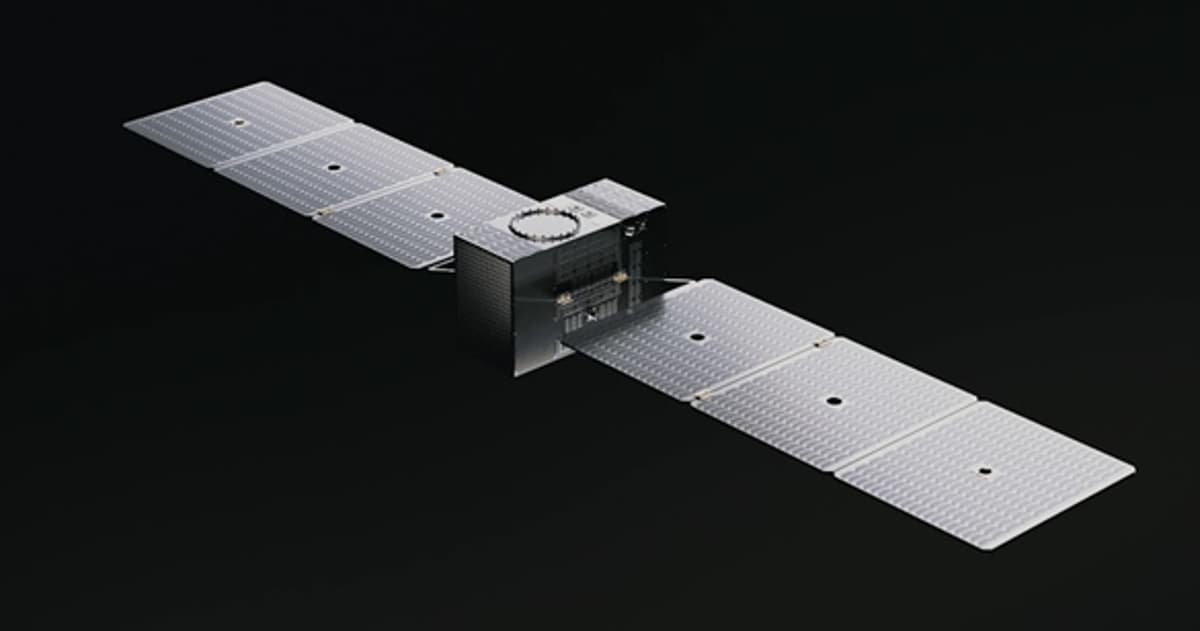
NewOrbit’s flagship NEO‑1 leverages its proprietary AURA propulsion system, which burns xenon—a dense, high‑specific‑impulse propellant—while harvesting residual atmospheric particles for attitude control. The satellite’s symmetrical geometry neutralizes aerodynamic torque, allowing it to maintain a stable orbit without frequent thruster firings. By eliminating the need for on‑orbit refueling, NewOrbit sidesteps a major logistical hurdle that has limited other VLEO concepts. The company’s engineering team, sourced from SpaceX, NASA JPL, Rocket Lab, and Formula 1, underscores the cross‑industry expertise required to translate theory into a five‑year operational lifespan.
If NEO‑1 succeeds, it could catalyze a new market segment for high‑resolution imaging, LiDAR mapping, and low‑latency communications, especially for defense and critical‑infrastructure monitoring. Competitors such as Kreios Space, Viridian Space, and Albedo are also pursuing air‑breathing electric propulsion, suggesting a nascent ecosystem will emerge around VLEO platforms. Moreover, the lower orbital altitude reduces the risk of long‑term debris cascades, a concern that has plagued higher orbits. As satellite constellations like Starlink experiment with lower altitudes, NewOrbit’s approach may set the technical and regulatory standards for the next generation of ultra‑low‑orbit services.
NewOrbit raises $18.5m to build a satellite to survive VLEO for up to 5 years
Comments
Want to join the conversation?
Loading comments...