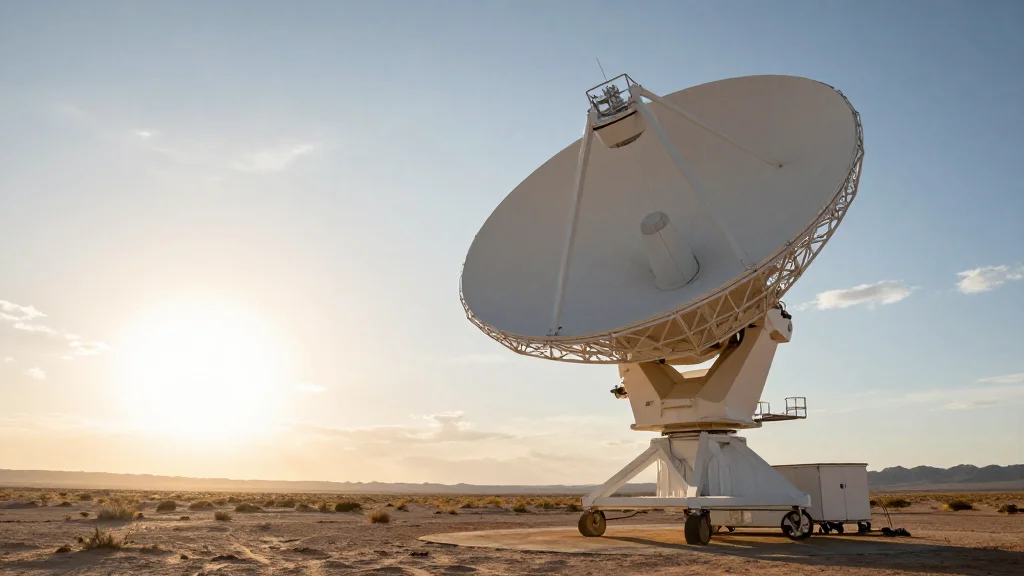
NgVLA Prototype Achieves First Light, Paving Way for 244‑Antenna Array

Companies Mentioned

Why It Matters
First light for the ngVLA prototype confirms that the engineering concepts needed for a continent‑spanning, ultra‑sensitive radio array are viable. By extending baseline lengths to thousands of kilometres, the ngVLA will resolve astronomical structures at unprecedented scales, opening new windows on planet‑forming disks, the environments of supermassive black holes, and the faint signals from the early universe. The project also serves as a catalyst for technology development in high‑frequency receivers, digital signal processing, and data‑intensive computing, with spillover benefits for telecommunications and remote sensing. Beyond pure science, the ngVLA represents a strategic investment in U.S. scientific infrastructure. It will attract a new generation of researchers, sustain high‑skill jobs at observatories and industry partners, and reinforce international collaborations that are essential for tackling the most ambitious astrophysical questions. The successful first light therefore has implications for national competitiveness in both fundamental research and high‑technology sectors.
Key Takeaways
- •ngVLA prototype antenna achieved first light, observing Sun, Crab Nebula and Perseus A
- •Prototype acted as a 28th antenna alongside the existing 27‑antenna VLA
- •Project plans a 244‑antenna array spanning over 8,045 km across North America
- •Tony Beasley highlighted the milestone as proof of engineering progress for the next great radio facility
- •Successful tests pave the way for detailed performance metrics and full‑array funding decisions
Pulse Analysis
The ngVLA’s first‑light success arrives at a pivotal moment for radio astronomy, where the community is balancing the promise of ultra‑high‑resolution imaging against the escalating costs of large‑scale infrastructure. Historically, breakthroughs such as the original VLA and the Atacama Large Millimeter/submillimeter Array (ALMA) have been tied to decisive engineering demonstrations that convinced funders to commit to multi‑billion‑dollar builds. The prototype’s seamless integration with the legacy VLA not only validates the hardware but also demonstrates operational compatibility—a non‑trivial hurdle when merging new technology with decades‑old systems.
From a market perspective, the ngVLA could become a magnet for private‑sector partnerships, especially in high‑frequency receiver design and real‑time data processing. Companies that develop low‑noise amplifiers or AI‑driven calibration pipelines stand to gain early access to a testbed that will push the limits of current technology. Moreover, the array’s planned baselines will rival those of the Square Kilometre Array’s mid‑frequency component, positioning the United States as a co‑leader rather than a follower in the next generation of radio facilities.
Looking ahead, the critical factor will be sustained political and fiscal support. While the first‑light event has generated enthusiasm, the full 244‑antenna build‑out will require multi‑year appropriations and likely international cost‑sharing. If the upcoming performance data confirm the prototype’s projected sensitivity gains, the ngVLA could secure the necessary backing and usher in a decade of discoveries that redefine our view of the radio universe.
ngVLA Prototype Achieves First Light, Paving Way for 244‑Antenna Array
Comments
Want to join the conversation?
Loading comments...