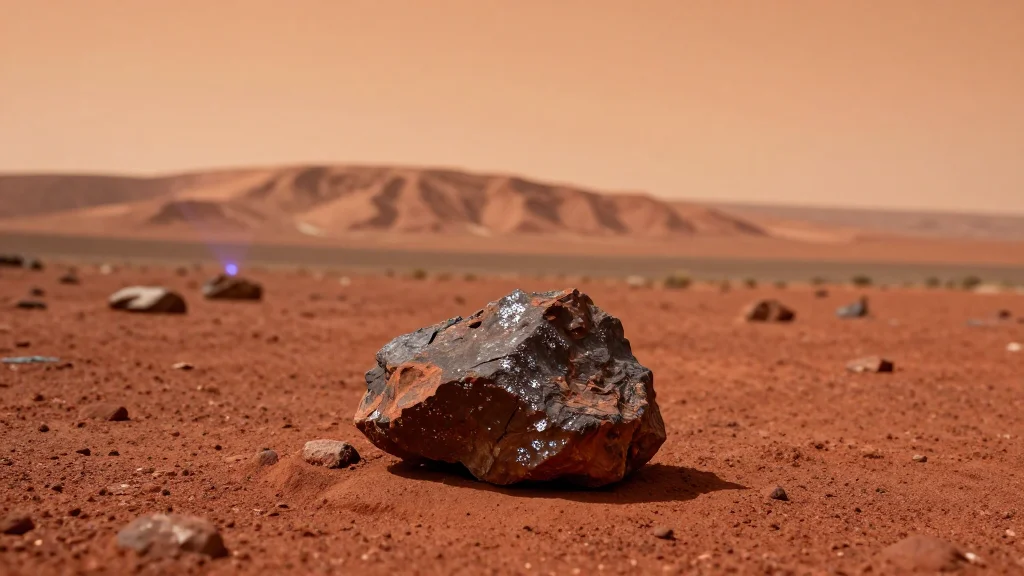
Nickel-Rich Rocks Discovered by Perseverance Hint at Complex Chemistry on Early Mars
Why It Matters
The discovery of bio‑available nickel expands the inventory of habitability factors on early Mars, informing target selection for the upcoming Mars Sample Return mission. It also refines our understanding of Martian redox chemistry and its potential to sustain life.
Key Takeaways
- •Nickel up to 1.1% found in 32 Martian rocks.
- •Nickel co-occurs with iron‑sulfide and sulfate minerals.
- •Mineral patterns resemble Earth pyrite linked to microbes.
- •Findings suggest bio‑available nickel for potential ancient life.
- •Source of nickel remains ambiguous, further study required.
Pulse Analysis
Since its 2021 landing, NASA’s Perseverance rover has transformed Jezero crater from a remote curiosity into a laboratory for planetary habitability. By combining laser-induced breakdown spectroscopy, infrared reflectance, and X‑ray fluorescence, the rover can quantify trace elements in situ, a capability that revealed nickel concentrations as high as 1.1 % in the Neretva Vallis sedimentary suite. Such levels exceed any previously recorded in Martian bedrock and suggest that the ancient fluvial system concentrated transition metals in ways that could have altered local geochemistry and energy gradients.
The nickel enrichment is not isolated; it co‑occurs with iron‑sulfide phases and secondary sulfates like jarosite and akaganeite, mineral assemblages that on Earth often form in microbially mediated, anoxic environments. The morphological similarity between the Martian iron‑sulfide structures and terrestrial pyrite points to comparable redox conditions, where sulfate‑reducing microbes could have harnessed nickel‑dependent enzymes for carbon fixation and energy production. Even if abiotic pathways generated the same signatures, the presence of a key catalytic metal expands the palette of chemical reactions that could sustain primitive metabolism.
These findings arrive at a pivotal moment for the Mars Sample Return campaign, which aims to bring precisely such mineral‑rich rocks back to Earth for definitive biosignature testing. Determining whether the nickel originated from igneous differentiation, meteoritic delivery, or hydrothermal alteration will guide sample selection and analytical priorities. Moreover, the study reshapes models of early Martian ocean chemistry, implying that transition‑metal availability may have been more widespread than previously thought. Continued in‑situ analysis and eventual laboratory work will be essential to resolve the biogenic versus abiotic debate.
Nickel-Rich Rocks Discovered by Perseverance Hint at Complex Chemistry on Early Mars
Comments
Want to join the conversation?
Loading comments...