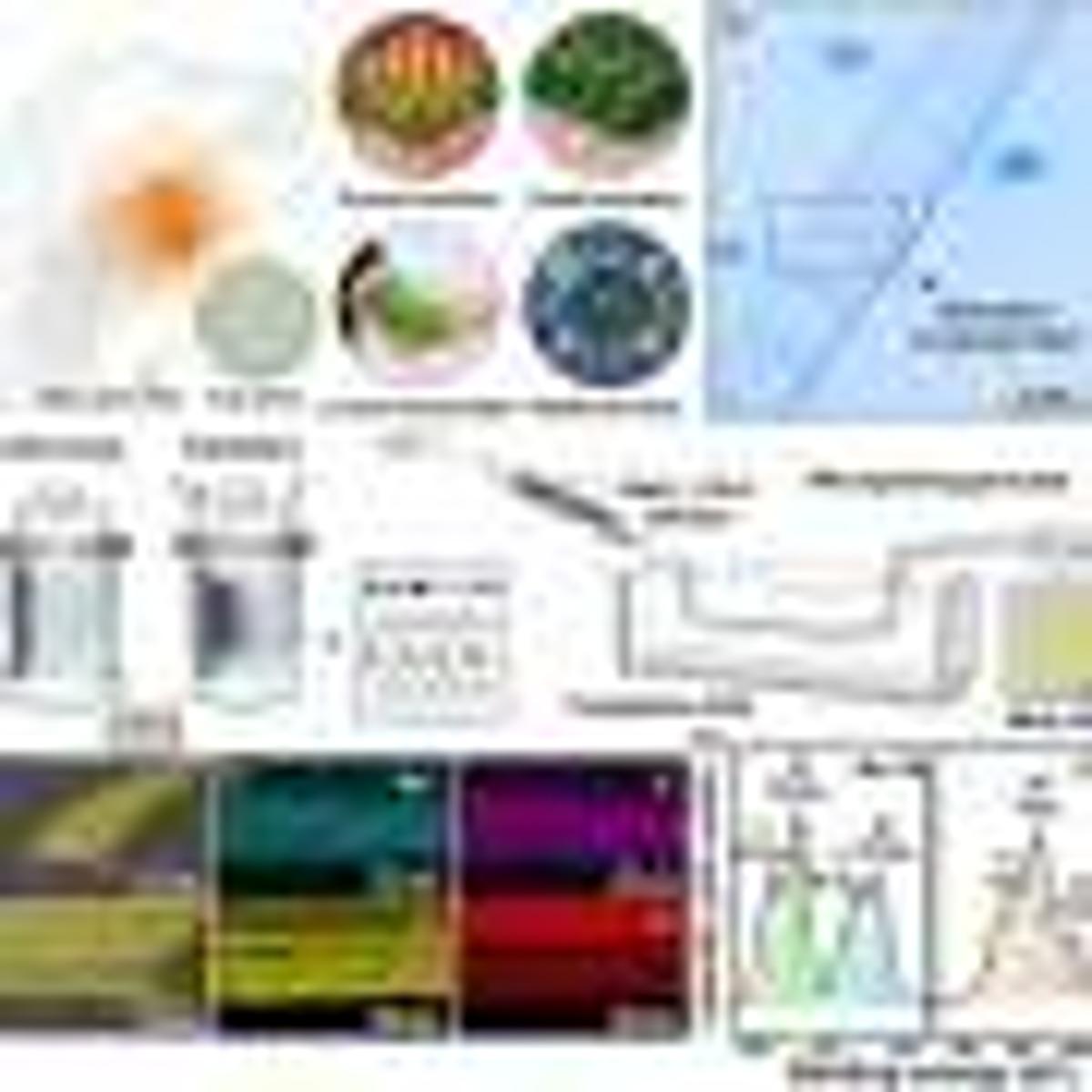
'No Pumps, No Batteries Needed': Wearable Semiconductor Fabric Monitors Health Through Sweat
Why It Matters
By removing power and fluid‑handling hardware, the technology lowers cost, size, and complexity, accelerating adoption of continuous, non‑invasive health monitoring across consumer and clinical markets.
Key Takeaways
- •MoS₂/PLA fiber absorbs sweat via capillary action, no pump needed
- •Sensor operates without external power, using intrinsic electrical responses
- •Detects electrolytes, metabolites, and motion with a single fiber
- •Works with microliter-level sweat, enabling real‑time health monitoring
- •Potential for sports, telemedicine, and early disease diagnosis
Pulse Analysis
The breakthrough hinges on a MoS₂‑reinforced PLA fiber that mimics plant roots, pulling sweat into microscopic pores through capillary forces. This passive collection eliminates bulky micro‑pumps and the need for onboard batteries, allowing the sensor to be woven directly into garments or bandages. Electrical signals generated by the sweat’s ionic content shift the fiber’s conductivity, while pressure‑induced changes reveal motion, delivering multimodal data from a single, ultra‑thin thread.
In the rapidly expanding wearables market, manufacturers have struggled with trade‑offs between sensor accuracy, power consumption, and user comfort. Conventional sweat patches rely on external stimulators or active fluid channels, which can cause skin irritation and limit continuous use. The new semiconductor fabric offers a low‑profile, self‑powered alternative that maintains stable skin contact and functions with microliter‑scale sweat volumes—critical for real‑time monitoring during low‑intensity activities or in clinical settings where sweat production is minimal. Its ability to differentiate electrolytes (increasing conductivity) from metabolites (decreasing conductivity) simplifies data processing, reducing the need for complex algorithms.
Looking ahead, the technology could accelerate the shift toward decentralized health care by enabling seamless integration of biometric monitoring into everyday clothing. Sports teams may adopt the fabric for instant performance feedback, while telemedicine platforms could leverage it for remote patient diagnostics, potentially catching metabolic imbalances before symptoms emerge. Challenges remain, including large‑scale manufacturing of uniform MoS₂/PLA fibers and meeting regulatory standards for medical devices. Nonetheless, the convergence of nanomaterials, polymer engineering, and textile design positions this sensor as a catalyst for the next generation of smart, battery‑free health wearables.
'No pumps, no batteries needed': Wearable semiconductor fabric monitors health through sweat
Comments
Want to join the conversation?
Loading comments...