Why It Matters
The null result refines our expectations for detectable alien technology while providing a scalable workflow that can accelerate the search across the growing list of habitable exoplanets.
Key Takeaways
- •33‑day radio survey covered 544 MHz‑9.8 GHz range.
- •No technosignature detected from K2‑18 b.
- •New filtering framework isolates genuine narrowband signals.
- •Methodology applicable to other hycean exoplanets.
- •Future arrays like SKA will enhance sensitivity.
Pulse Analysis
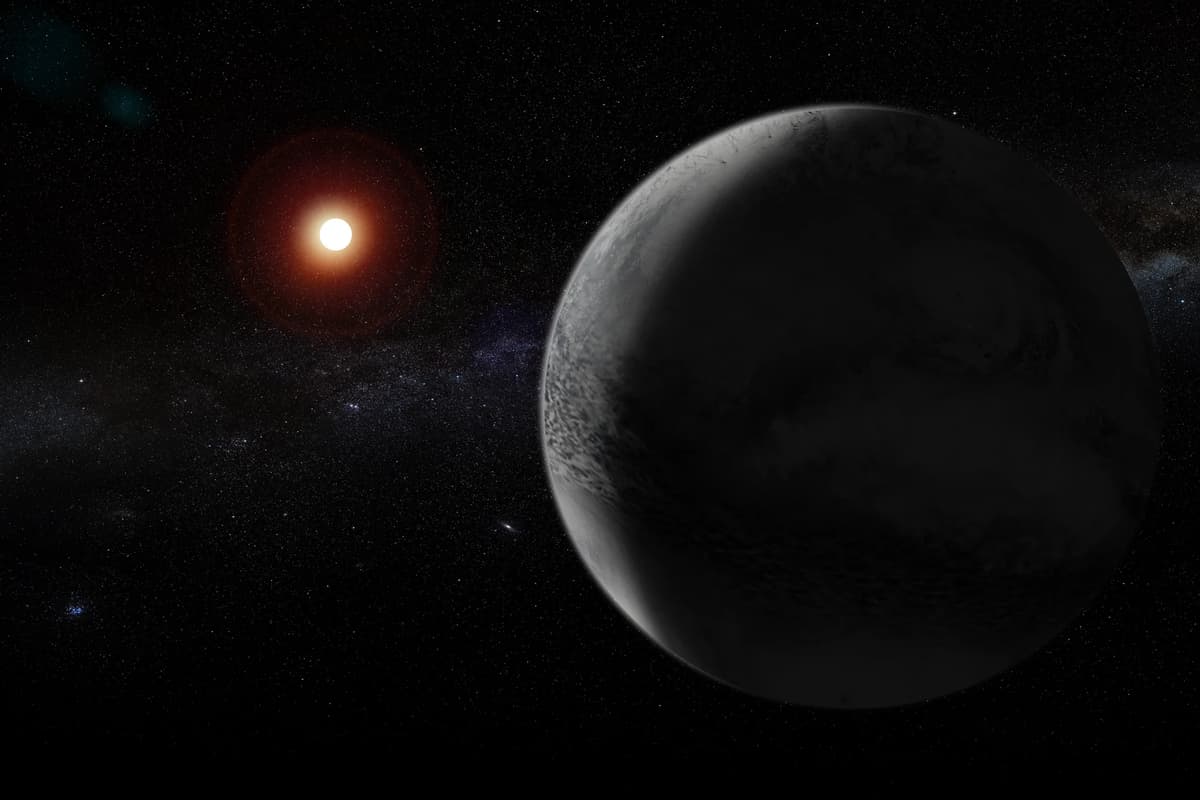
The hunt for extraterrestrial intelligence has moved beyond nearby stars to the most promising exoplanets, and K2‑18 b has become a flagship target. Classified as a sub‑Neptune with a hydrogen‑rich envelope, the planet sits in the habitable zone of a red dwarf 124 light‑years away, prompting the “hycean” hypothesis—an ocean world cloaked in a thick atmosphere. Recent James Webb observations revealed methane and carbon dioxide, fueling speculation about biosignatures. Against this backdrop, a dedicated radio campaign was launched to test whether any advanced civilization might be broadcasting detectable signals.
The team combined the Very Large Array and South Africa’s MeerKAT to monitor K2‑18 b for a full orbital period, scanning 544 MHz to 9.8 GHz with unprecedented sensitivity. After discarding more than 20 million raw detections, a cascade of filters—beam‑pattern checks, Doppler‑drift matching, occultation tests, and persistence analysis—whittled the list to zero credible technosignatures. While the null result cannot rule out life, it demonstrates a reproducible workflow for separating terrestrial interference from genuine extraterrestrial narrowband emissions, a hurdle that has long plagued SETI experiments.
Looking ahead, the filtering architecture built for K2‑18 b can be deployed on any candidate hycean world as larger facilities come online. The Square Kilometre Array and the next‑generation VLA will push detection thresholds down by orders of magnitude, potentially catching faint beacons that current instruments miss. Moreover, the framework encourages multi‑wavelength strategies, integrating optical laser searches and infrared technosignature metrics. By standardizing signal‑validation pipelines, the astronomy community gains a scalable toolset that could finally translate the growing catalog of habitable‑zone exoplanets into actionable SETI targets.
No signs of technology on exoplanet K2-18 b
0
Comments
Want to join the conversation?
Loading comments...